Angel
Thomas Hutter
Basic information
- ID
- С-I-2162
- Author
- Thomas Hutter
- Name
- Angel
- Date of creation
- 18th c.
- Technique
- carving
- Material
- wood polychrome gilt
- Dimensions (height x width, cm)
- 63 x 50.5
Information about author
Object description
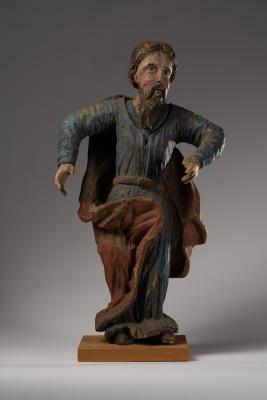
The polychrome figure of an angel is presented in full length with his arms outstretched. The head is slightly tilted to the left. Facial features are carved in detail. The sculptor skillfully showed a slightly elongated face with puffy cheeks, black eyebrows, a small nose, almond-shaped eyes with an upward gaze, a slightly opened mouth, and a small prominent chin. The angel's head is framed by strands of wavy hair. The sculptor depicted the anatomy of the human body in a naturalistic manner, realistically recreating plump little hands, legs and a plumpish belly. The works of the early period of the sculptor's artistic practice are characterized by a generalized design of draperies and soft modeling of clothing, which later were replaced by geometrized planes and some decorativeness in the composition of the clothes’ folds.
Legal regulation
Borys Voznytskyi Lviv National Art Gallery