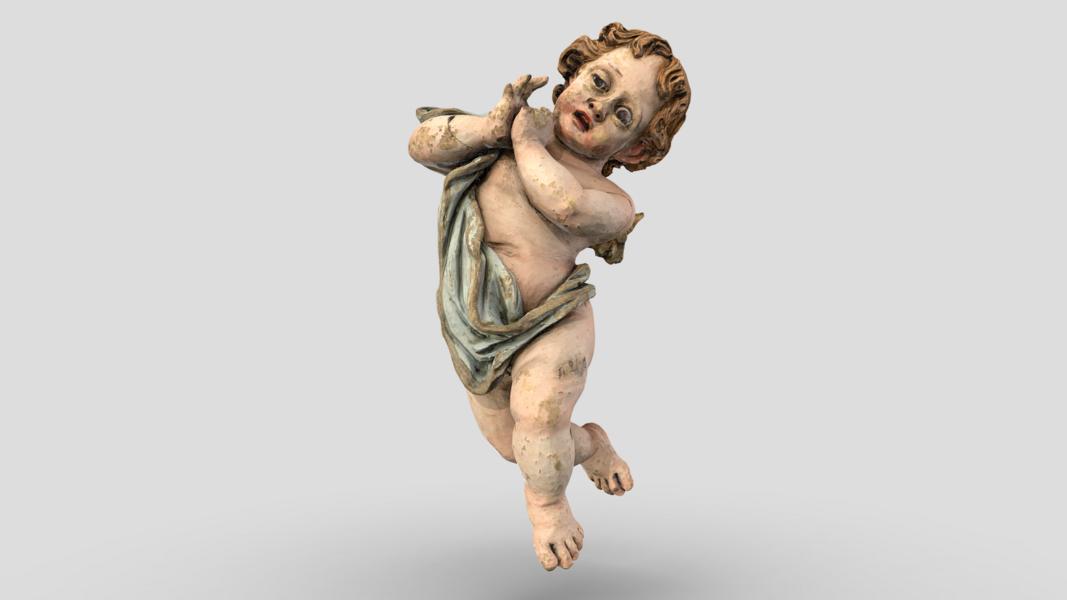
Putto
unknown

Basic information
- ID
- С-І-450
- Author
- unknown
- Name
- Putto
- Date of creation
- 18th c.
- Country
- Ukraine
- Technique
- polychrome
- Material
- stone mass
- Dimensions (height x width x depth, cm)
- 37 x 21 x 16
Additionally
- Type
- sculpture 3D
- Genre
- religious
- Plot
- Angel
- Provenance
- Collection of Leon Pininski
Information about author
Object description
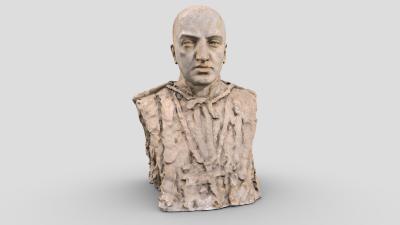
Baroque altars decorated with three-dimensional figures, relief antependium, and compositions with rays and putti became widespread in Eastern rite churches. Putti symbolised the triumph of the Christian idea. The spiritual plastic language of the sculptors, deprived of the signs of earthly materiality, created images of angels that seemed to come from another dimension – not the physical, but the spiritual. Sculptural images of putti were a common motif in Renaissance and Baroque art. A small-scale sculpture appears as a small child with wings, creating the illusion of flight. Soft, flowing contours surround the angel's naked body, covered only by a drapery thrown over her right shoulder. The childlike face, with its plump cheeks, is frozen in melancholy thought. The angel's head is covered with wavy strands of hair. The sculptor created the image of a putto surrounded by lyricism.
Legal regulation
Borys Voznytskyi Lviv National Art Gallery