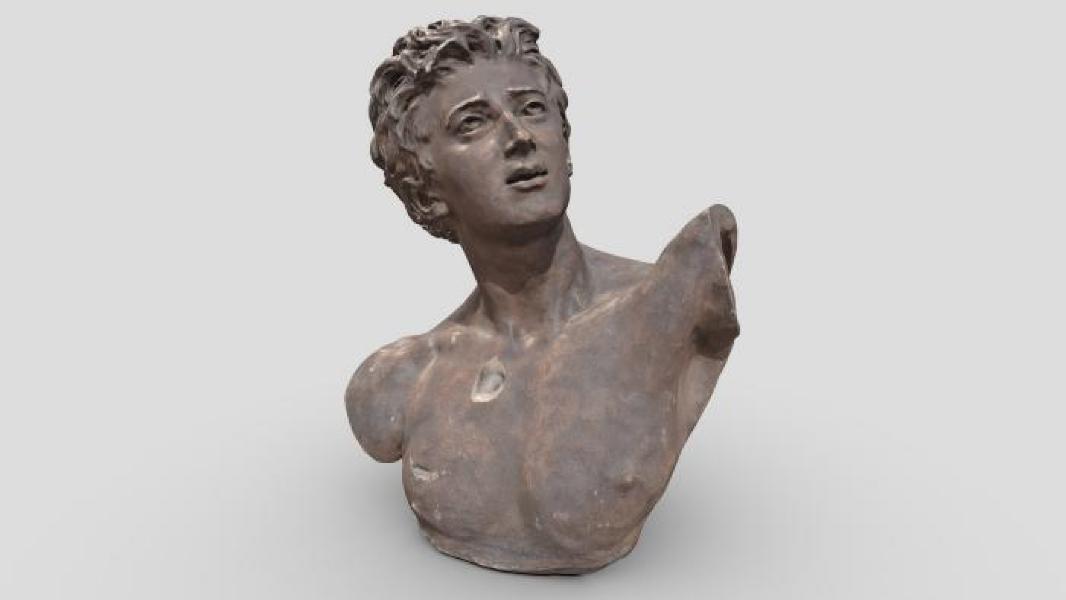
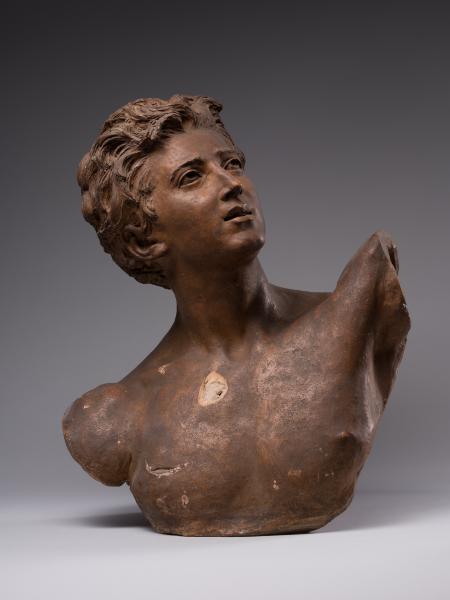
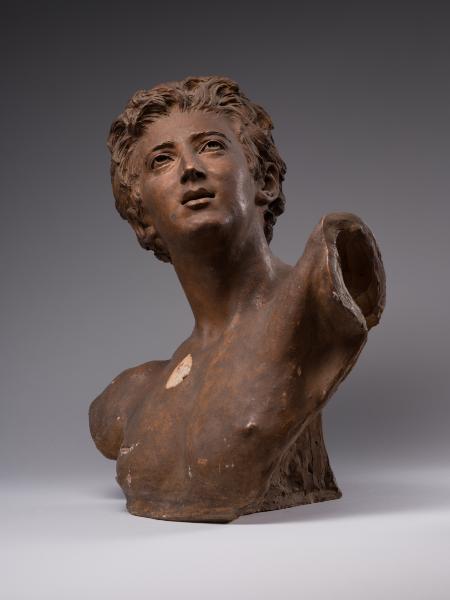
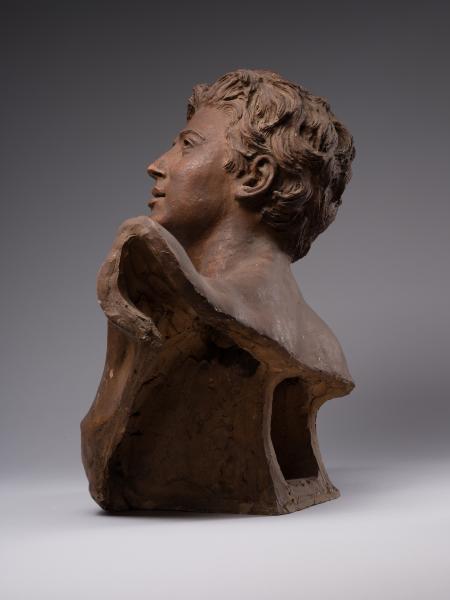
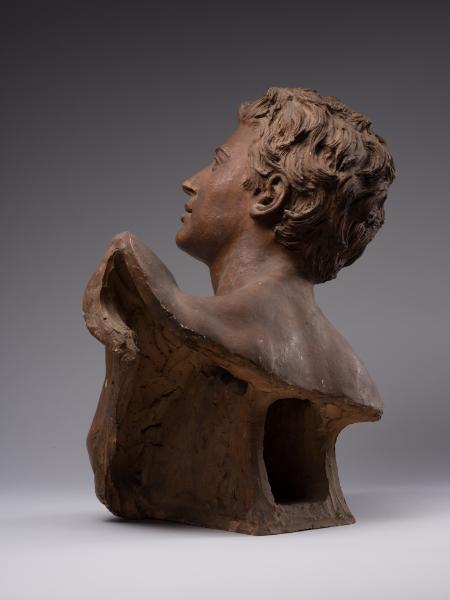
Genius (Bust of a Boy)
Tadeusz Baracz


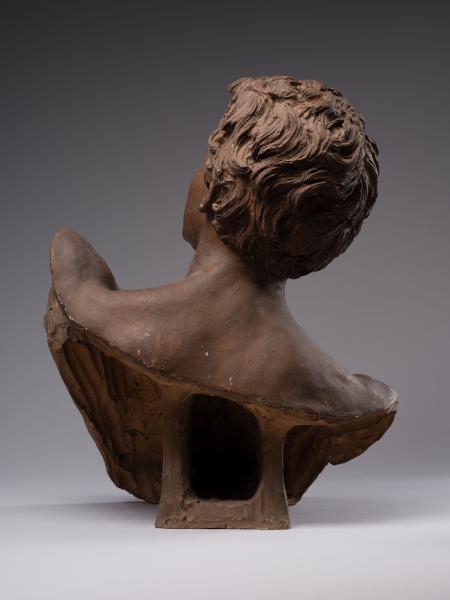
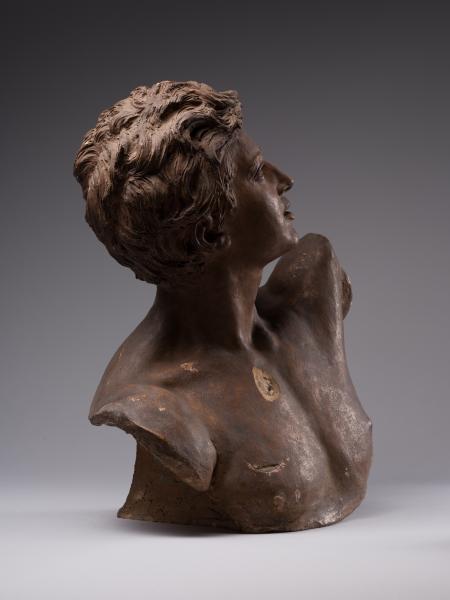
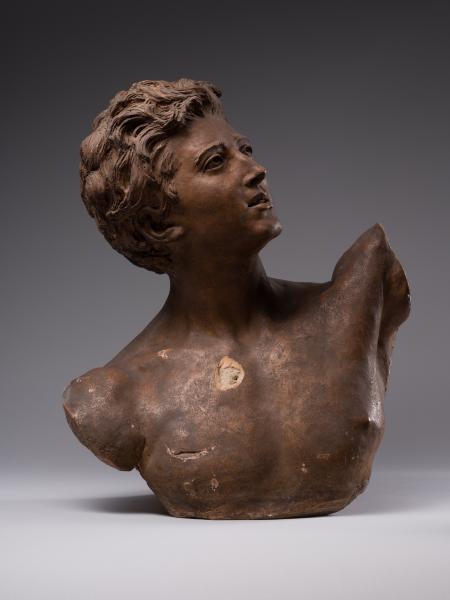
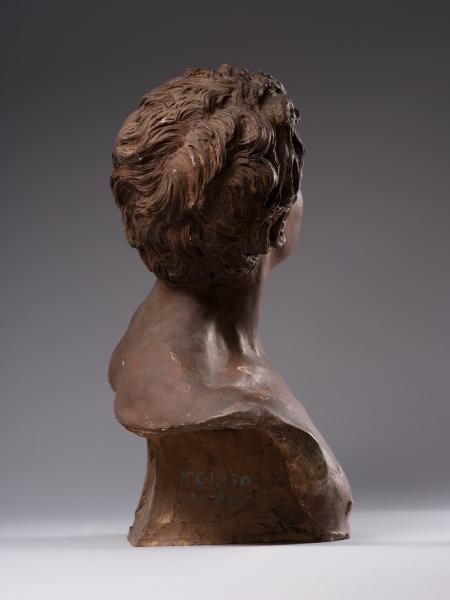
Basic information
- ID
- С-I-230
- Author
- Tadeusz Baracz
- Name
- Genius (Bust of a Boy)
- Date of creation
- 1884
- Country
- Austro-Hungarian Empire
- Culture
- Modern times
- Technique
- modeling
- Material
- terracotta
- Dimensions (height x width x depth, cm)
- 46.5 x 42 x 23
Additionally
- Type
- sculpture 3D
- Plot
- Allegory
- Provenance
- Courtesy of Stanislaw Baracz and his wife National Gallery of Lviv (until 1940)
Information about author
Object description
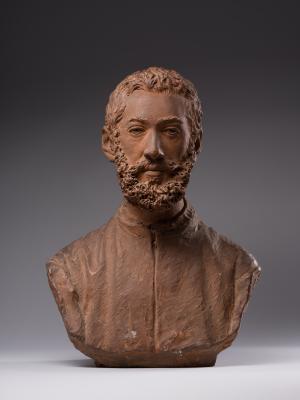
Tadeusz Baracz became famous as the author of numerous monuments, including those to Adam Mickiewicz in Drohobych (1894), Truskavets (1898), and Boryslav (1898), and a project for a monument to the poet in Krakow (1884–1885). The competition for the latter (1880–1890) was won by Teodor Rygier's work, which was later cast in Rome by the Italian firm Nelli and erected in 1898 on the square at the intersection of Sienna Street and Sukiennice. The monument was destroyed by the German occupying forces on 17 August 1940 and restored in 1955. T. Baracz's unrealised project was characterised by excessive narrative and an excess of figures, including the genius, whose terracotta model is in the collection of Borys Voznytskyi Lviv National Art Gallery, and the bronze model in the National Museum in Krakow. The sculptor's work on the monument comes at a time when the cult of Mickiewicz as a "national genius" of the Polish people, a "national prophet", was established in the late nineteenth century and several competitions for projects to mark the 100th anniversary of his birth were announced. The prototype of the sculpture was the numerous representations of geniuses as allegories of inspiration in the monuments to creative people in the European artistic tradition. Perhaps the most famous example of the implementation of the figurative and plastic concept in Lviv sculpture is the monument to A. Mickiewicz by A. Popiel (1902–1903) on the Mariinska Square in Lviv with the figure of the poet reaching for a lyre handed to him by a winged genius flying from the sky. The stylistic feature of the bust from the Gallery's collection is the reminiscence of Romanticism, visible in the inspired gaze and half-open young lips. The idealisation, the graceful line of the silhouette, the sensuality and the soft modelling all point to the inspiration of Neo-Florentine art, based on the creative reinterpretation of works by Donatello, Desiderio da Settignano, and Benvenuto Cellini.
Inscriptions
Signed and dated on the right-hand chamfer: "T. Barącz / 884"; on the back: "H VI / 17".
Legal regulation
Borys Voznytskyi Lviv National Art Gallery