Kitchen Interior
Egbert van der Poel


Basic information
- ID
- Ж-809
- Author
- Egbert van der Poel
- Name
- Kitchen Interior
- Technique
- oil painting
- Material
- wood oil
- Dimensions (height x width, cm)
- 39 x 50
Additionally
- Type
- painting
- Genre
- genre art
- Provenance
- Collection of Lviv City Gallery
- Exposition
- Potocki Palace
Information about author
Object description
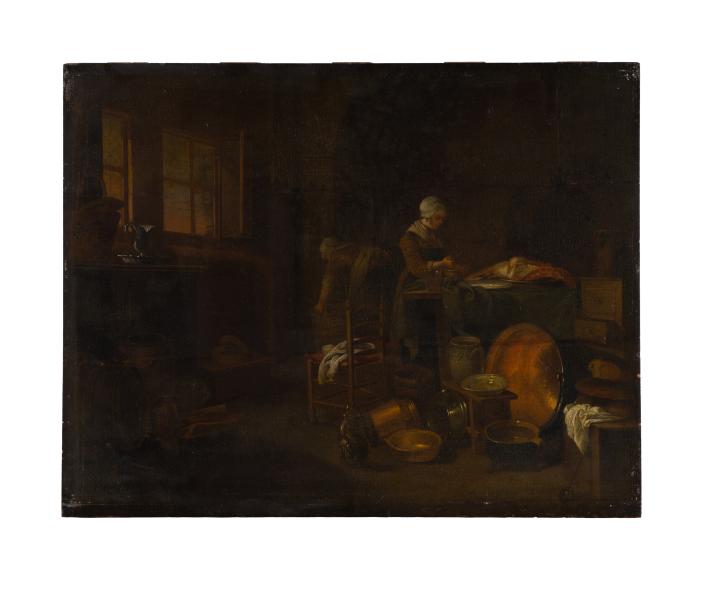
Dark in colouration and maintained in a single colour scheme, the work "Kitchen Interior" depicts a simple Dutch person's typical home and daily life. In the background, a new day is just dawning outside the window – warm, sunlit hues of pink illuminate the sky. To the right of the window, in the depths of the painting, a woman is bent over doing laundry. On the shelf beneath the window are a silver teapot and a plate, possibly for fruit, a woven basket for groceries, and among the kitchen utensils, the attention is drawn to the polished copperware: a cauldron, a jug, and bowls. In the centre, a woman is depicted at the table – dressed in typical simple brown clothing, with her head covered by a white cap, skillfully filleting fish with her hands. She exudes a sense of calm and balance. The woman is engaged in daily work that is useful and necessary and often goes unnoticed. Casually thrown white clothes distract from the harsh realities of 17th-century life. The liberation of the seven provinces from the Spanish monarch's rule contributed to the Dutch Republic's economic rise. The tastes of the burghers, who became the driving force behind this progress, were catered to by an art characterised by its particular democracy. Artists turned to everyday life and leisure themes, depicting moments frozen in time, capturing both domestic scenes and actions occurring in that instant. Domestic realist painting, still lifes, and landscapes became exceptionally popular in the works of Dutch artists of that time.
Legal regulation
Borys Voznytskyi Lviv National Art Gallery