Angel’s Head
Franciszek Oledzki


Basic information
- ID
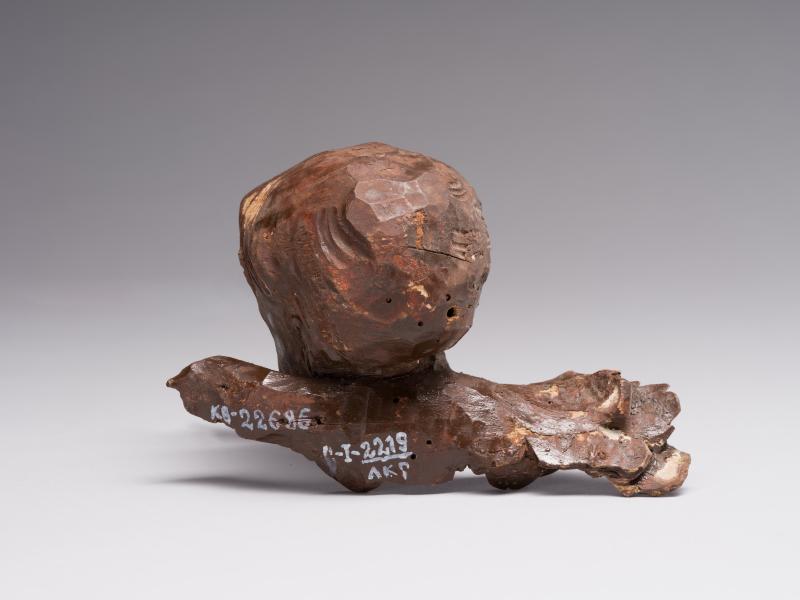
- С-I-2219
- Author
- Franciszek Oledzki
- Name
- Angel’s Head
- Date of creation
- 18th c.
- Country
- Ukraine
- Technique
- carving
- Material
- wood
- Dimensions (height x width x depth, cm)
- 10 x 15.2 x 7.6
Additionally
- Type
- sculpture
- Genre
- religious
- Plot
- Cherub
- Provenance
- Unknown origin
Information about author
Object description
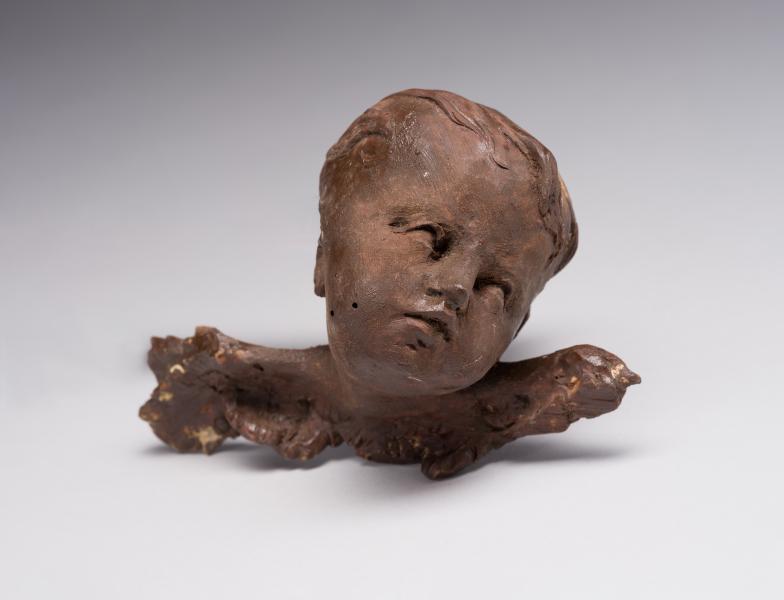
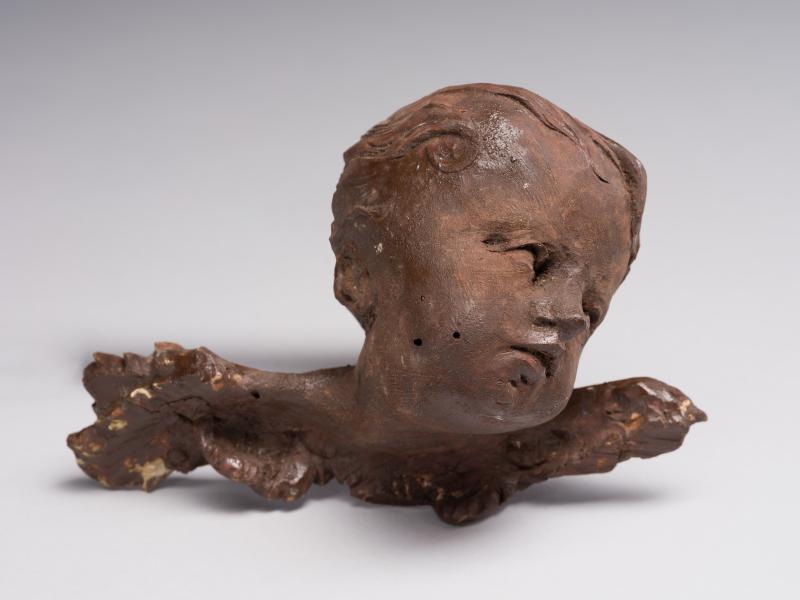
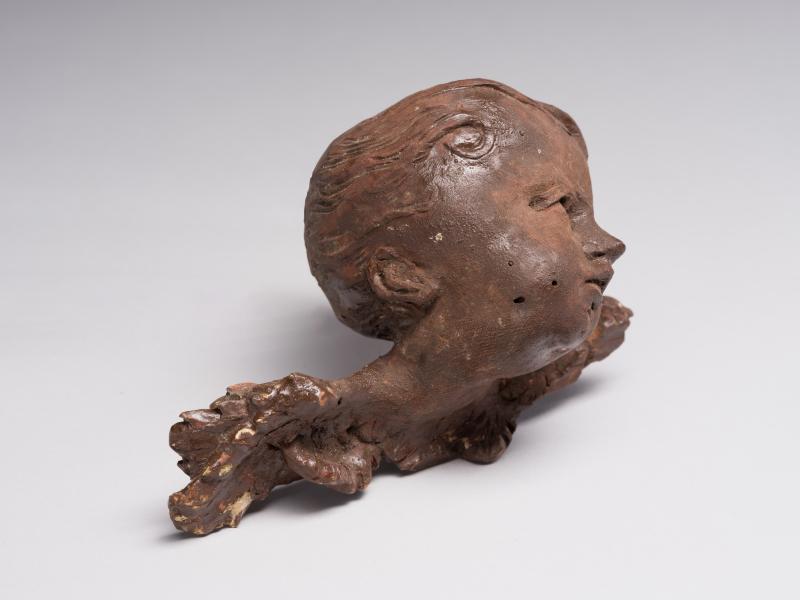
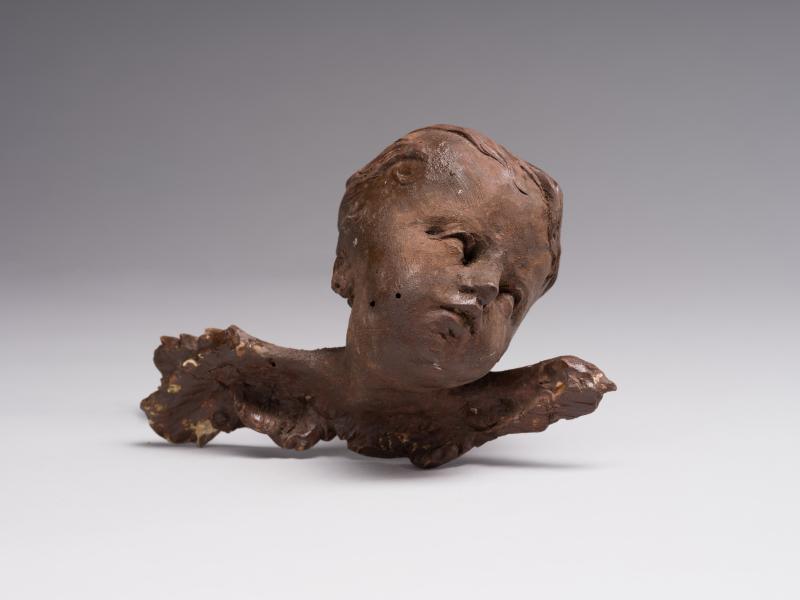
The carved wooden image represents the traditional iconographic type of cherub in Baroque sacred art. Similar works served as decorations for altars, iconostases, or church interiors. The presented angel’s head is carved with a sense of plastic refinement and vivid softness. The realistically executed face is endowed with delicate features. The head, turned to the left and raised upwards, creates the impression of a radiant image embodying celestial purity and tranquillity. Plump, rounded cheeks, a bright, open forehead with a playful strand of curled hair, half-closed, expressive eyes directed upwards, a small, snub nose, and lips parted in admiration characterise the emotional and expressive image of the cherub. The expression of the face is imbued with childlike spontaneity and innocence, imparting a sense of divine presence. The decorative completeness of the expressive image is enhanced by small wings, each feather of which conveys a sense of movement. The work is coherent and realistic, conveying idealised beauty. The author skilfully combines naturalism with artistic decorativeness, embodied in the tender, idealised childlike image of the angel’s head.
Legal regulation
Borys Voznytskyi Lviv National Art Gallery