Altar Cross
unknown folk sculptor




Basic information
- ID
- Ж-5469
- Author
- unknown folk sculptor
- Name
- Altar Cross
- Date of creation
- 19th c.
- Country
- Ukraine
- Technique
- carving
- Material
- wood oil
- Dimensions (height x width x depth, cm)
- 51.6 x 23 x 10.4
Additionally
- Type
- decorative and applied arts
- Genre
- religious
- Provenance
- Khvativ village, Busk district, Lviv region
Information about author
Object description
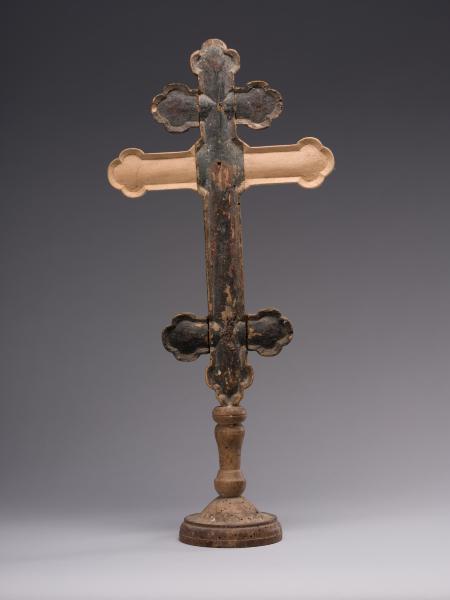
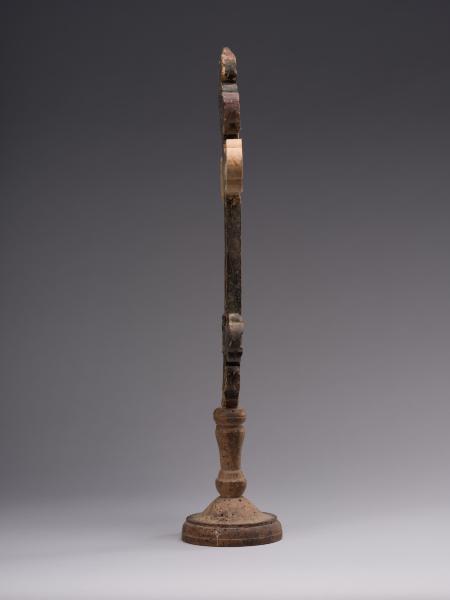
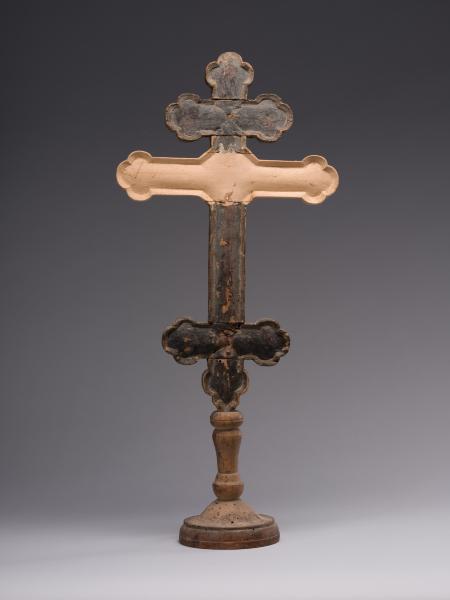
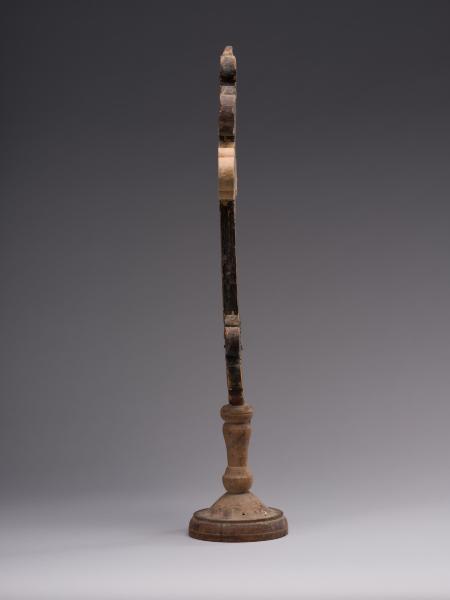
The altar cross served as a highly revered, consecrated symbol on the altar; it was carried out during worship and used during services and festive processions. The work has numerous damages and signs of ageing, indicating many years of use. The eight-pointed cross is placed on a round carved base. The work belongs to the iconographic type of a flowal cross: a complex shape with widened ends, decorated with three petal-shaped finials at each end. Due to the poor preservation of the work's painted decoration, not all images have survived. In the centre of the main rod, on the back side, a full-figure painted image of the Virgin Mary is visible. The ends of the altar cross are decorated with images of cherubs on the front and back sides. The work is a valuable example of wooden sacred sculpture and painting, combining symbolism, decorativeness, and liturgical function.
Legal regulation
Borys Voznytskyi Lviv National Art Gallery