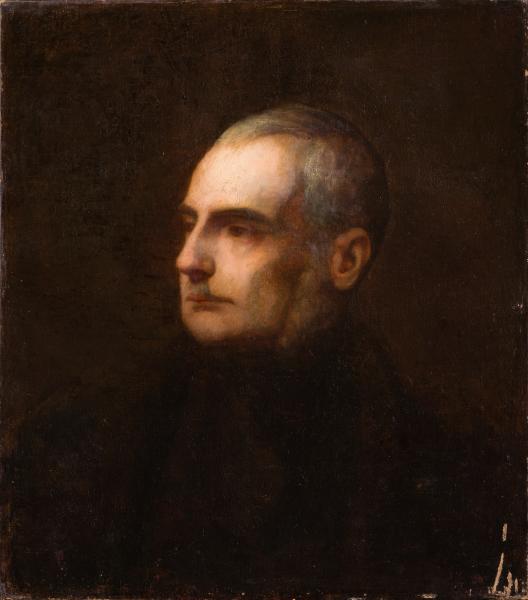
Portrait of Zygmunt Krasinski
unknown


Basic information
- ID
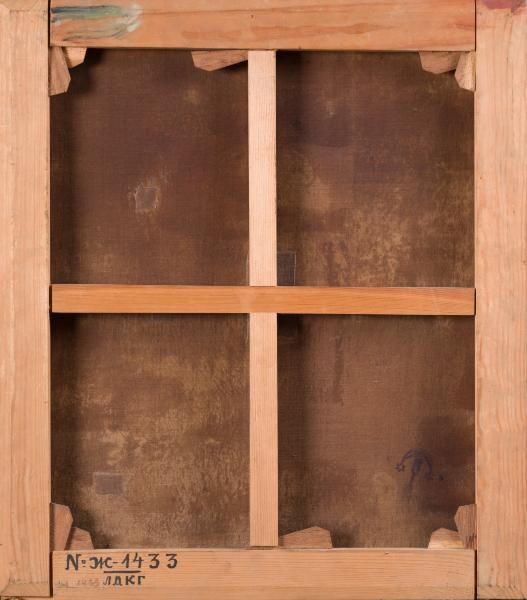
- Ж-1433
- Author
- unknown
- Name
- Portrait of Zygmunt Krasinski
- Date of creation
- 19th c.
- Country
- Austrian Empire (?)
- Culture
- Modern times
- Technique
- oil painting
- Material
- canvas oil
- Dimensions (height x width, cm)
- 52.8 x 46.5
Additionally
- Type
- painting
- Genre
- portraiture
- Plot
- Portrait
- Provenance
- the Dzieduszycki collection
Information about author
Object description
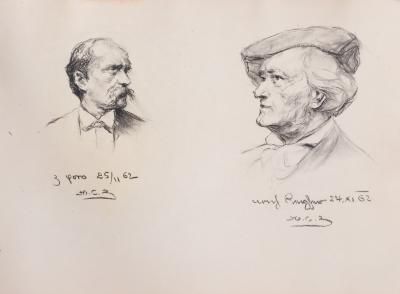
Zygmunt Krasiński (Napoleon Stanisław Adam Feliks Zygmunt Krasiński) (19 February 1812 – 23 February 1859) was an outstanding Polish poet, playwright, and count. One of the three Polish poets-prophets of the Romantic era, along with Adam Mickiewicz and Juliusz Słowacki. He came from a noble family. His father, Wincenty (1782–1858), was a general under Napoleon Bonaparte. He was the French emperor's godson. He graduated from high school in Warsaw and studied law at Warsaw University. He later moved to Europe, where he continued his studies in Geneva. In Switzerland, he met Adam Mickiewicz, who influenced the young man's intellectual development. He wrote his first "Gothic tales" in the tradition of the "horror novel" in Warsaw. From 1829, he lived abroad, mainly in France and Italy. He studied European literature and philosophy. In 1833–1835, he wrote "The Undivine Comedy" and "Iridion", two of his best works. In 1836, he met J. Słowacki in Rome. In December 1838, he met Delfina Potocka, wife of Mieczysław Potocki (1807–1877), who became the artist's muse for many years. More than 700 letters from their correspondence have been preserved, which are considered a masterpiece of European Romantic epistolary writing. In the second half of 1839, he wrote the poems "Son of Shadows", "Caesar's Dream", and "Legend" and published them anonymously the following year under the title "Three Thoughts Left Behind by the Late Henryk Ligenza". In the second half of 1841, he began work on a philosophical treatise entitled "About the Position of Poland from the Divine and Human Vantage Point", which was completed in 1846–1847. On 26 July 1843, under pressure from his father, he married Elżbieta Branicka (1820–1876) in Dresden and had four children. He was the author of lyrical and philosophical-political poems that gained popularity in intellectual circles. In his later works, Z. Krasiński's tragic historical fatalism was replaced by mature messianism and Christian providentialism. He died of tuberculosis on 23 February 1859 in Paris. He is buried in Opino-Guru near Cechanów, where the Museum of Romanticism is now located.
Portrayed person
- The name of the person portrayed
- Zygmunt Krasinski
- Lifetime of the person portrayed
- 19.02.1812–23.02.1859
Legal regulation
Borys Voznytskyi Lviv National Art Gallery