Saint John
unknown


Basic information
- ID
- С-I-352
- Author
- unknown
- Name
- Saint John
- Date of creation
- 18th c.
- Country
- Austria
- Technique
- carving polychromy
- Material
- wood
- Dimensions (height x width x depth, cm)
- 34 x 18 x 10
Additionally
- Type
- sculpture
- Genre
- religious
- Plot
- Saint John
- Provenance
- Collection of Leon Pininski
Information about author
Object description
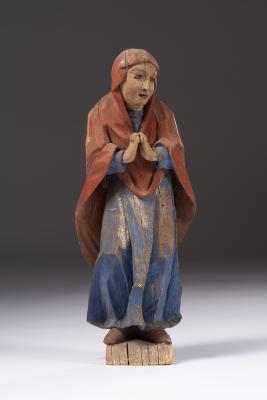
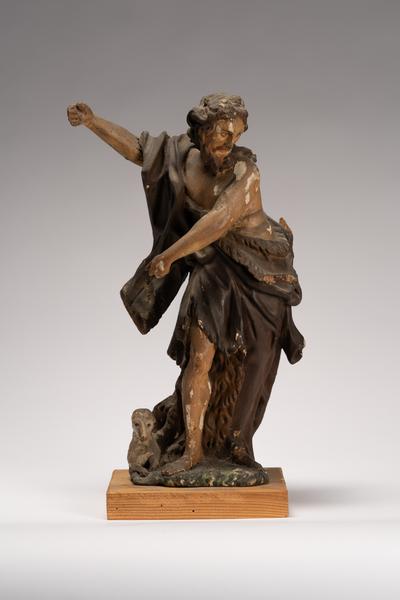
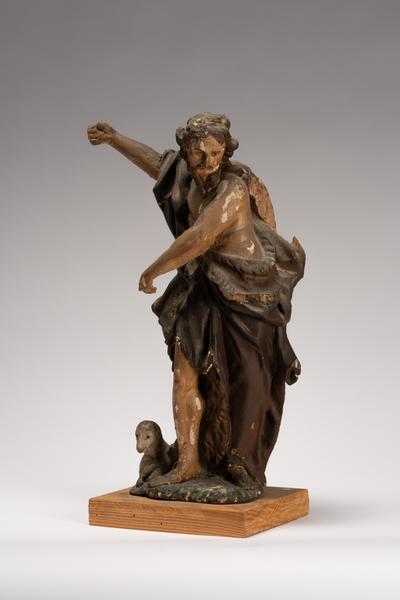
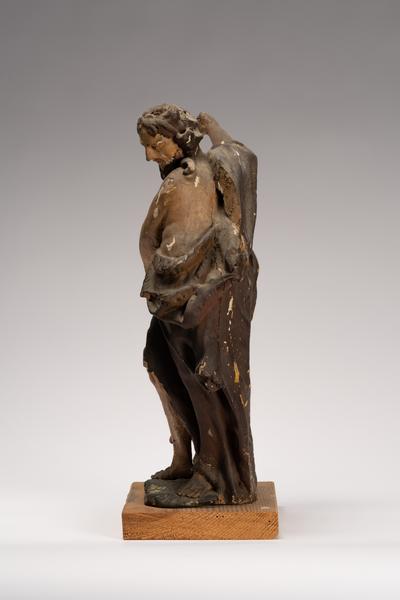
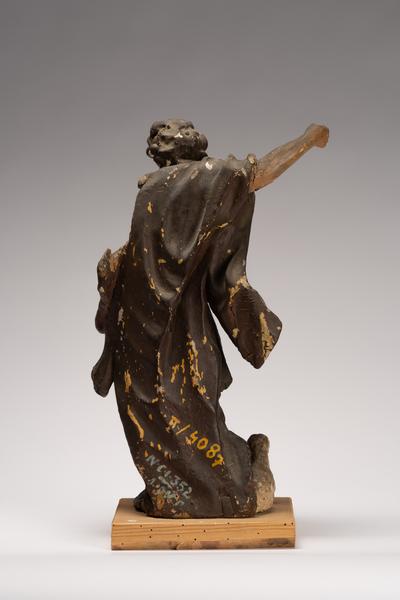
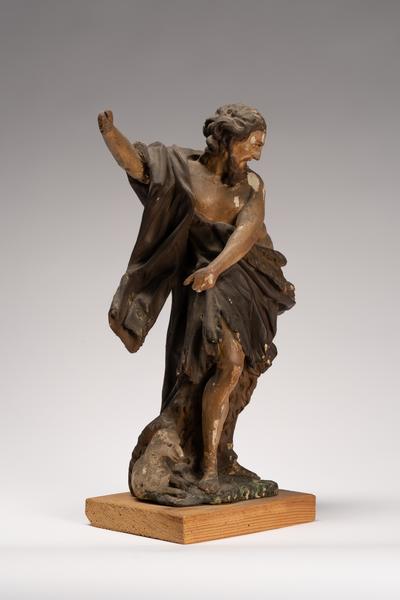
John the Baptist is the Forerunner of Christ, a prophet, the patron saint of ascetics, a hermit, and the son of the priest Zechariah and the Righteous Elizabeth. It was from him that Christianity inherited the concept of ablution and purification, which later became the Sacrament of Baptism. The sculptural composition depicts the expressive figure of St. John with theatrically extended arms. His athletic body is clad in a cilice – a cloak made of camel hair, with one end draped over his right shoulder and the other wrapped around his hips, flowing down and leaving his right leg exposed. The artist tries to convey the material's texture, engraving the edges of the cilice with lines. The drapery is covered with static straight lines with sharp endings. The elongated ascetic face with sunken cheeks has an expression of alienation and obedience. Eastern iconography presents John the Baptist as very thin, with uncut hair and beard, barefoot. Often, John is depicted with a lamb, as in this sculptural composition.
Legal regulation
Borys Voznytskyi Lviv National Art Gallery