Contractions
Arnold Sharhorodskyi


Basic information
- ID
- Ф.Шар.Арх.ЛКГ-3
- Author
- Arnold Sharhorodskyi
- Name
- Contractions
- Date of creation
- 1972
- Country
- the USSR
- Culture
- Art of the Soviet period
- Technique
- oil painting
- Material
- canvas oil
- Dimensions (height x width, cm)
- 70 x 59
Additionally
- Type
- painting
- Genre
- abstract painting
- Plot
- Abstract works
- Provenance
- Handed over to the museum from Arnold Sharhorodskyi
Information about author
Object description
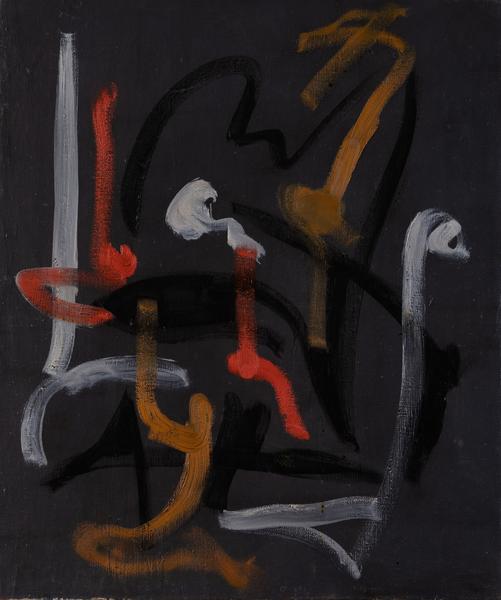
The vertical rectangular canvas with an achromatic background depicts a series of coloured stripes (white, black, ochre, and red), which are brush marks left by the author's specific hand movement. Such an approach is somewhat in line with automatic writing practices. This idea is suggested by interpreting lines comparable to specific forms of non-Cyrillic calligraphy. Through artistic means, the author explored his corporeality and psyche, particularly the unconscious. The colour scheme used by the artist also refers to primitive art forms that used natural pigments: charcoal (black), ochre (red and yellow), and chalk (white). Given Arnold Sharhorodskyi's well-known reflections on the sacred texts of various religions, the works of Sigmund Freud and his followers, and his study of various periods of art history, including primitive art, it is reasonable to assume that this painting is the result of a personal reflection on this mass of information. For example, it involves studying oneself and correlating the "self" with collective unconscious archetypes, where artistic practice becomes a meditative or ecstatic experience. Given the prevalence of consonant precedents in art of the time, we can observe a young artist testing different ideas and forms to find what would later become the defining feature of his anthropological practice.
Legal regulation
Borys Voznytskyi Lviv National Art Gallery