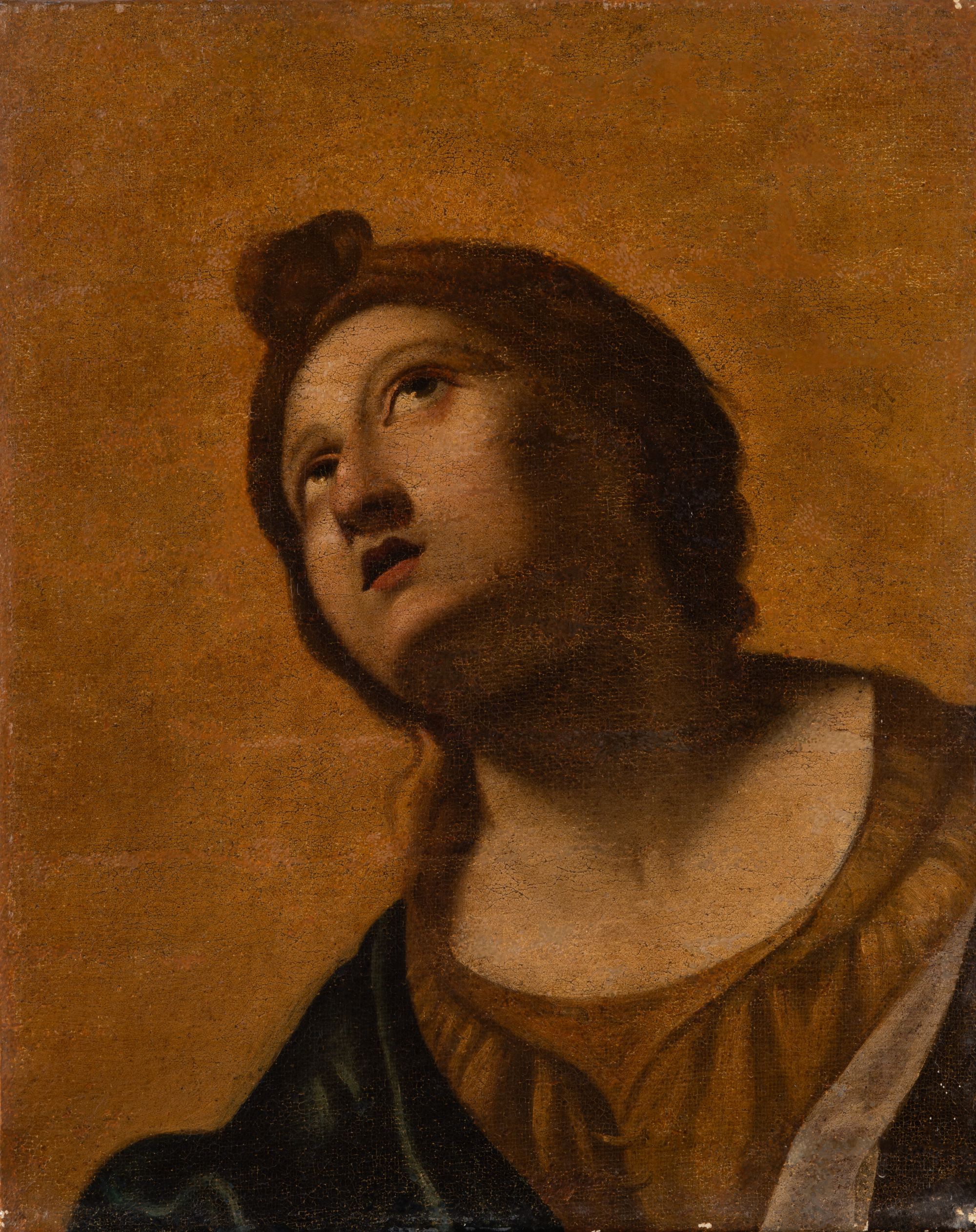
Holy Woman
unknown (Italian School)
Basic information
- ID
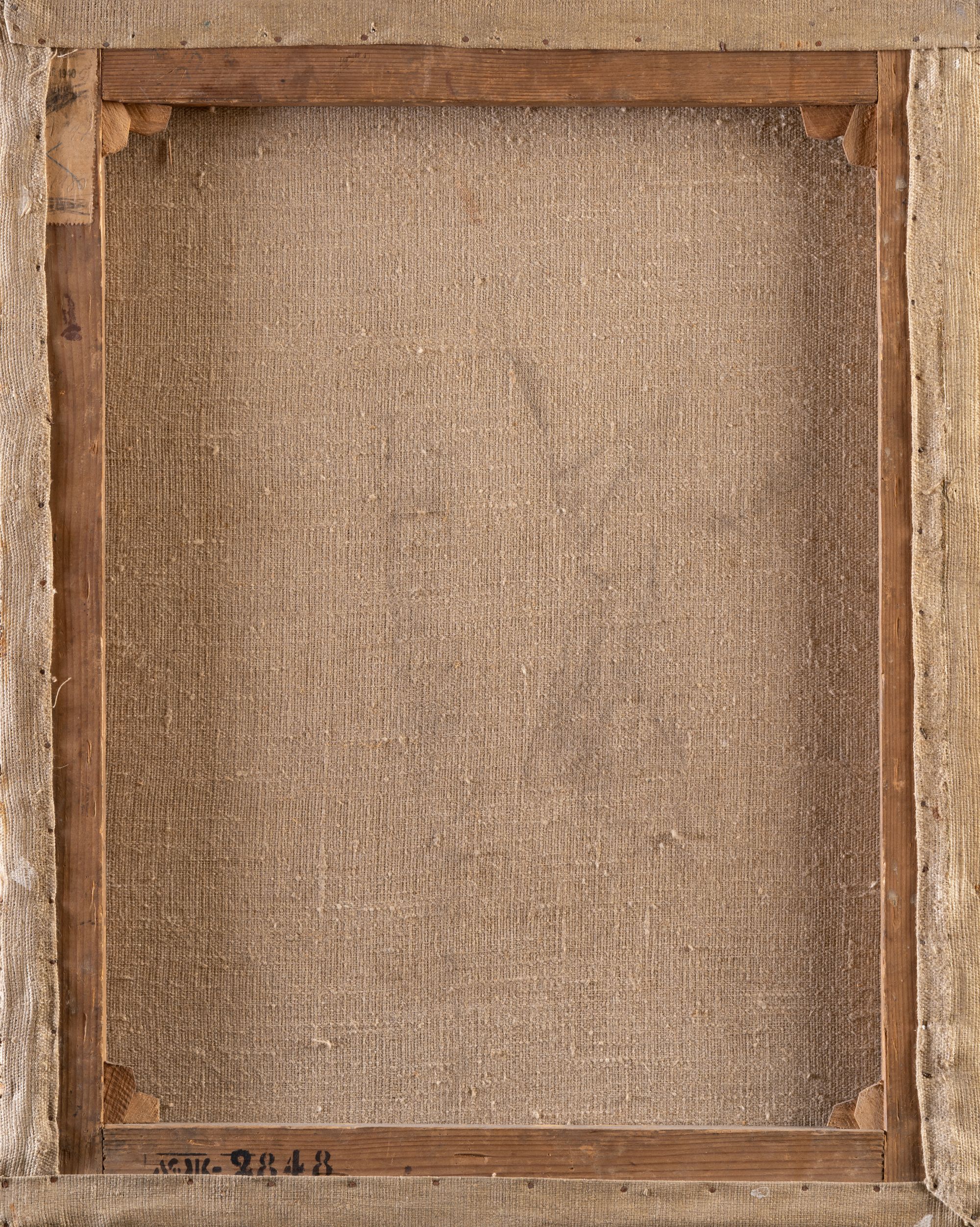
- Ж-2848
- Author
- unknown (Italian School)
- Name
- Holy Woman
- Date of creation
- 17th c.
- Technique
- oil painting
- Material
- canvas oil
- Dimensions
- 52 x 42 cm (height x width)
Additionally
- Type
- painting
- Genre
- religious
- Plot
- Saint
- Provenance
- Collection of Lviv Archdiocesan Museum
- Exposition
- Potocki Palace
Information about author
Object description
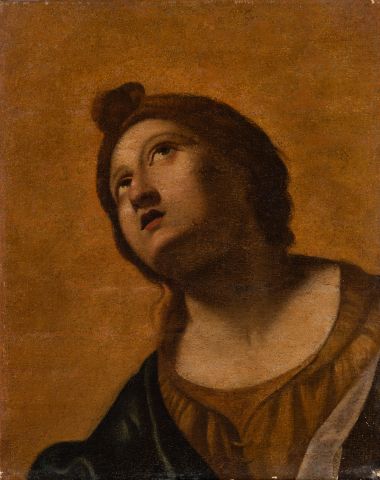
The painting by an unknown artist serves as an exemplar of Baroque religious painting. The composition and palette of the artwork harken back to the traditions of the 17th-century Italian Academic school.
The canvas presents an image of a holy martyr caught in a moment of mystical ecstasy or divine vision. She is depicted from a low-angle perspective (di sotto in su), a technique employed in Baroque art to demonstrate a human's direct communion with God. Due to the absence of specific martyric attributes, identifying this saint with absolute certainty remains challenging; iconographically, she could represent Catherine of Alexandria, Cecilia, or Barbara.
A bust-length depiction of a young woman emerges against a golden-ochre background. The saint's head is tilted sharply back and turned to the left. The gaze of her large eyes is directed upwards towards the divine light, her lips slightly parted. Her dark auburn hair is gathered atop her head into a high bun, reminiscent of the classical antique hairstyles that 17th-century masters frequently emulated when portraying biblical heroines. She is attired in an ochre-coloured dress with a wide, rounded neckline, whilst a heavy, dark emerald cloak is draped over her shoulder.
Legal regulation
Borys Voznytskyi Lviv National Art Gallery