Paul the Apostle
unknown

Basic information
- ID
- С-I-1759
- Author
- unknown
- Name
- Paul the Apostle
- Date of creation
- 18th c.
- Technique
- carving
- Material
- wood whitewash bronze paint
- Dimensions
- 40 x 57 x 27 cm (height x width x depth)
Additionally
- Type
- sculpture 3D
- Genre
- religious
- Provenance
- Expedition to the Lviv region
Information about author
Object description
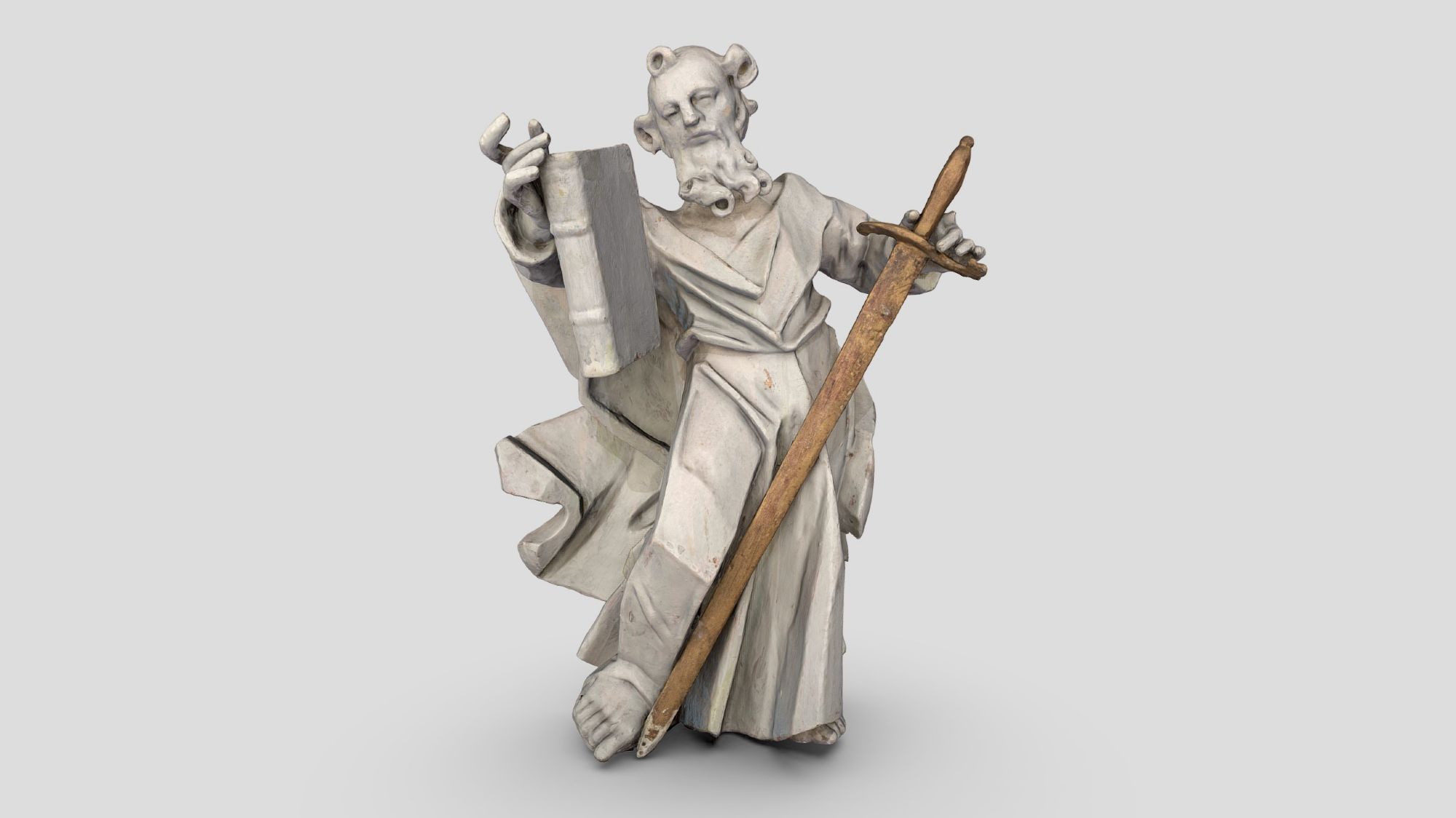
Saint Paul was born in the Asian city of Tarsus in a Jewish family. He did not belong to the Twelve Apostles, but he is revered as the "first apostle of the throne" due to his special missionary and theological merits. The beginnings of St. Paul's iconography date back to the fourth century. The sculpture of the saint man from the village of Buchyno, in the Brody region, is presented in a dynamic pose with attributes in his hands, namely with a book and a sword, which in his hands symbolises victory over death. The squat and somewhat S-shaped figure of St. Paul, together with the apparent folds of his clothing formed by large geometric planes, are imbued with expression. The artist skilfully depicted the face of the saint man and his character, which is manifested in a purposeful gaze and barely raised arches of eyebrows on a high forehead. Hair curls and fluttered strands of beard add dynamism to the work. The apostle's image was prevalent in art, particularly in painting and sculpture. The images of Paul and Peter together form a particular group. The sculpture of Peter the Apostle forms a pair with the sculpture of St. Paul from the village of Buchyno.
Legal regulation
Borys Voznytskyi Lviv National Art Gallery