Still Life with Flowers
Jan Davidsz. de Heem
Basic information
- ID
- Ж-3920
- Author
- Jan Davidsz. de Heem
- Name
- Still Life with Flowers
- Date of creation
- 17th c.
- Technique
- oil painting
- Material
- wood oil
- Dimensions
- 64.5 x 45 cm (height x width)
Additionally
- Type
- painting
- Genre
- still life
- Plot
- Still life
- Provenance
- Purchased from a private individual, 1963
Information about author
Object description
Pronkstilleven (translated from Dutch as a "sumptuous" or "ostentatious still life") is a specific genre of 17th-century Dutch and Flemish painting that emerged as an evolution of the classical still life, designed to demonstrate wealth and refined taste. Such paintings are characterised by complex compositions and a colour palette typical of the Baroque style.
Despite the demonstrative luxury, a pronkstilleven almost always retained a hidden moral and ethical subtext. Alongside opulence, artists left symbols of the transience of earthly goods: a pocket watch counting down the hours, a withered flower, a crack in a glass, or insects eating away at fruit.
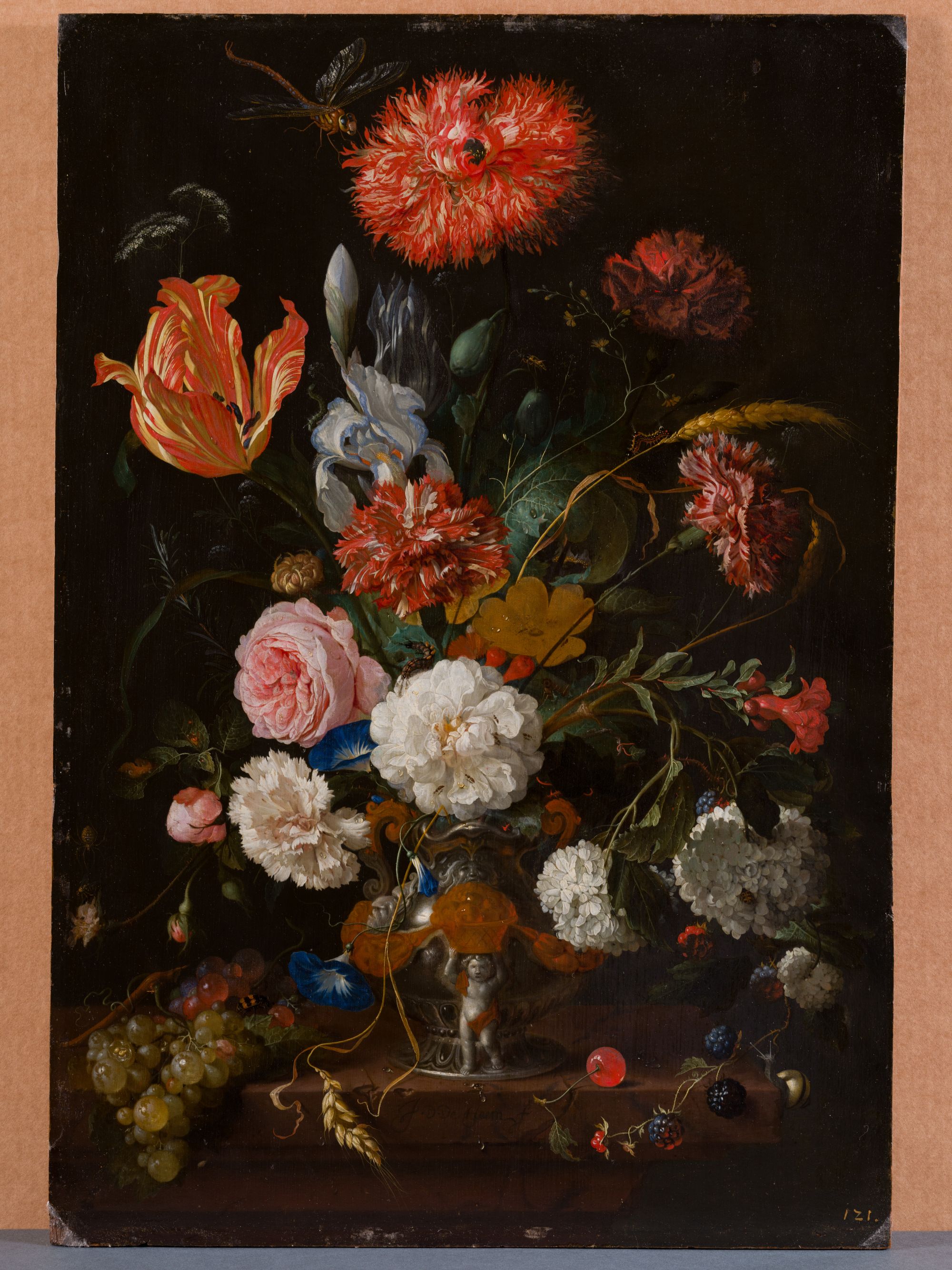
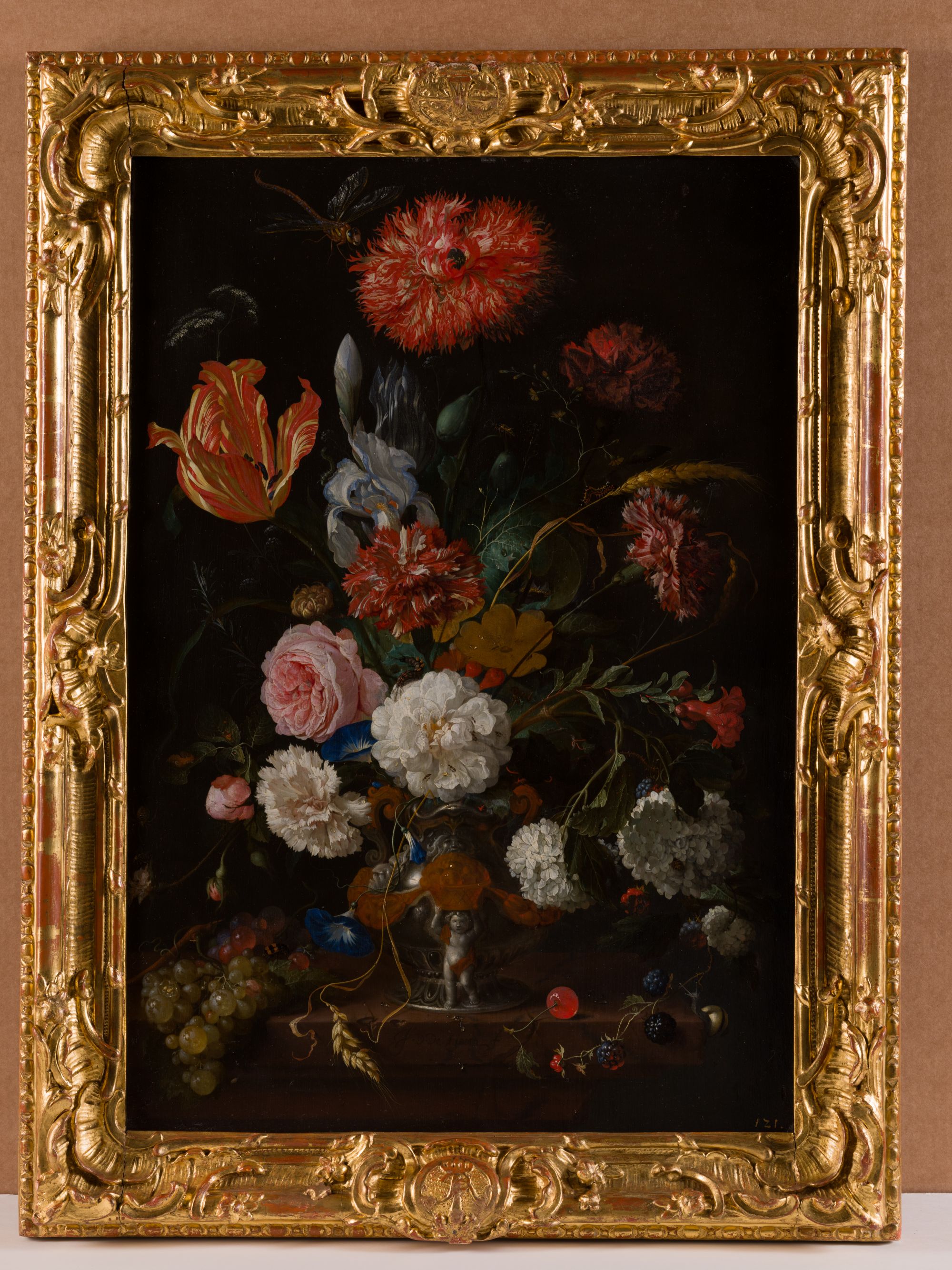
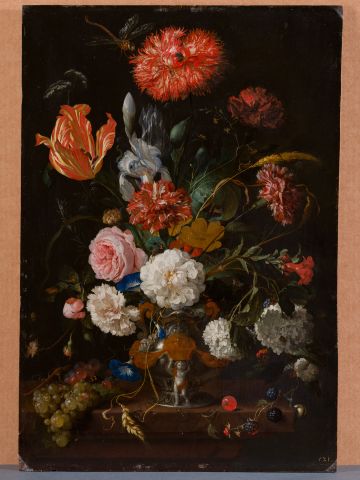
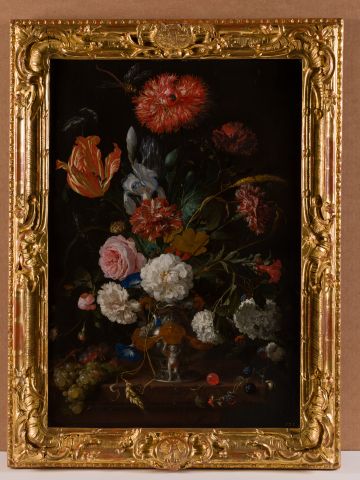
The still life from the Gallery's collection is a vertical composition of pink, red, white, and variegated flowers, placed in an elaborately decorated silver vase on a stone tabletop. The bouquet combines plants that bloom at different times of the year: a tulip, a poppy, pink and white roses, carnations, irises, morning glory, and a hydrangea. The flowers are rendered with botanical accuracy.
In the upper part of the painting, a dragonfly hovers over a lush flower. Tiny insects crawl across the petals and leaves. At the base of the vase lie ears of wheat, blackberries, cherries, and a cluster of white grapes. The central part of the vase is adorned with a sculptural figure of a small, naked putto (Cupid).
The deep, completely dark background creates a sharp contrast with the rich palette of vibrant shades.
On the front edge of the stone slab, the artist's signature "J. D. De Heem f", executed in dark paint, is visible.
Legal regulation
Borys Voznytskyi Lviv National Art Gallery