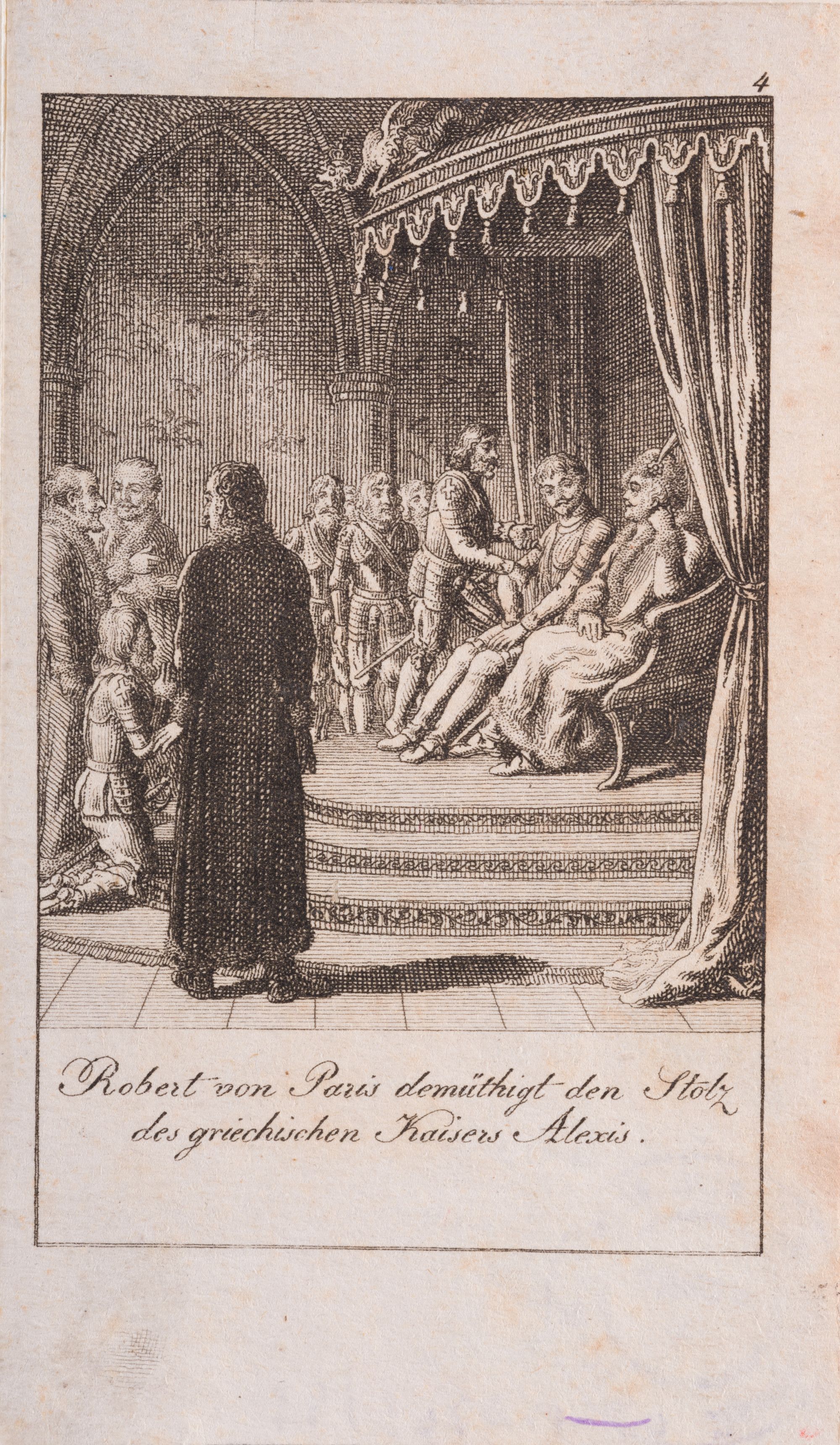
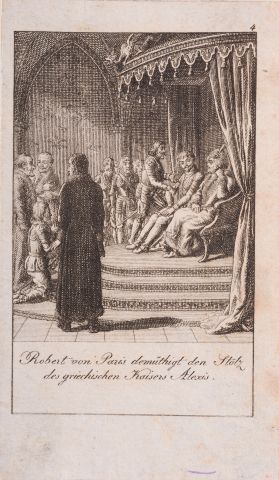
Scene Depicting the Crusades (Robert of Paris Humiliates the Haughty Greek Emperor Alexius)
Daniel Chodowiecki
Basic information
- ID
- Г-IV-1211
- Author
- Daniel Chodowiecki
- Name
- Scene Depicting the Crusades (Robert of Paris Humiliates the Haughty Greek Emperor Alexius)
- Date of creation
- late 18th c.
- Country
- Germany
- Technique
- сopper engraving
- Material
- paper
- Dimensions
- 9.5 x 5.6 cm (height x width)
Additionally
Information about author
Object description
When the Crusader forces arrived in Constantinople in 1096, Emperor Alexius I demanded that they swear an oath of fealty. The arrogant Western knights began to openly display their superiority. Count Robert of Paris even sat upon the imperial throne. The Basileus remained silent. Count Baldwin of Boulogne, the future King of Jerusalem, in order to avoid a scandal, forced Count Robert to apologise to the Byzantine Emperor.
The engraving depicts a scene inside the throne room. On the right, two figures are seated on the throne beneath a canopy. One of them is being seized by the elbow by a knight who has approached the throne from the left. This is Baldwin, who is forcing Robert to stand up so that he may apologise to the Basileus, seated on the right-hand side of the throne. Other knights have approached behind Baldwin.
One of the crusaders, depicted on the left, is kneeling before the steps leading up to the throne. Standing next to him are two men discussing the situation that has arisen. In the foreground, to the left of centre, is the figure of a man seen from behind, dressed in long, dark robes. He is holding something in his right hand, concealing the object behind his back. He may be a Byzantine official.
Inscriptions
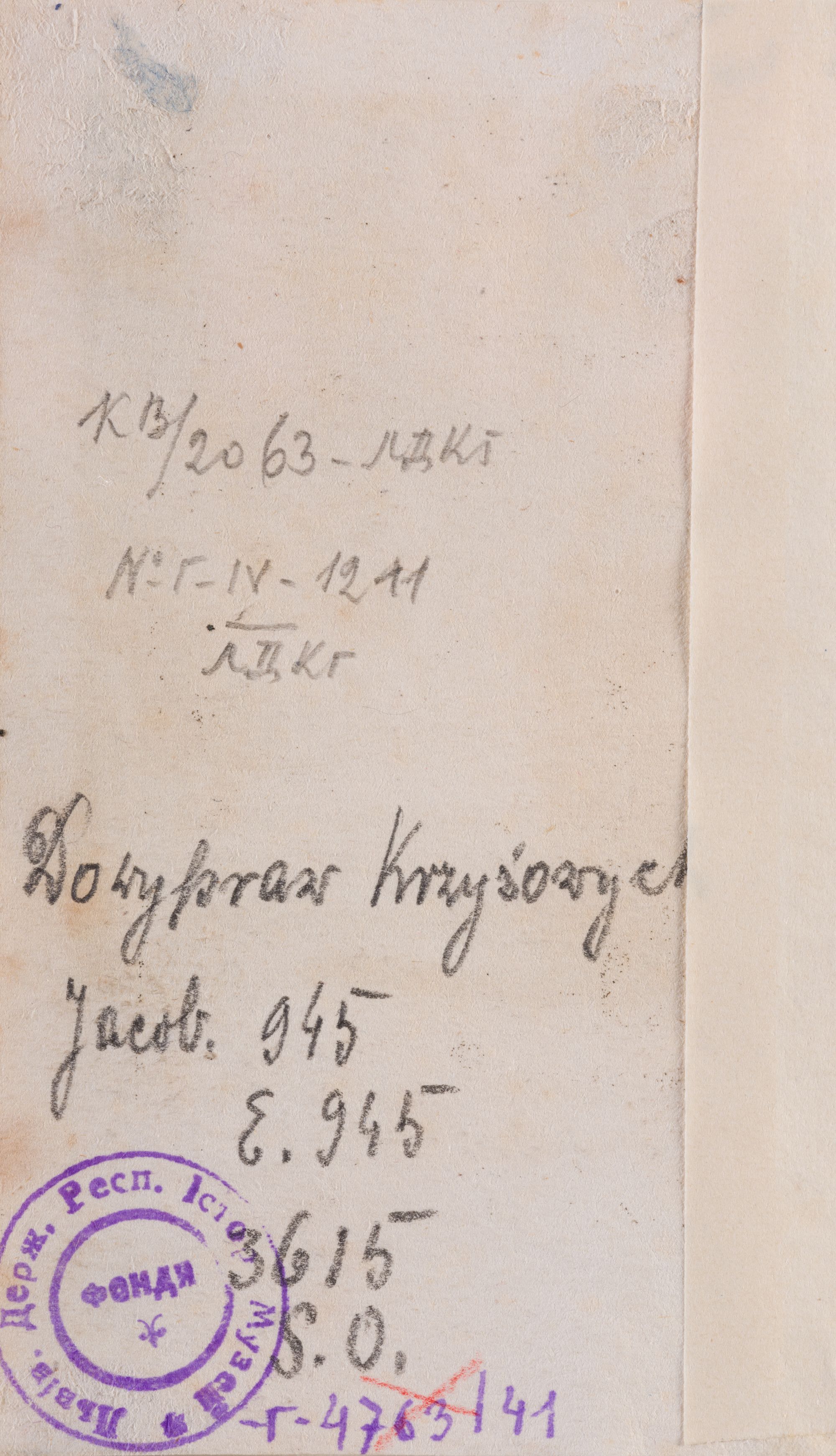
Below the image is the inscription: "Robert von Paris demüthigt den Stolz/ des griechischen Kaisers Alexis". On the reverse, at the top, are the inventory numbers of the Lviv Picture Gallery. Below, in the centre, are the inscriptions: "Do wypraw Krzyżowych", "Jacob. 945/ E. 945/ 3615/ S.O.". At the bottom left is the round seal of the Lviv State Republican Historical Museum's holdings; on the right – the historical museum's inventory number.
Legal regulation
Borys Voznytskyi Lviv National Art Gallery