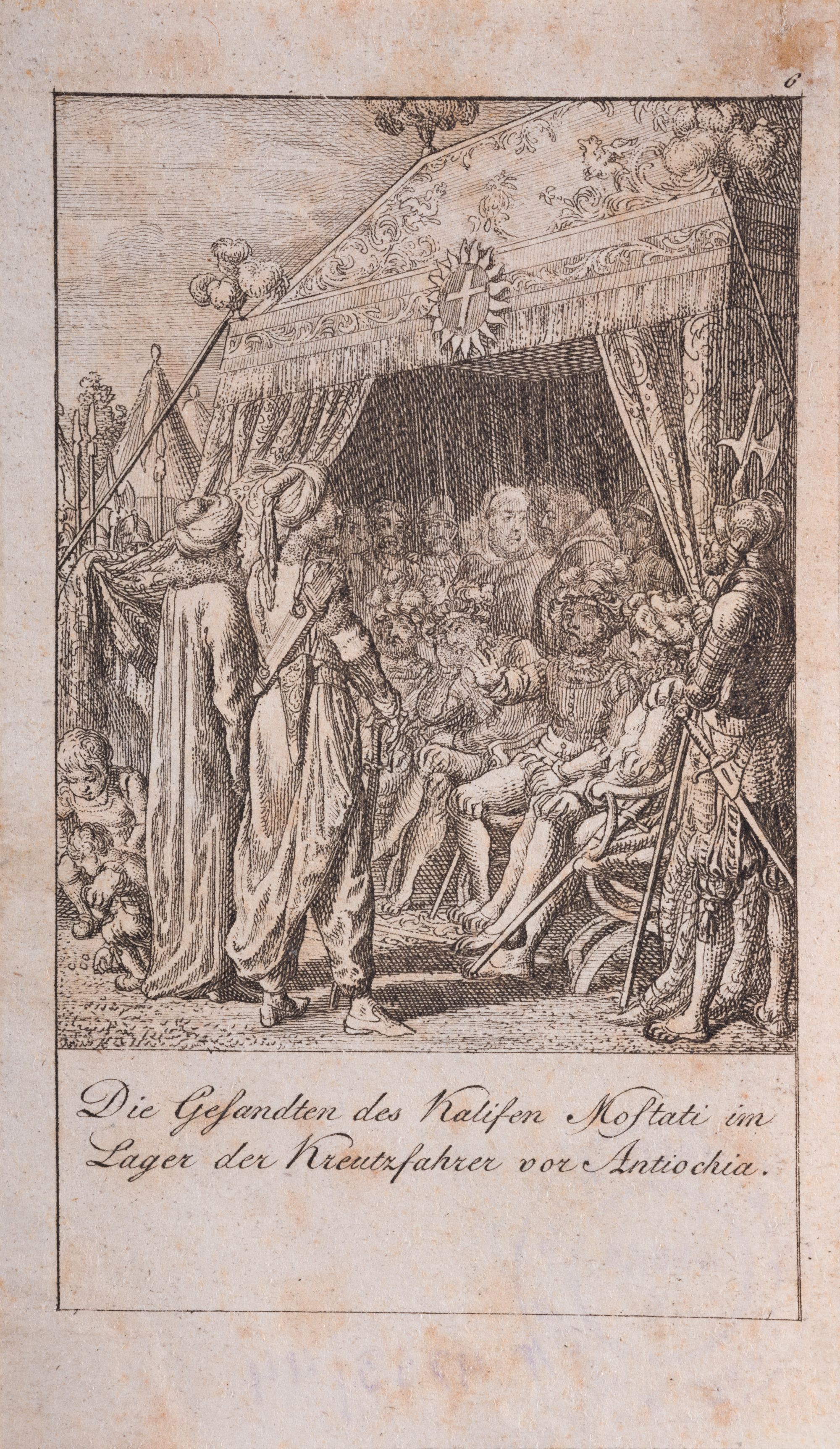
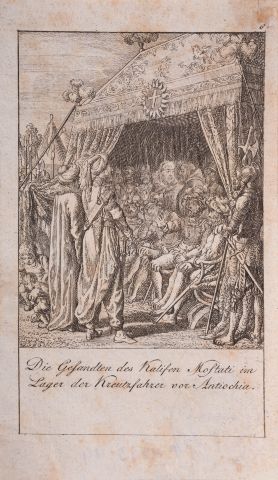
Scene Depicting the Crusades (Envoys of Caliph Mostati [al-Mustali] at the Crusaders' Camp near Antioch)
Daniel Chodowiecki
Basic information
- ID
- Г-IV-1214
- Author
- Daniel Chodowiecki
- Name
- Scene Depicting the Crusades (Envoys of Caliph Mostati [al-Mustali] at the Crusaders' Camp near Antioch)
- Date of creation
- late 18th c.
- Country
- Germany
- Technique
- сopper engraving
- Material
- paper
- Dimensions
- 9.4 x 5.5 cm (height x width)
Additionally
Information about author
Object description
In April 1098, envoys of al-Mustali, the Fatimid Caliph of Egypt, arrived at the Crusaders' camp near Antioch. They proposed that the Christians form a military alliance against their common enemy – the Seljuk Turks. However, the negotiations ended in failure due to differences over territorial interests.
The Crusaders were led by Prince Bohemund of Taranto. He is depicted in the engraving, seated on a throne in a magnificent tent. Behind him stand other knights and a priest, who stands out in the centre. On the left, the Caliph's envoys have approached the tent. They are depicted wearing long cloaks and salwar suits, with turbans on their heads.
At the left-hand edge of the engraving are small children playing with pebbles. On the right stands a warrior-guard in armour and a helmet, holding a halberd and with a sword at his belt.
Inscriptions
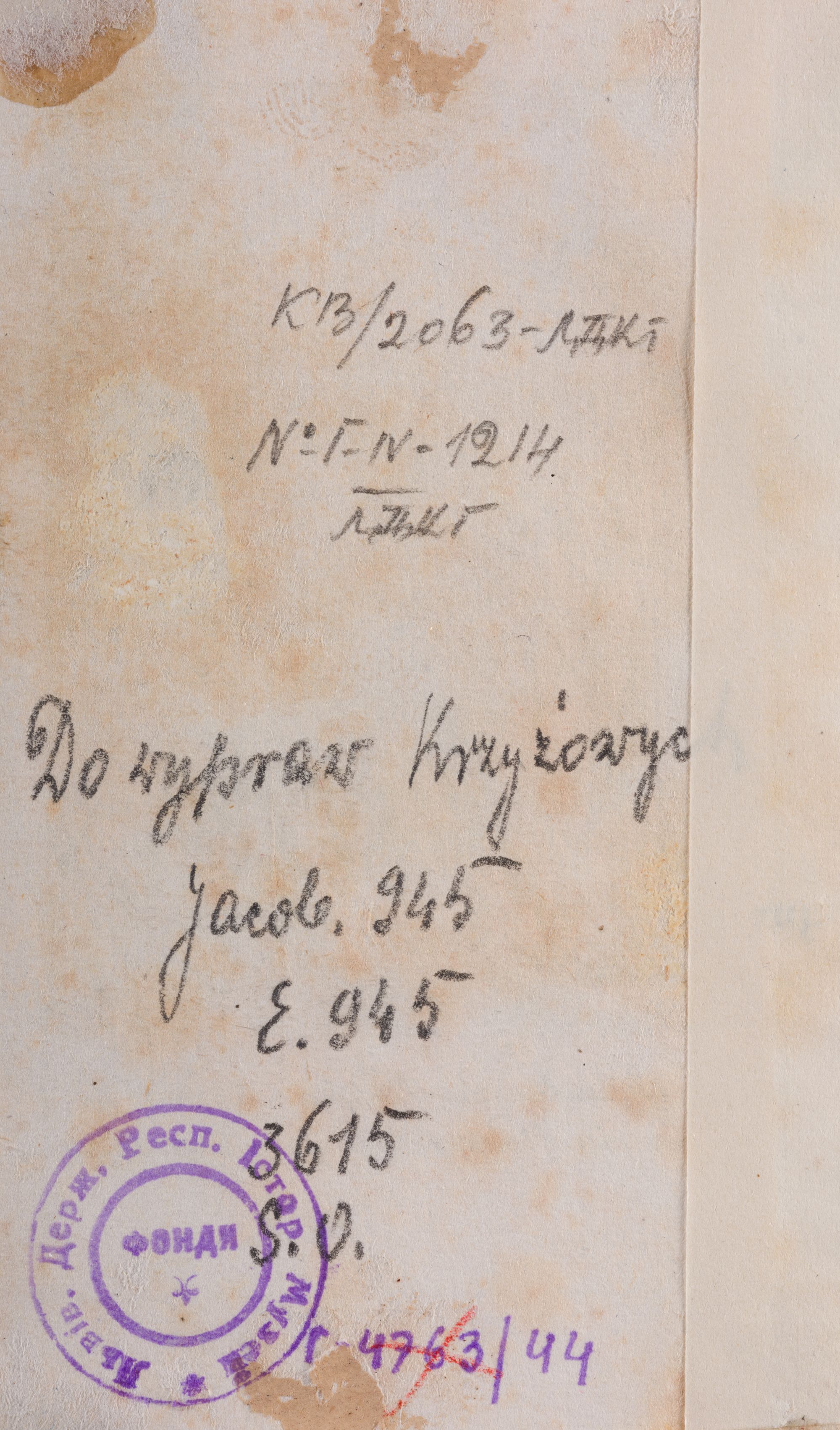
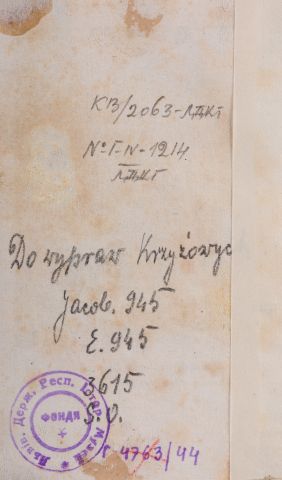
Below the image is the inscription: "Die Gesandten des Kalifen Mostati im/ Lager der Kreutzfahrer vor Antiochia". On the reverse, at the top, are the inventory numbers of the Lviv Picture Gallery. Below, in the centre, are the inscriptions: "Do wypraw Krzyżowych", "Jacob. 945/ E. 945/ 3615/ S.O.". At the bottom left is the round seal of the Lviv State Republican Historical Museum's holdings; on the right – the historical museum's inventory number.
Legal regulation
Borys Voznytskyi Lviv National Art Gallery