Death Sentence of Konradin of Swabia and Friedrich of Austria
Daniel Chodowiecki
Basic information
- ID
- Г-IV-2707
- Author
- Daniel Chodowiecki
- Name
- Death Sentence of Konradin of Swabia and Friedrich of Austria
- Country
- Germany
- Technique
- etching
- Material
- paper
- Dimensions
- 8.6 x 5.1 cm (height x width)
Additionally
- Type
- engraving
- Genre
- history painting
- Provenance
- Purchased from O. Bushel, 1977
Information about author
Object description
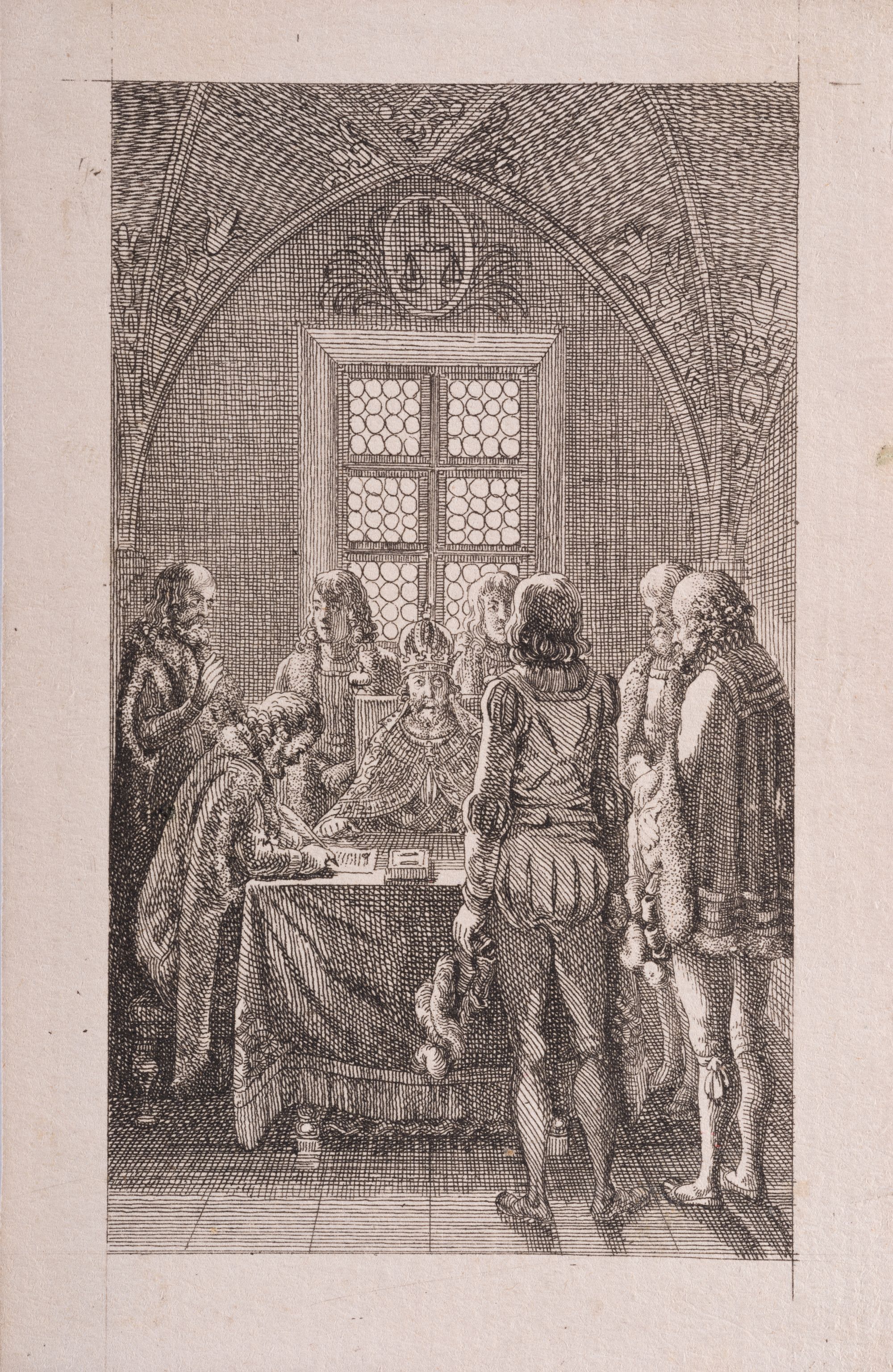
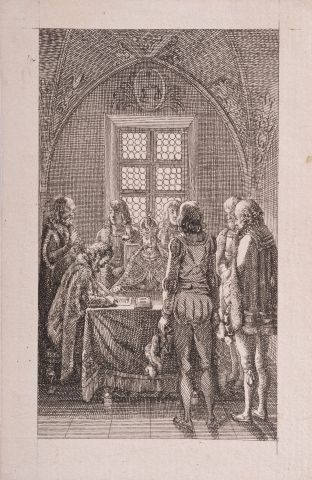
A work from the series "Ancient, Medieval and Modern History" ("Ältere, Mittlere und Neuere Geschichte"). The artist has depicted a historical event that took place in Naples in 1268. Following a victorious battle, Charles I of Anjou, King of Naples and Sicily, took his enemies – two young dukes – captive: the 16-year-old Konradin of Hohenstaufen, Duke of Swabia, and the 18-year-old Frederick of Baden (of Austria). Konradin had launched a campaign against Charles to defend his legitimate claims to Sicily. However, he lost the battle, after which Charles put the young men on trial, summoning lawyers from many Italian cities. Although a number of judges were opposed to the death sentence, the king forced them to pass it.
To illustrate this shameful event, Daniel Chodowiecki depicted Charles, wearing a robe and crown, seated at a table in the centre of the composition. With his hands resting on the table, the monarch looks at a young knight, shown from behind – presumably Duke Konradin – and pronounces the sentence. Standing next to Konradin is an older man who bears no resemblance to the young Frederick. At the table to the king's right is a scribe writing down the verdict on a sheet of paper. Behind the royal throne stand three figures of varying ages. The scene takes place in front of a window within an interior featuring a Gothic vaulted ceiling. This is Castel dell'Ovo, where trials were held in medieval Naples. Above the window is a cartouche, on whose oval shield are depicted scales with weights as a symbol of a fair trial.
To illustrate this shameful event, Daniel Chodowiecki depicted Charles, wearing a robe and crown, seated at a table in the centre of the composition. With his hands resting on the table, the monarch looks at a young knight, shown from behind – presumably Duke Konradin – and pronounces the sentence. Standing next to Konradin is an older man who bears no resemblance to the young Frederick. At the table to the king's right is a scribe writing down the verdict on a sheet of paper. Behind the royal throne stand three figures of varying ages. The scene takes place in front of a window within an interior featuring a Gothic vaulted ceiling. This is Castel dell'Ovo, where trials were held in medieval Naples. Above the window is a cartouche, on whose oval shield are depicted scales with weights as a symbol of a fair trial.
Inscriptions
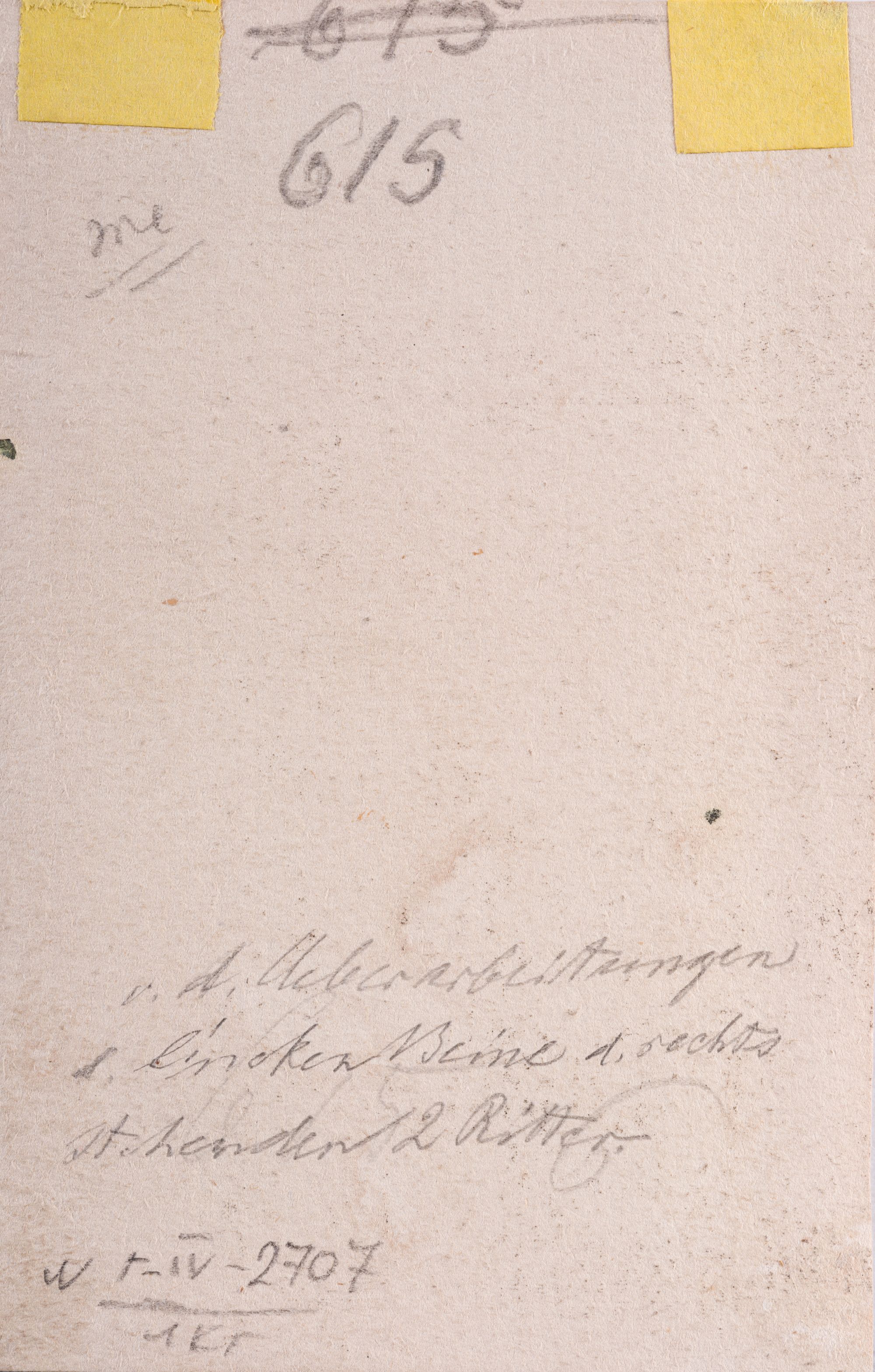
On the reverse of the sheet, there is an illegible inscription in pencil in German cursive, in Kurrent script. Only individual words and phrases can be deciphered: "d. Ueberschreitungen"; "d. linken Beine d. rechts"; "stehenden 2 Ritter". Below, the inventory number of the Lviv Picture Gallery is indicated in pencil.
Legal regulation
Borys Voznytskyi Lviv National Art Gallery