St Paraskeva
unknown
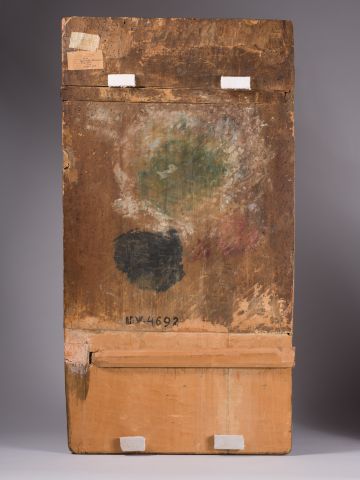
Basic information
- ID
- Ж-4692
- Author
- unknown
- Name
- St Paraskeva
- Date of creation
- 15th c.
- Country
- Ukraine
- Technique
- tempera painting
- Material
- wood tempera
- Dimensions
- 92 x 57 cm (height x width)
Additionally
- Type
- painting
- Genre
- religious
- Plot
- Saint Paraskeva
- Provenance
- Kulchytsi village, Sambir district, Lviv region
- Exposition
- Olesko Castle
Information about author
Object description
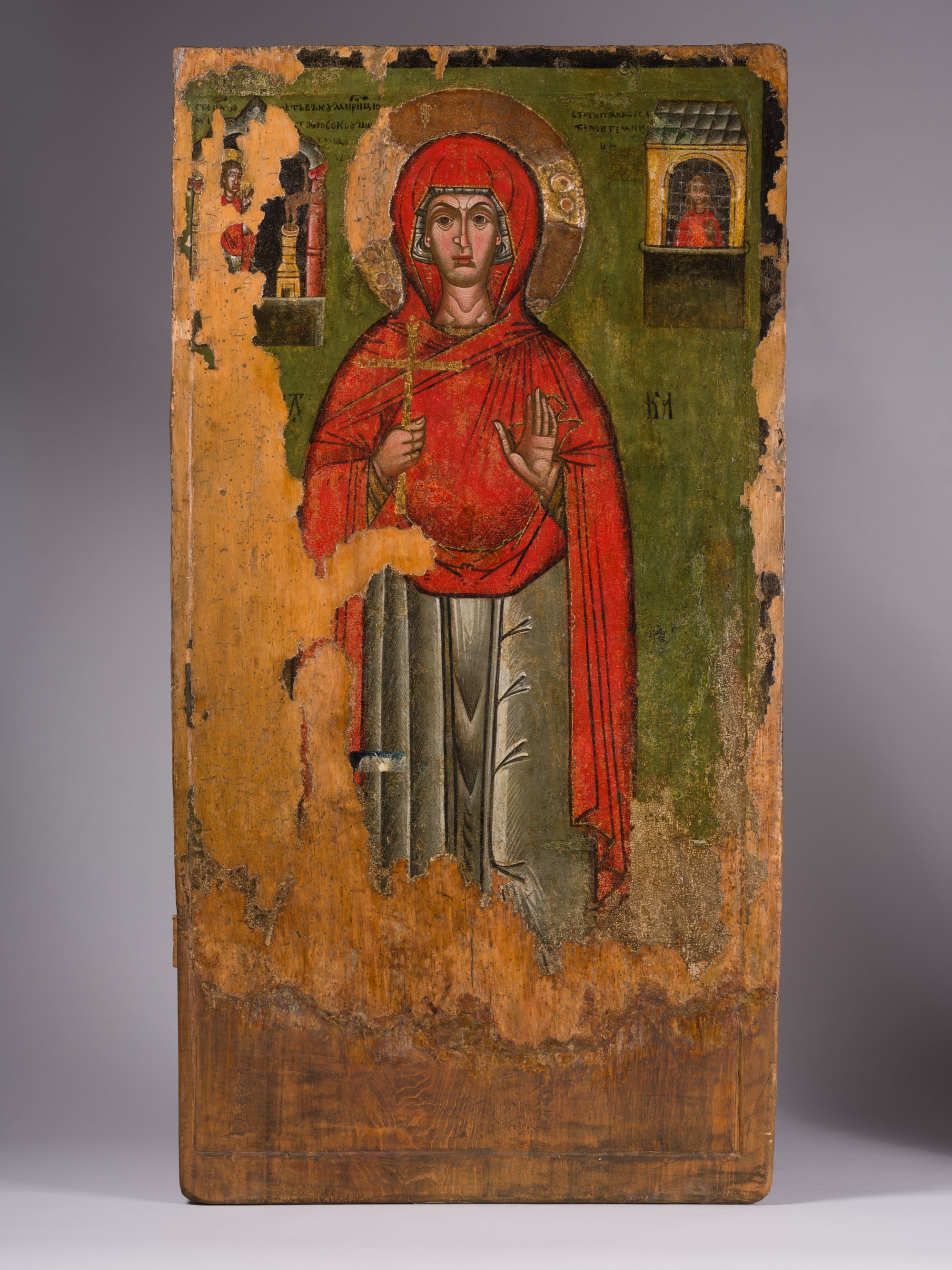
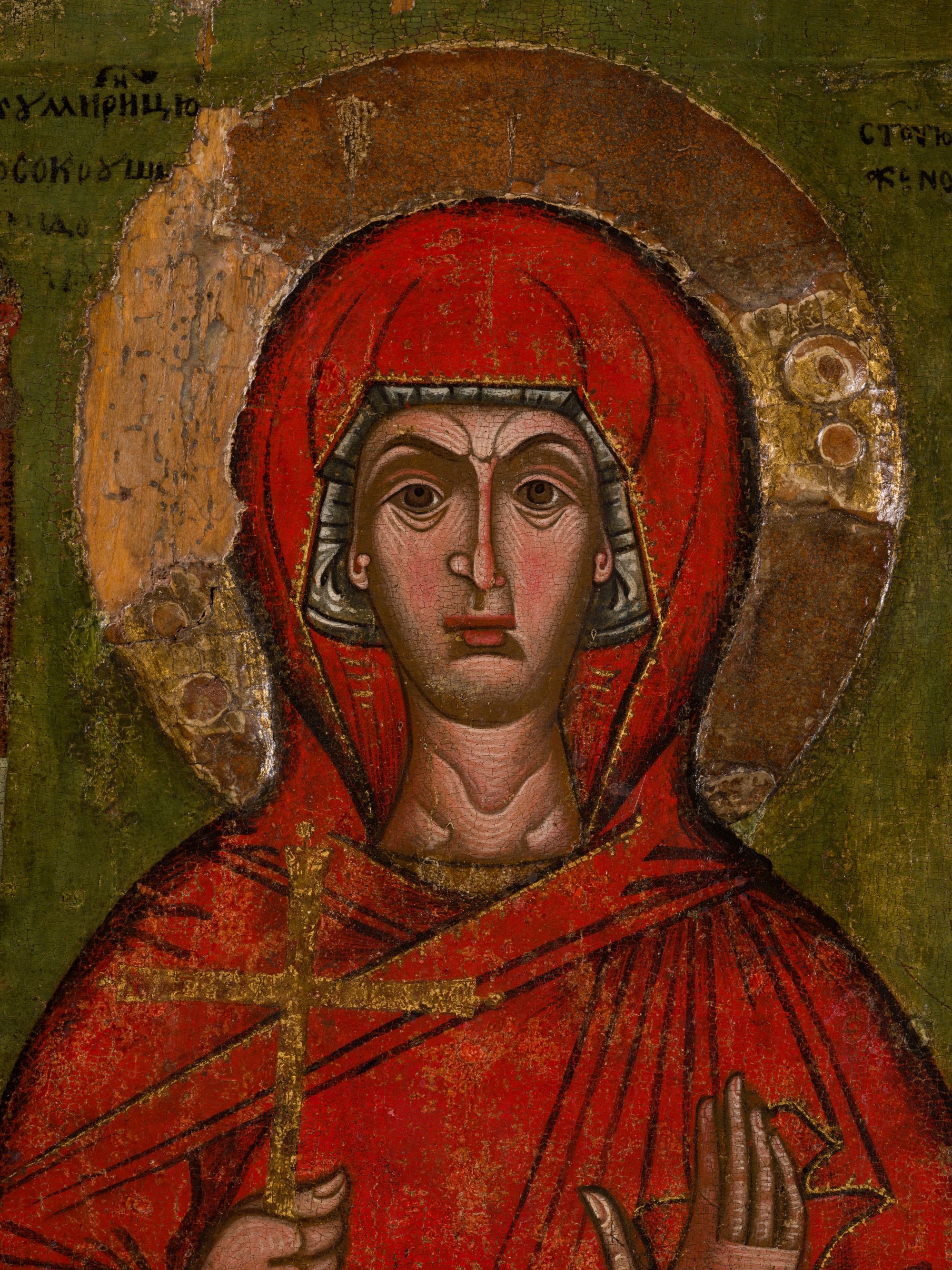
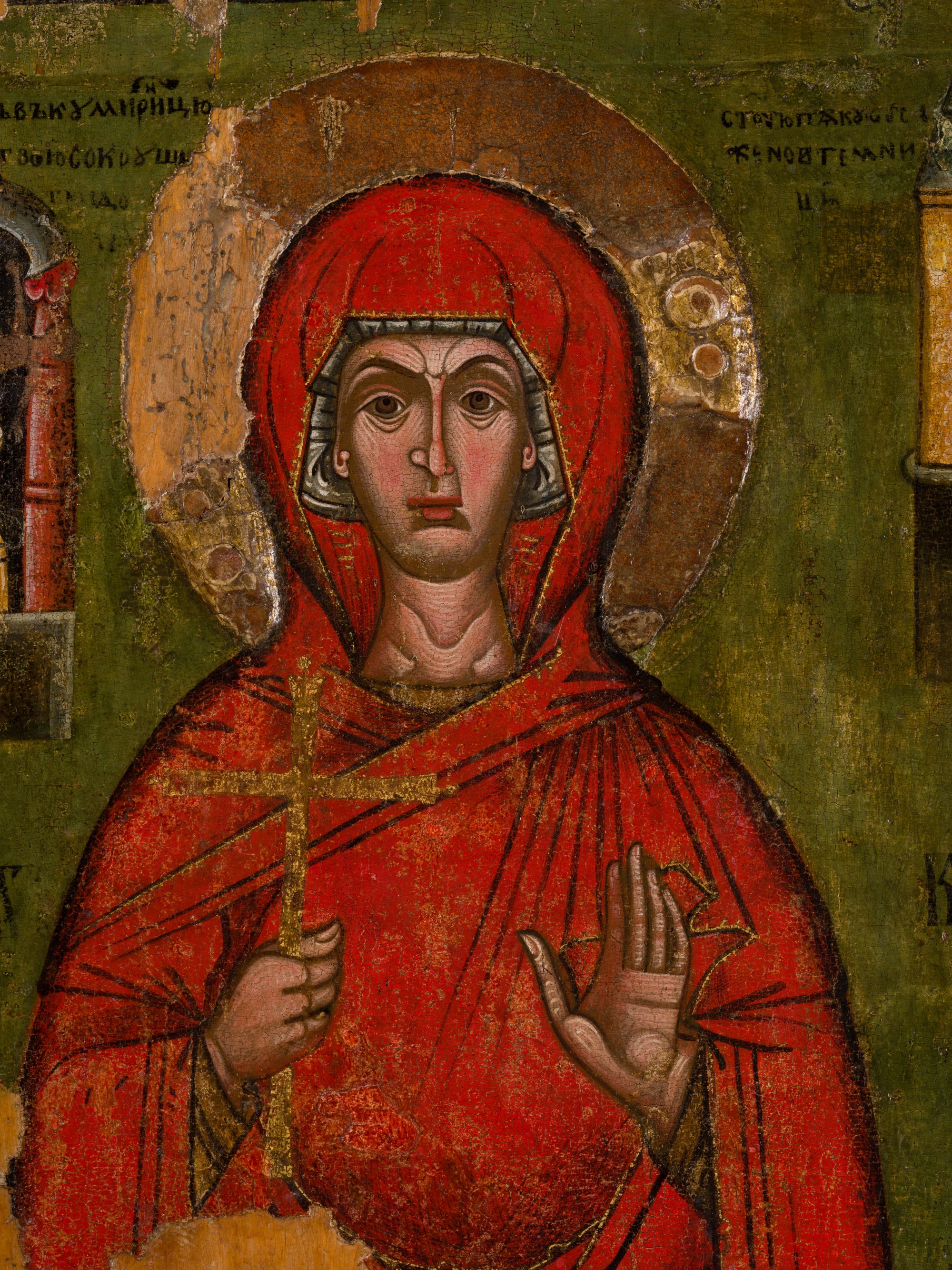
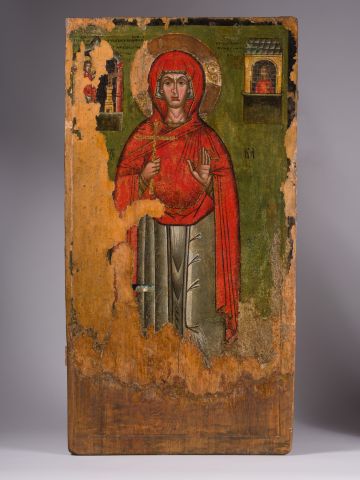
The icon of St Paraskeva Pyatnytsia is a unique specimen of the archaic period of Ukrainian medieval painting, belonging to the treasury of the Galician school of icon painting. The recessed central panel of the icon showcases an iconographic, full-length frontal depiction of the holy great martyr. The background features a noble dark green hue that creates an effect of depth, pushing the depicted figure into the foreground. Scenes from the life of Paraskeva are positioned in the upper section.
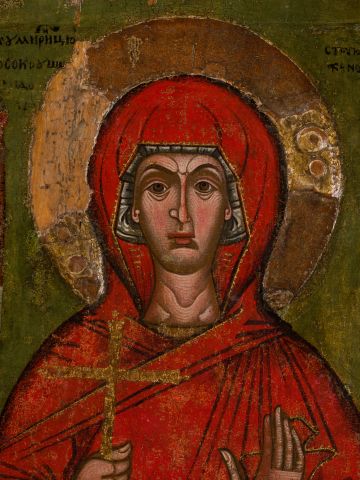
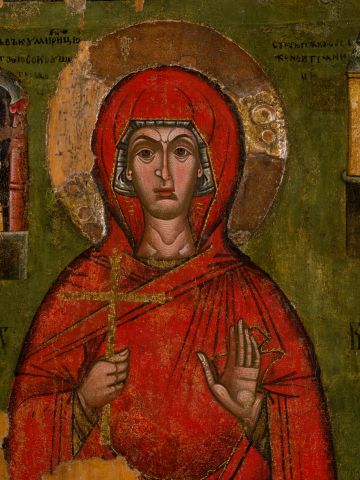
The saint is depicted wearing a greyish-blue chiton, modelled with concise, sharp graphic folds. Over the chiton, a bright red maphorion (of a cinnabar hue) envelops the head and shoulders of the saint, leaving only her hands exposed. Fragments of a relief-worked halo have been preserved around her head. In her right hand, Paraskeva holds a cross – an indisputable testament to her suffering for the Christian faith. The left hand is raised to chest level with the palm facing the viewer, a gesture traditionally interpreted as a sign of accepting divine grace, a testament to righteousness, and a readiness to hear prayer.
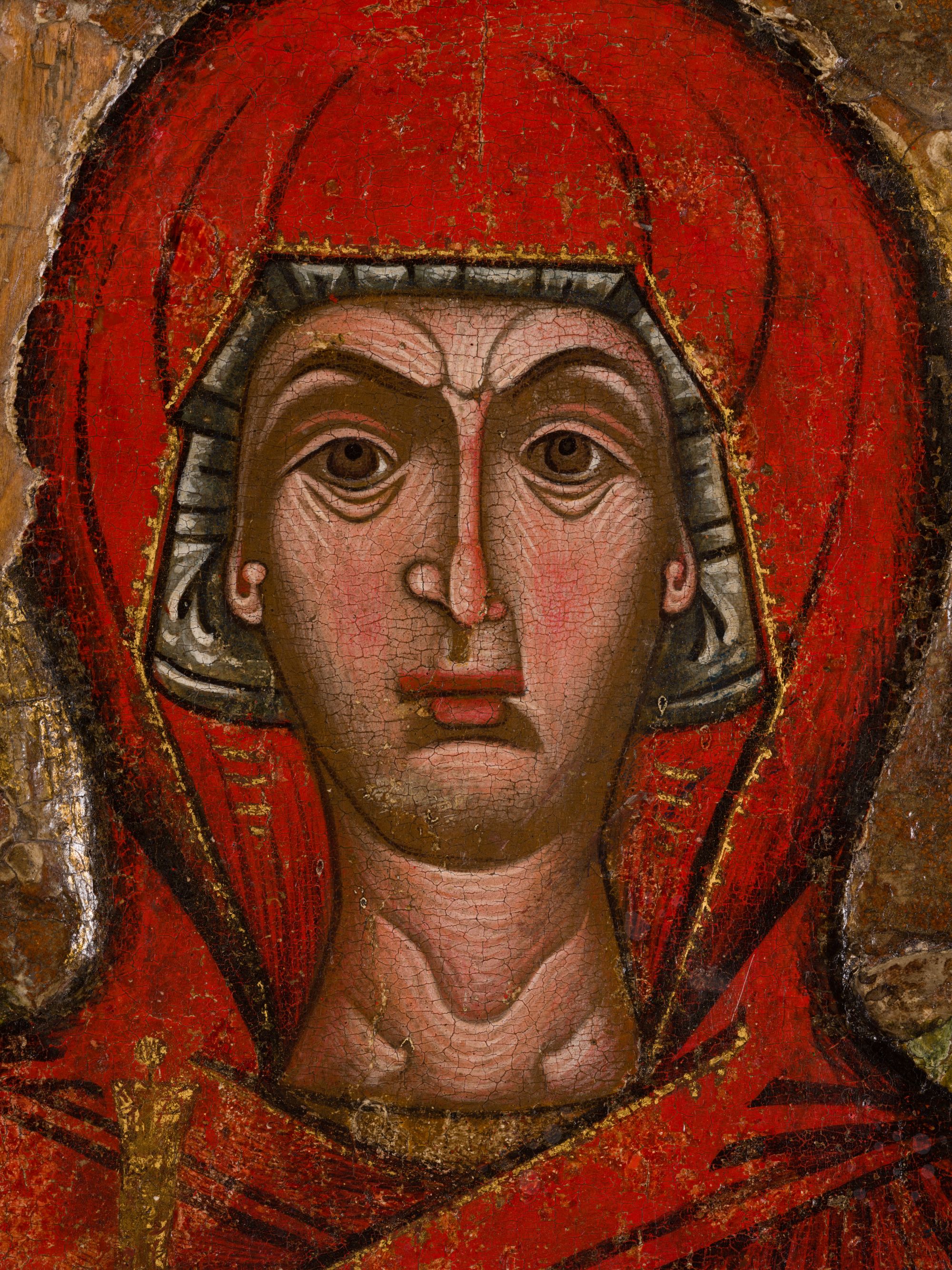
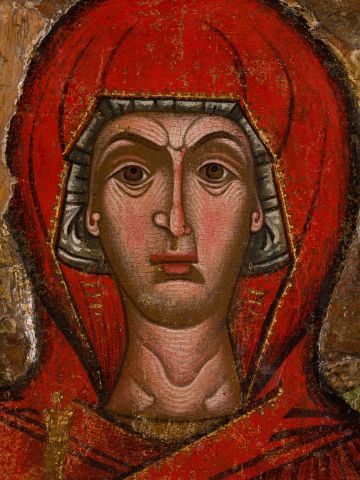
The face of the saint is a striking feature of the artwork. The gaze of her large, wide-open almond eyes is directed not at the viewer but slightly to the side, indicating a detachment from the material world. There is no fear in her eyes – only an unwavering inner strength, asceticism, and sorrowful wisdom are palpable. The image is stripped of superfluous decorativeness, focusing primary attention on capturing a deep mystical experience and the resilience of the human spirit in the face of trials.
The contours of the face, slender elegant fingers, nose, and brow line are outlined with expressive, dark graphic lines. These elements point to the stylistic specifics of the work, reflecting a linear-graphic style of painting that connects the icon to Byzantine monumental fresco painting.
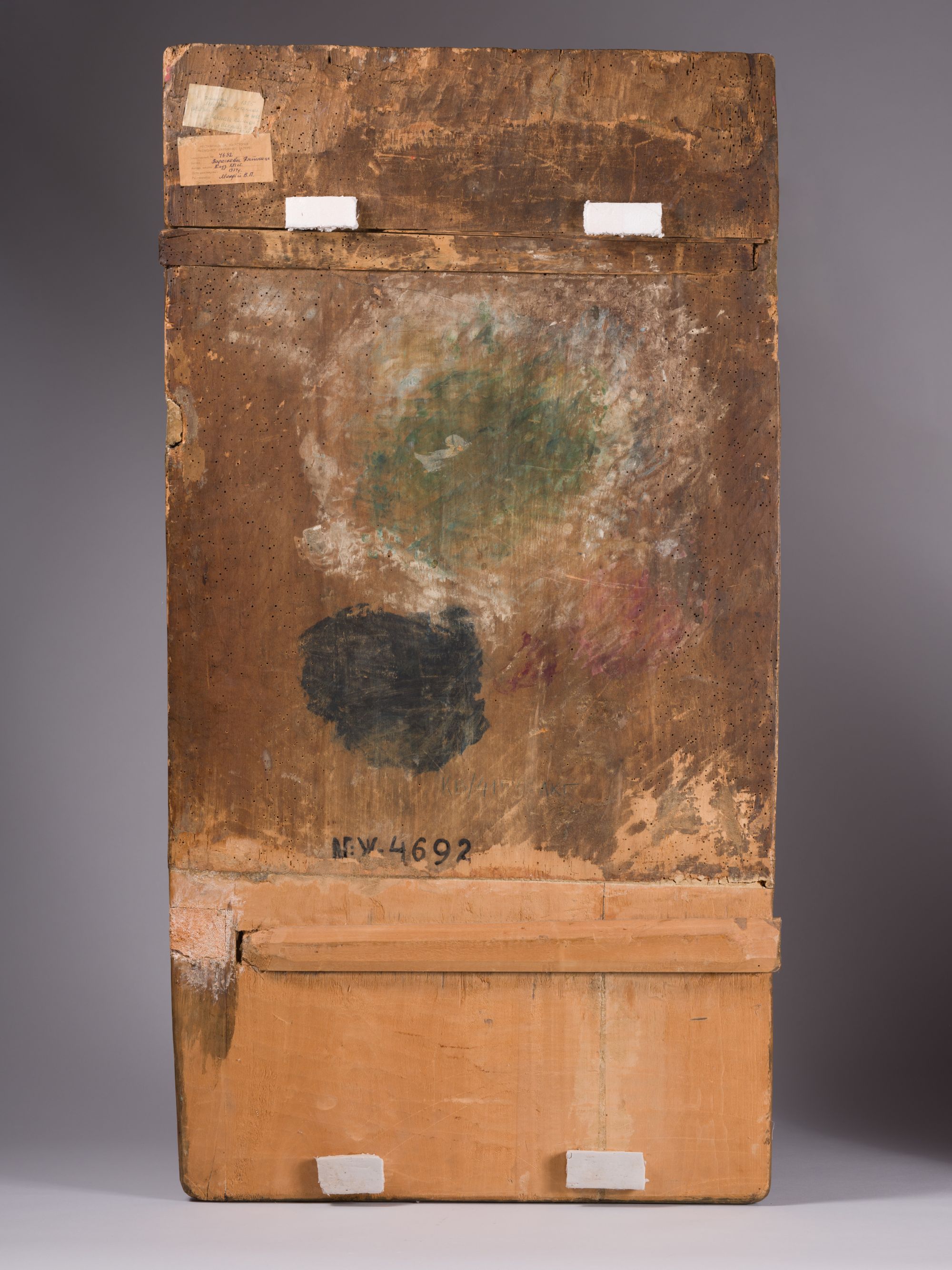
The artwork entered the Gallery's collection in the 1960s in a complex condition: the image was severely damaged, and the lower section of the work was completely destroyed.
Legal regulation
Borys Voznytskyi Lviv National Art Gallery