Virgin Enthroned
unknown
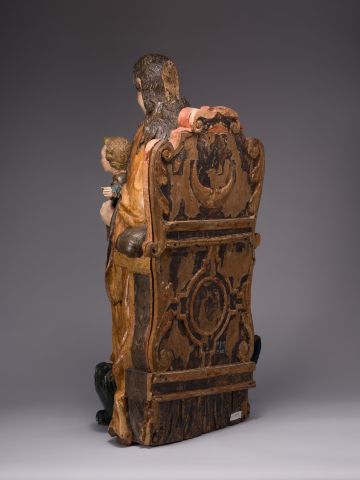
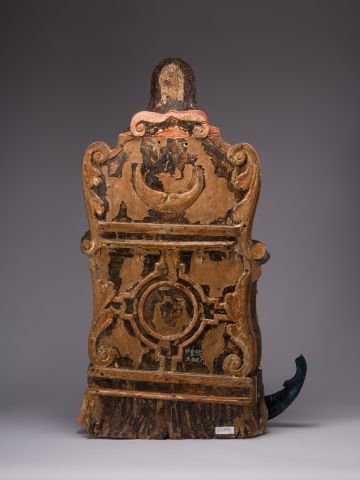
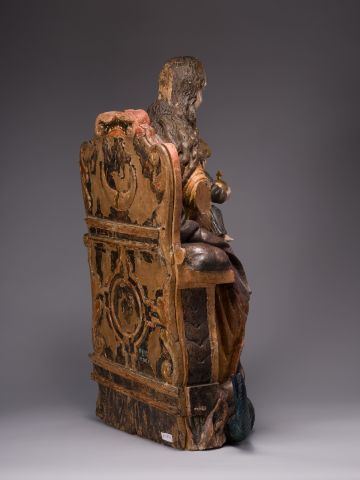
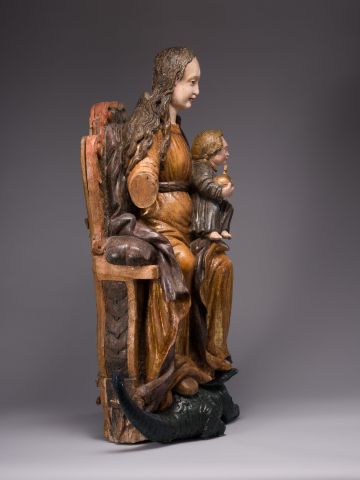
Basic information
- ID
- С-I-374
- Author
- unknown
- Name
- Virgin Enthroned
- Date of creation
- 16th c.
- Technique
- carving polychromy
- Material
- wood
- Dimensions
- 86 x 50 x 30 cm (height x width x depth)
Additionally
- Type
- sculpture
- Genre
- religious
- Provenance
- Collection of Lviv Archdiocesan Museum
- Exposition
- Olesko Castle
Information about author
Object description
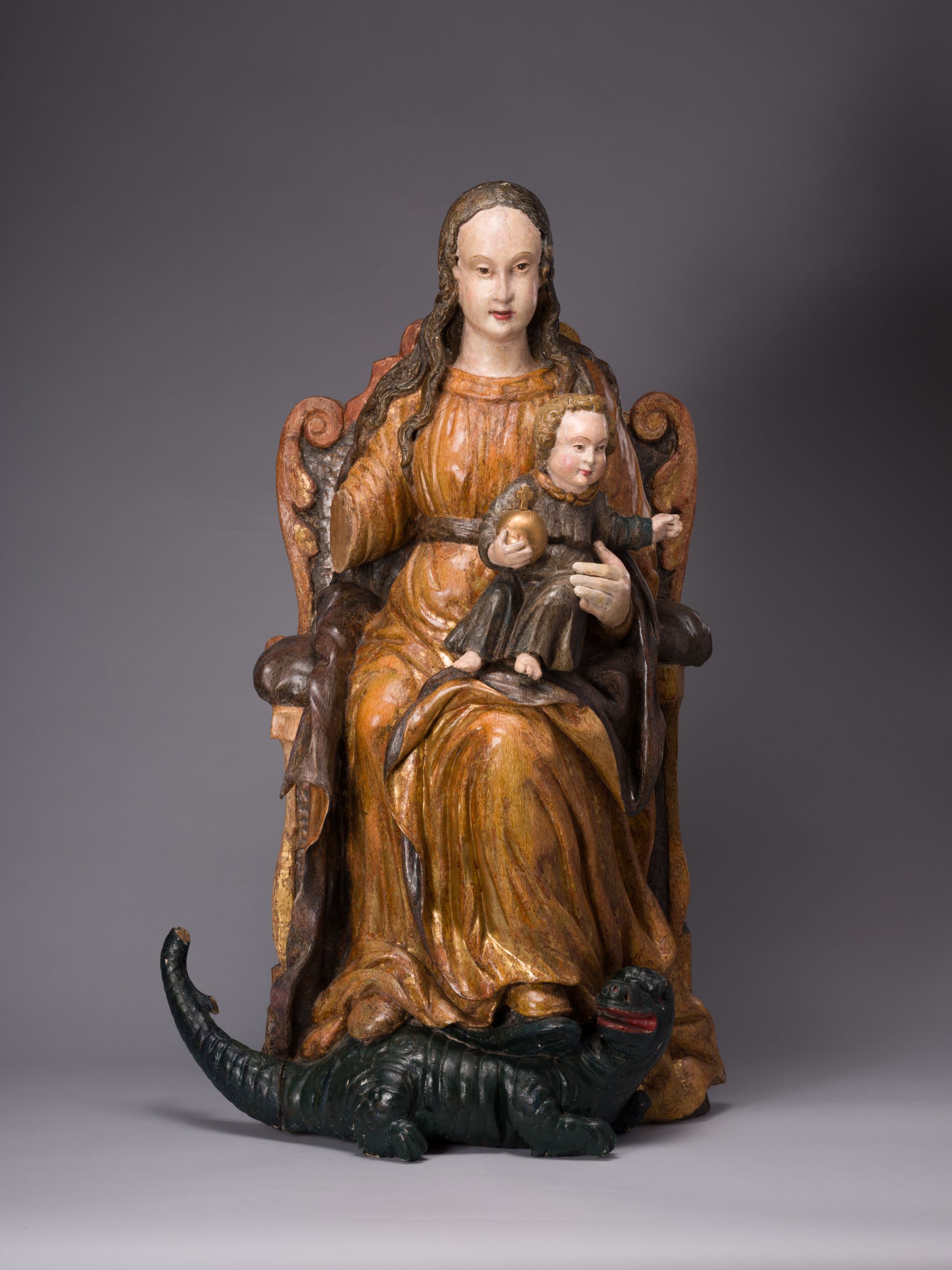
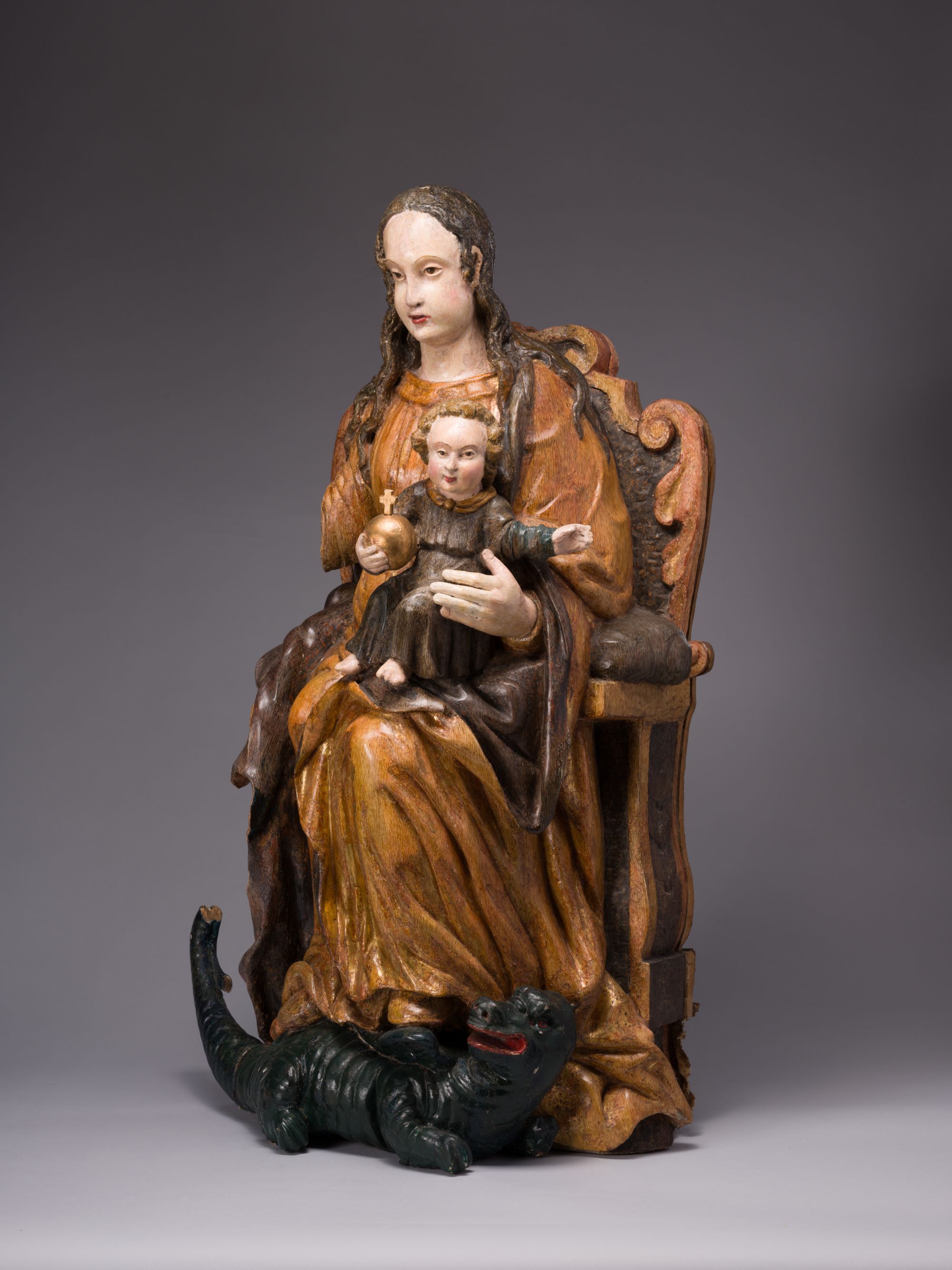
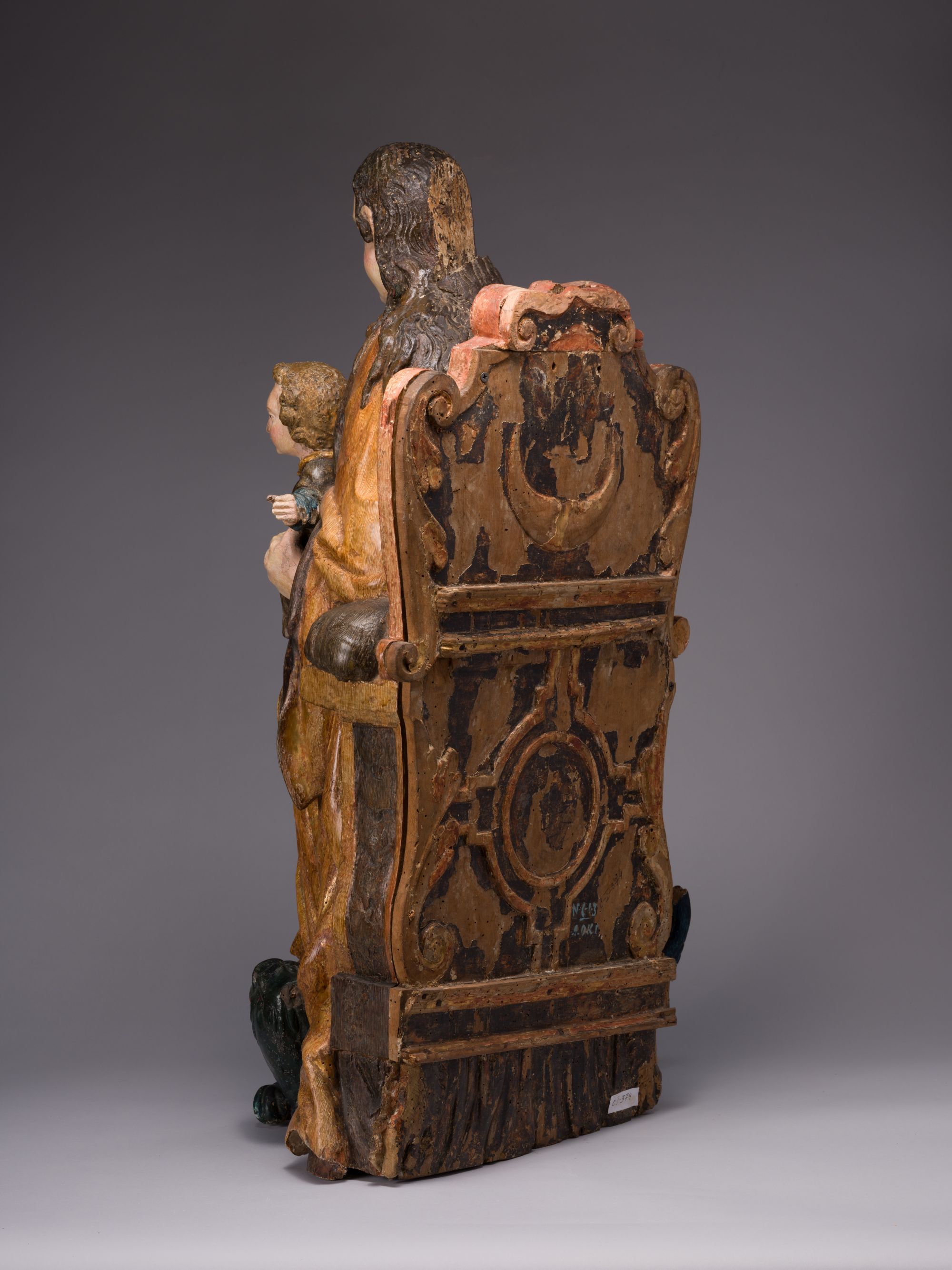
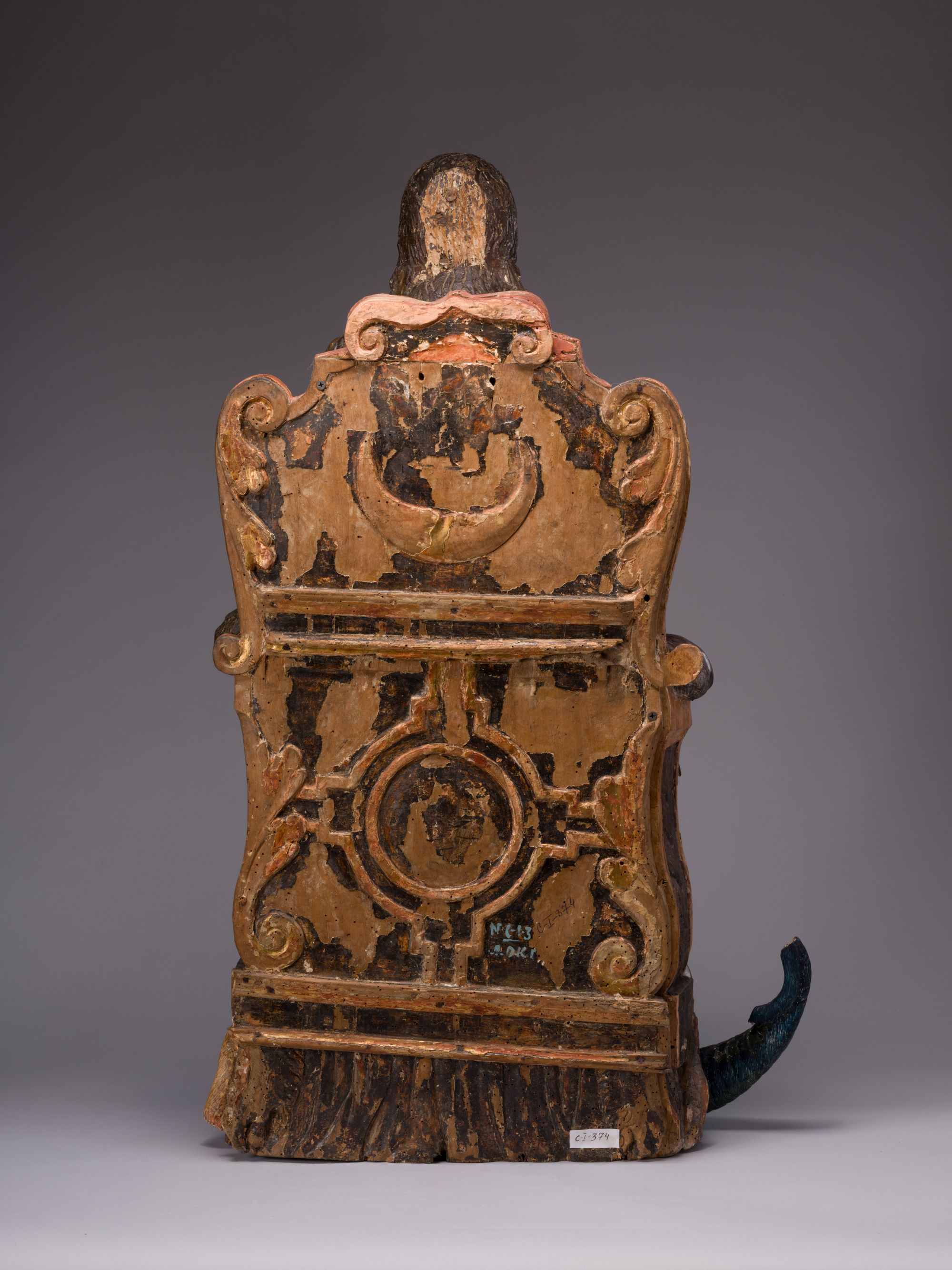
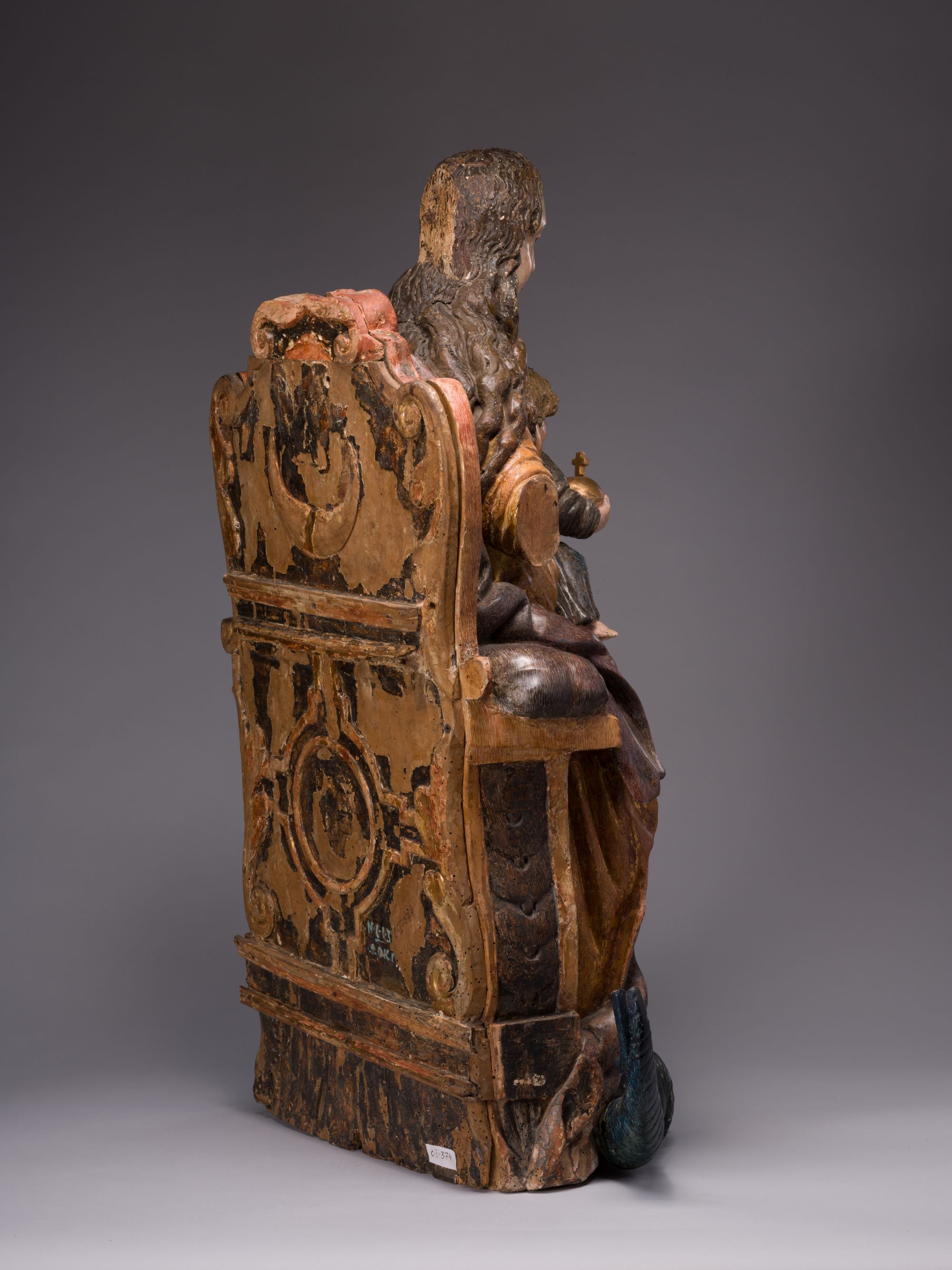
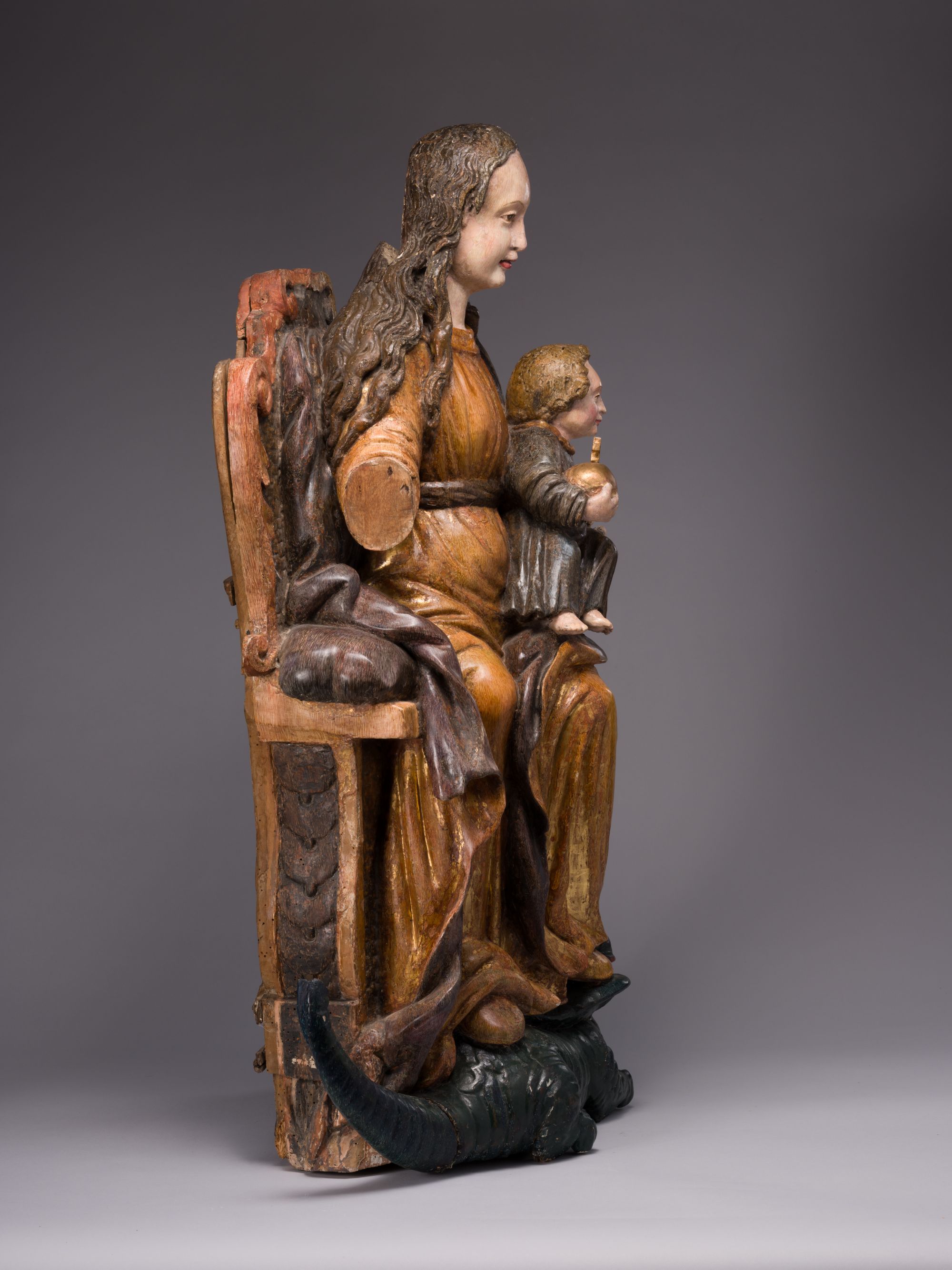
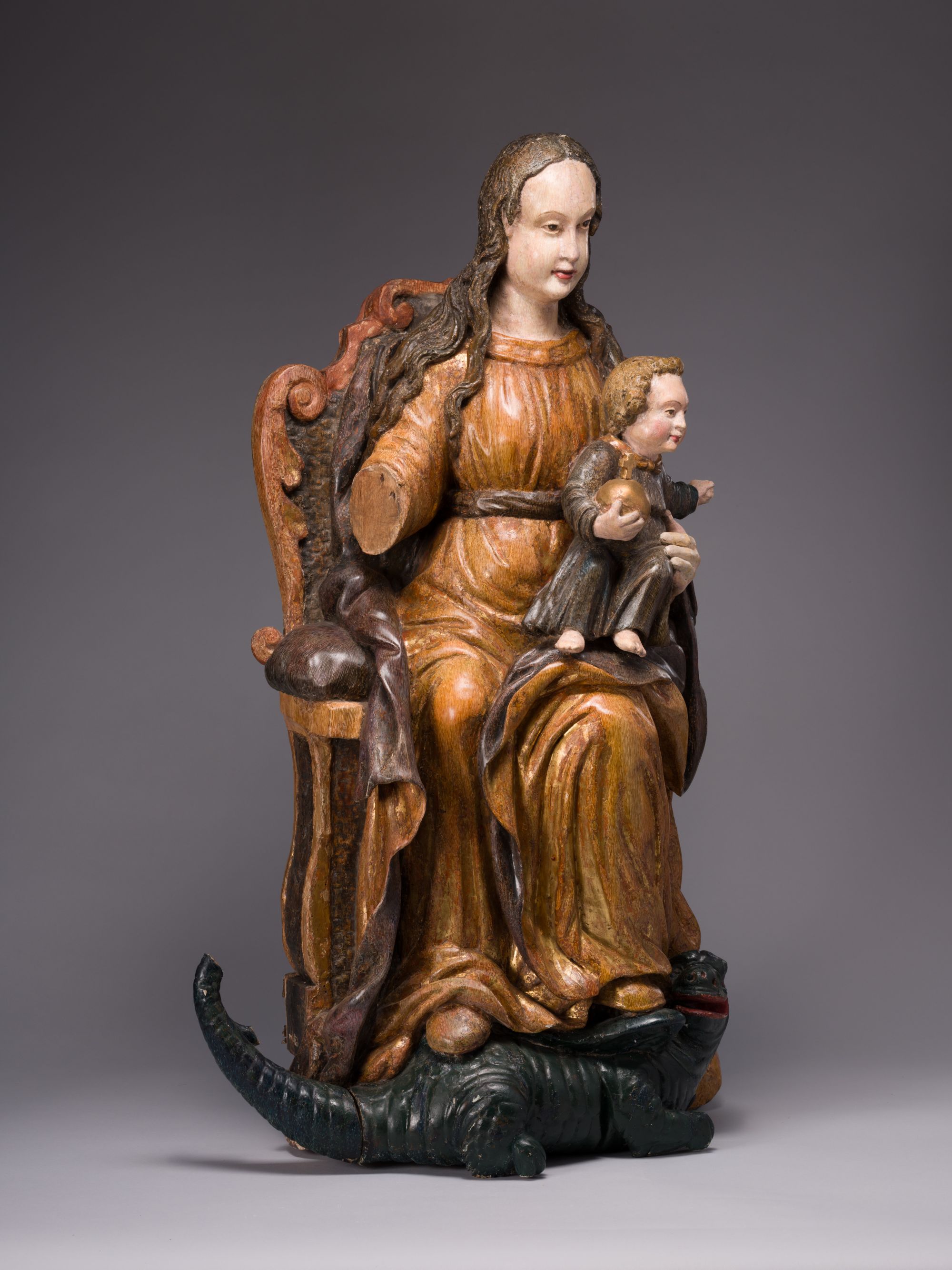
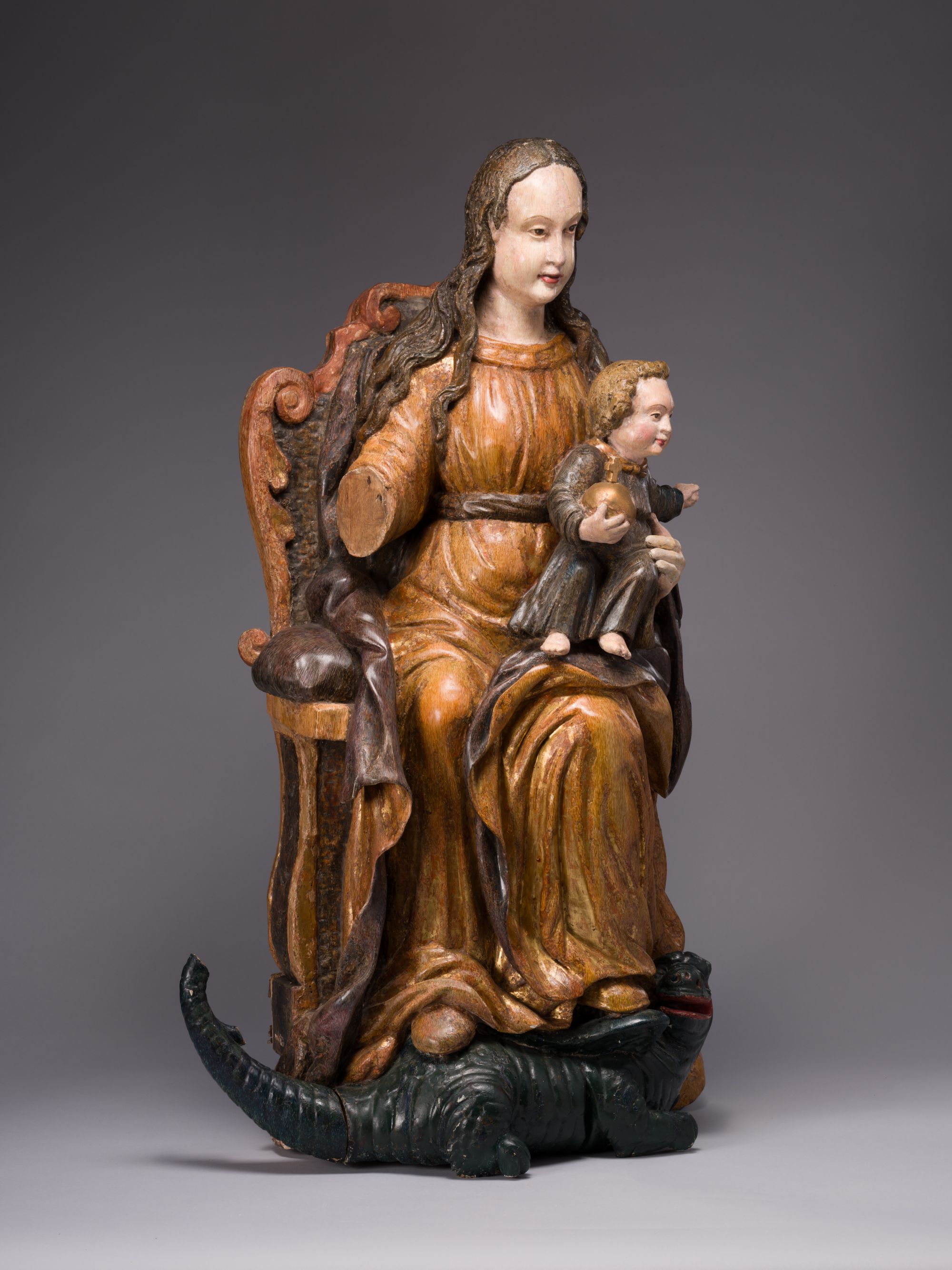
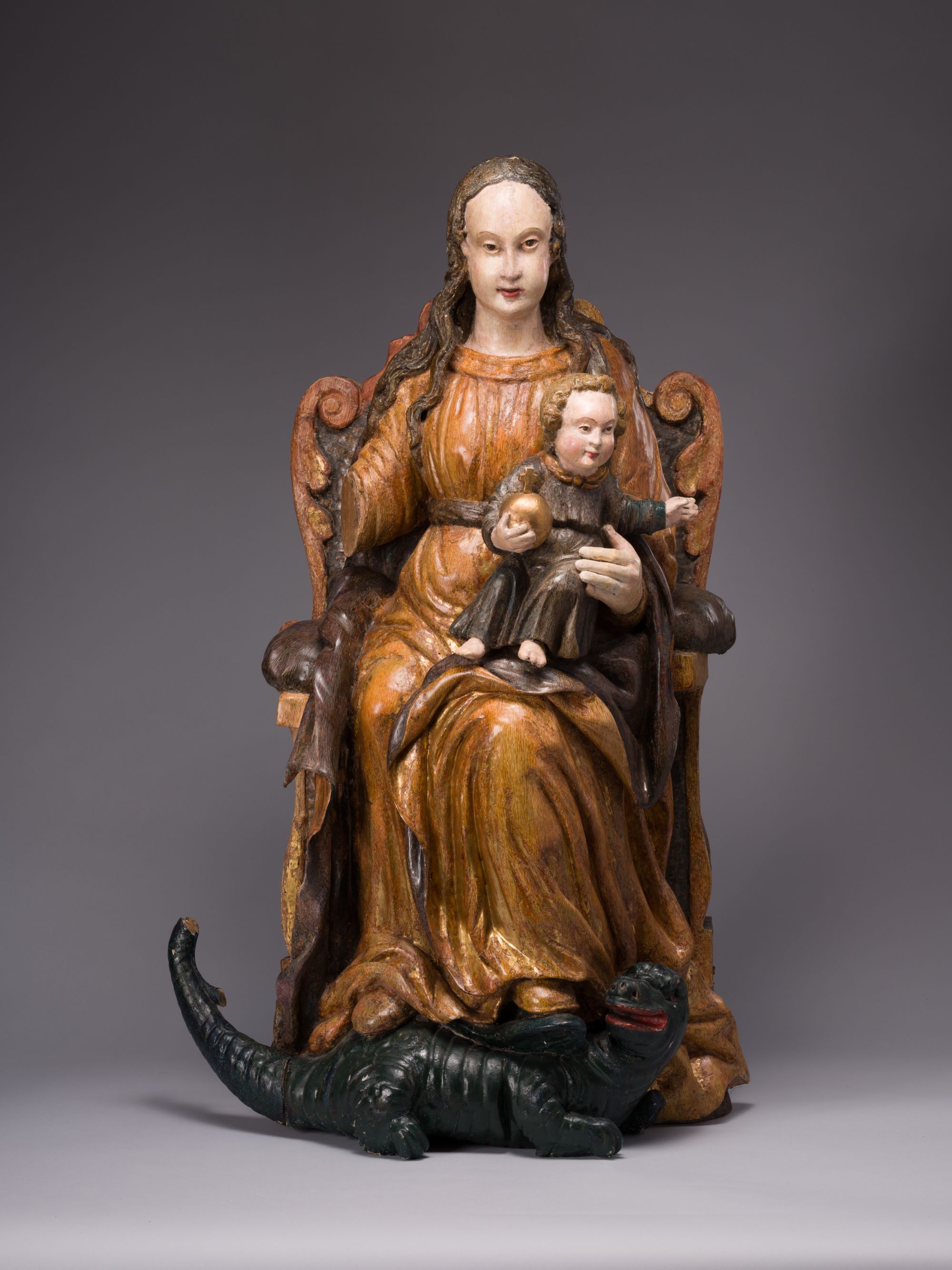
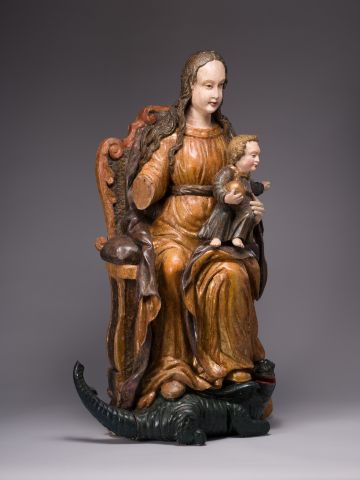
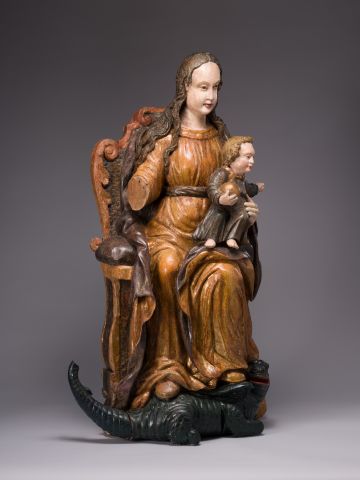
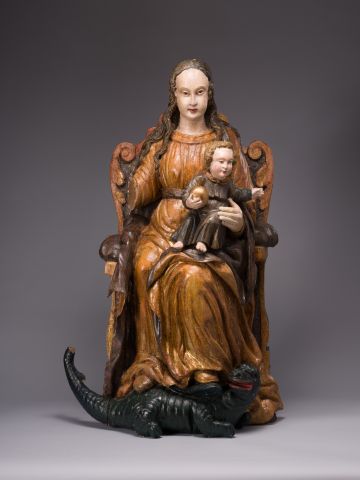
The sculptural composition "Virgin Enthroned" by an unknown master is atypical for our lands. Sedes Sapientiae (Latin for "Throne of Wisdom" or "Seat of Wisdom") is one of the medieval iconographic types of the Virgin Mary. This title refers not to the physical throne upon which the Virgin Mary sits, but to her very figure as the embodiment of Divine Wisdom. Because She became the mother of the Son of God, she was granted a special status as a mediator between Christians and God. Depictions of the Virgin Mary on a throne with the Christ Child on her lap have been known in Byzantine art since the 5th century. From Byzantium, this iconographic image spread to European countries, becoming the most prevalent type of Marian depiction between the 8th and 13th centuries.
The depiction is deeply symbolic in character: it portrays not so much a mother's earthly love for her child, but rather the Virgin Mary presenting the Saviour – the incarnate Wisdom – to the faithful. In this iconographic type, Christ is linked to the wise King Solomon of the Old Testament, the founder of the first temple in Jerusalem. The Mother of God symbolises his throne, upon which Christ took His place as the new Solomon. This sculptural work demonstrates the Virgin Mary on the throne in a hieratic pose inherited from previous eras. The young Jesus holds an orb in His hand, and His image is simultaneously playful and serene. The Virgin Mary presents her Son with a majestic solemnity, emphasised by her frontal positioning. Her garments cascade to her feet in soft waves of drapery folds.
Satan, in the guise of a dragon at the feet of the Mother of God, is powerless to tempt her. The visual and compositional layout references the Book of Genesis (3:15), in which God declares to the serpent: "I will put enmity between you and the woman". The image of the Virgin Mary, who was considered a symbol of the Church and the Mother of all those adopted by God and Christ, demonstrates a triumph over evil.
Legal regulation
Borys Voznytskyi Lviv National Art Gallery