Saint Anne
unknown
Basic information
- ID
- С-I-436
- Author
- unknown
- Name
- Saint Anne
- Date of creation
- 15th c.
- Technique
- carving polychromy
- Material
- wood
- Dimensions
- 99 x 28 x 22 cm (height x width x depth)
Additionally
- Type
- sculpture
- Genre
- religious
- Plot
- Saint Anne
- Provenance
- Collection of Leon Pininski
- Exposition
- Olesko Castle
Information about author
Object description
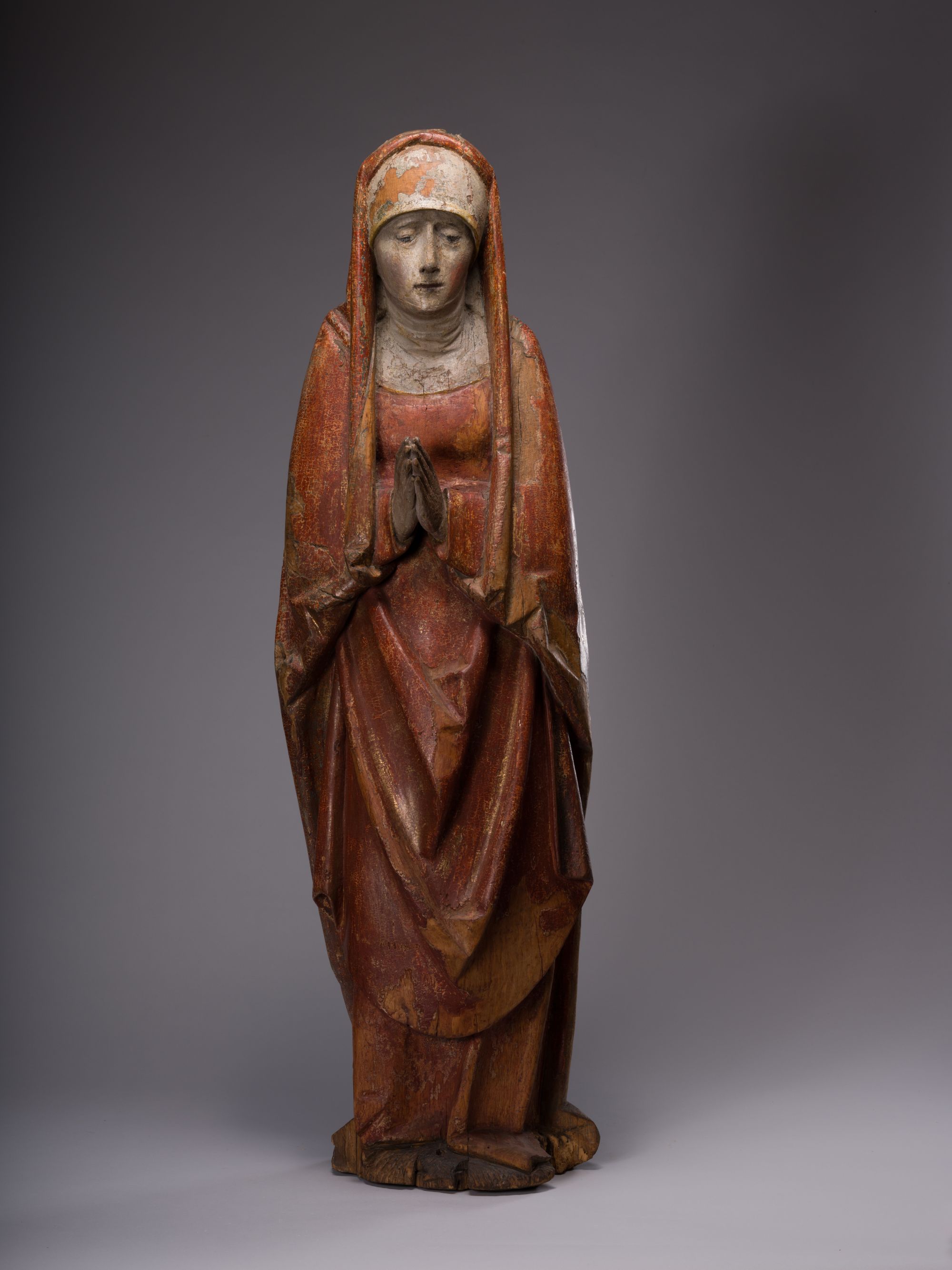
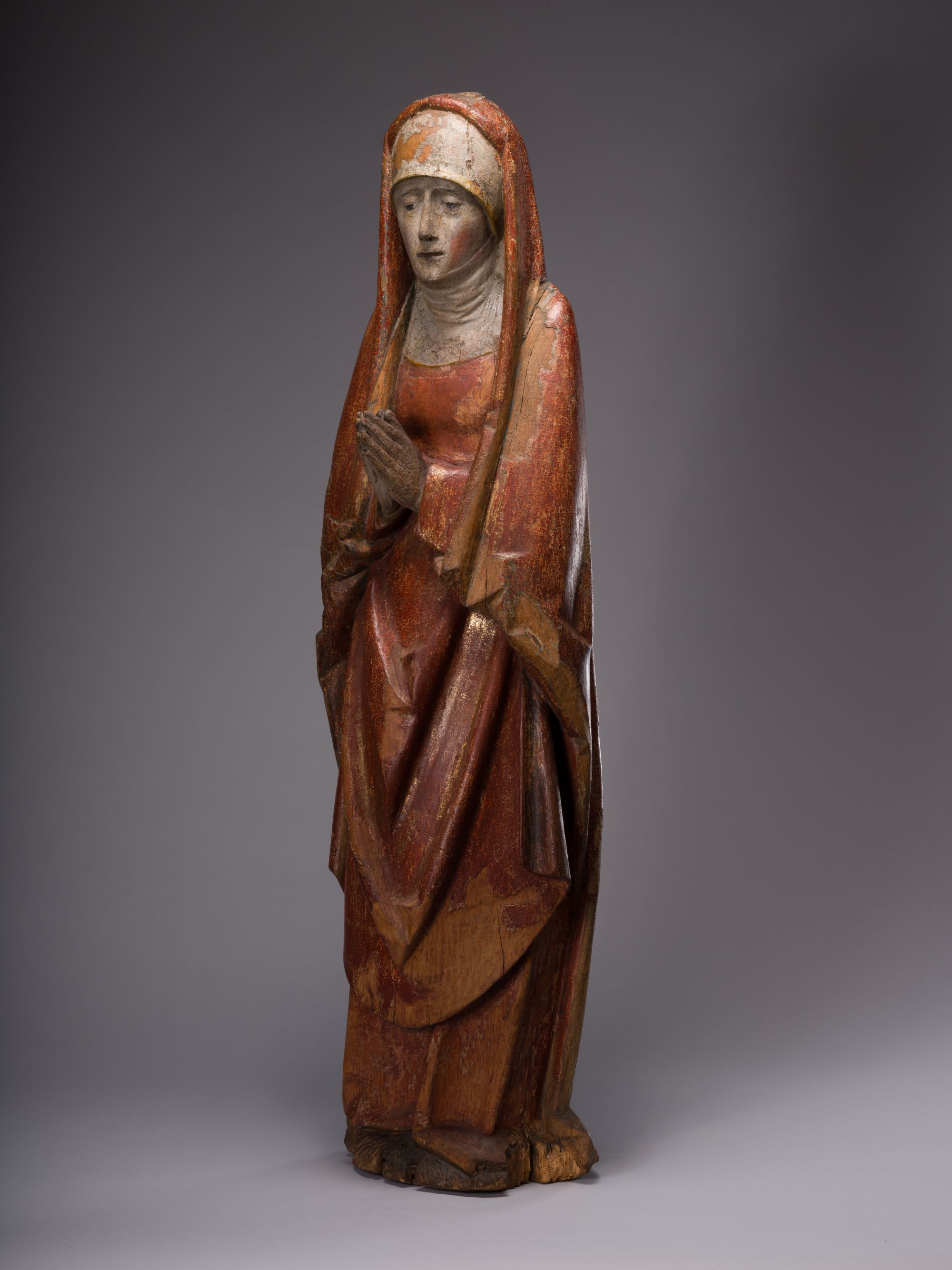
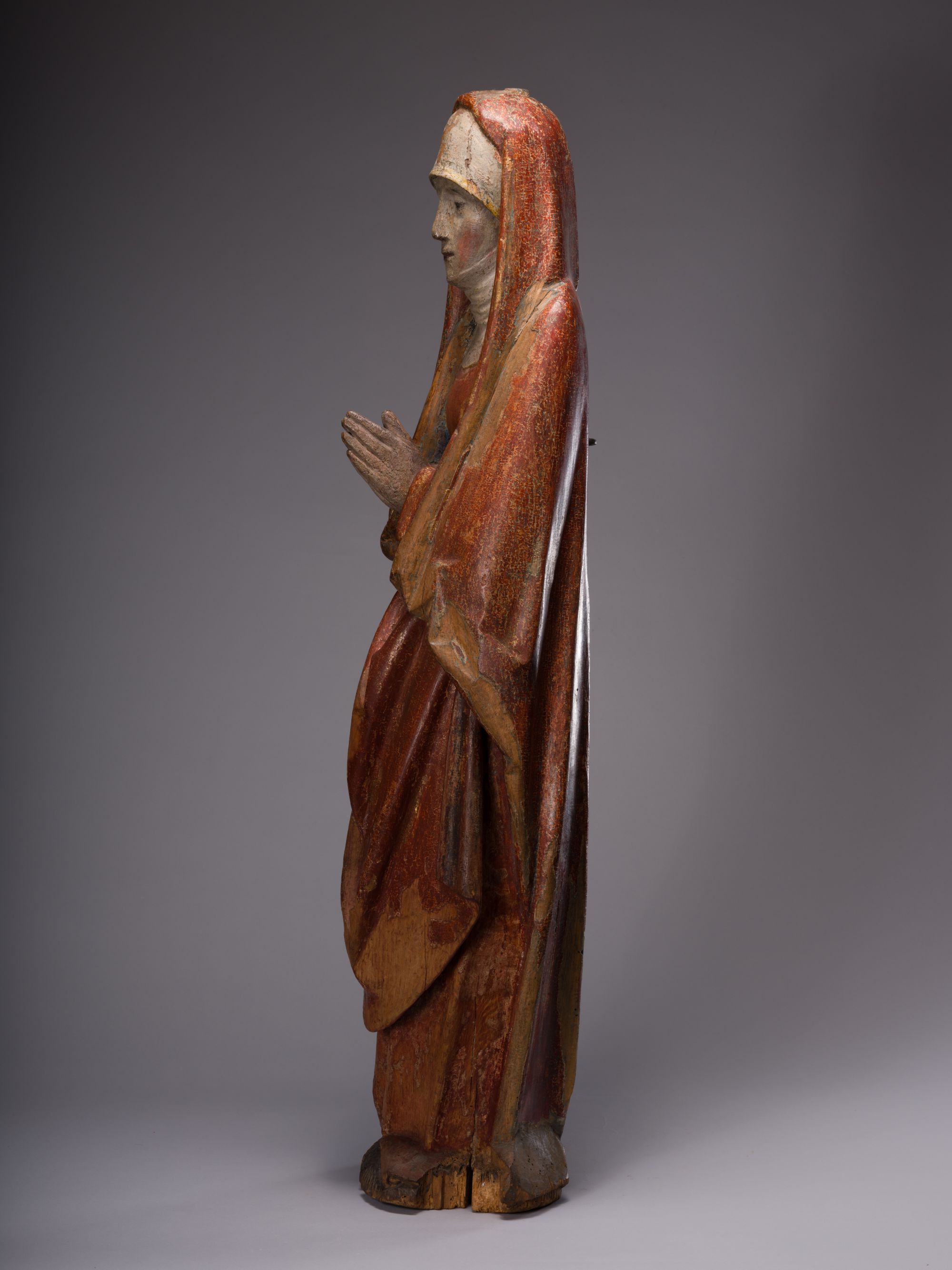
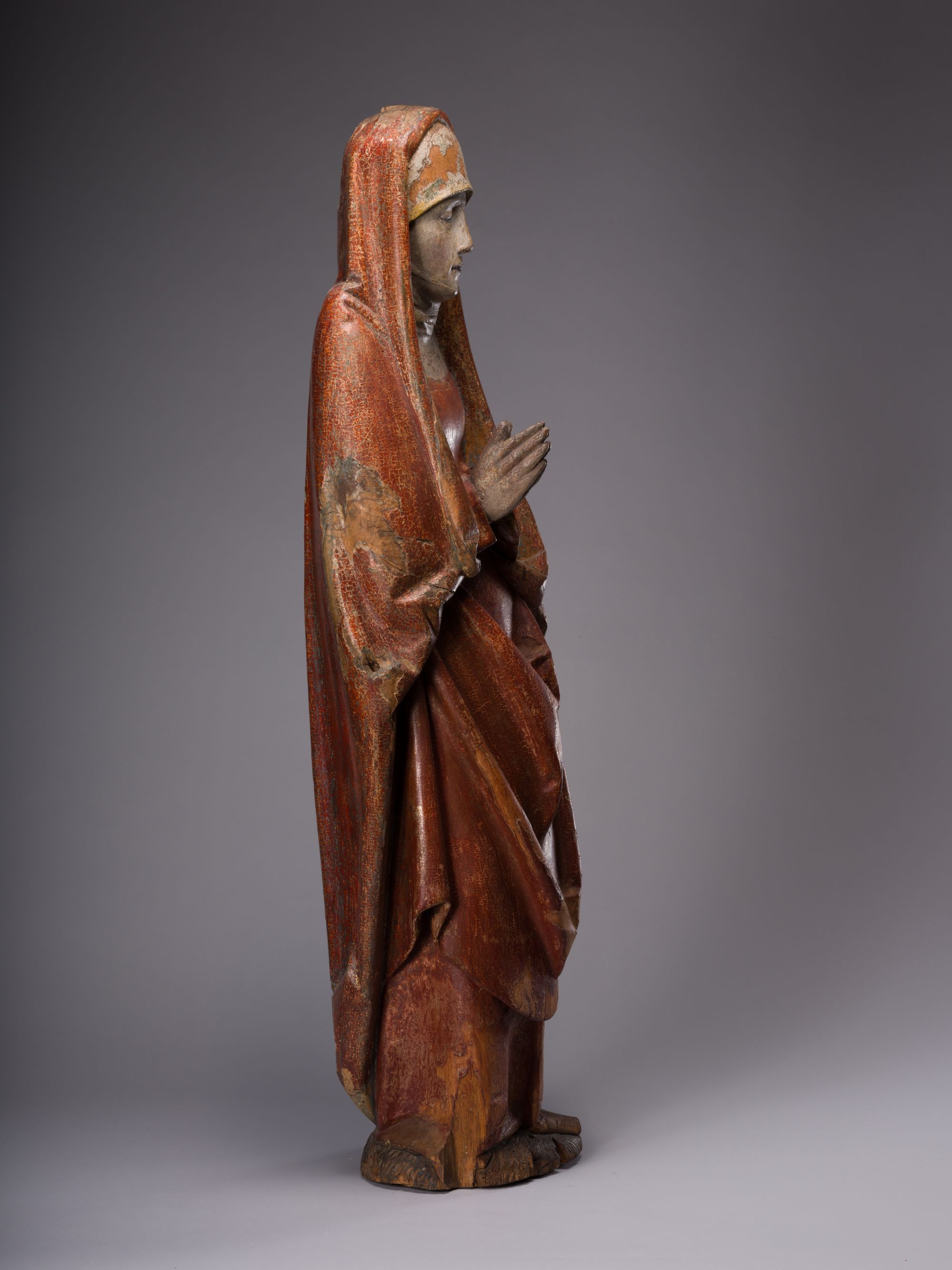
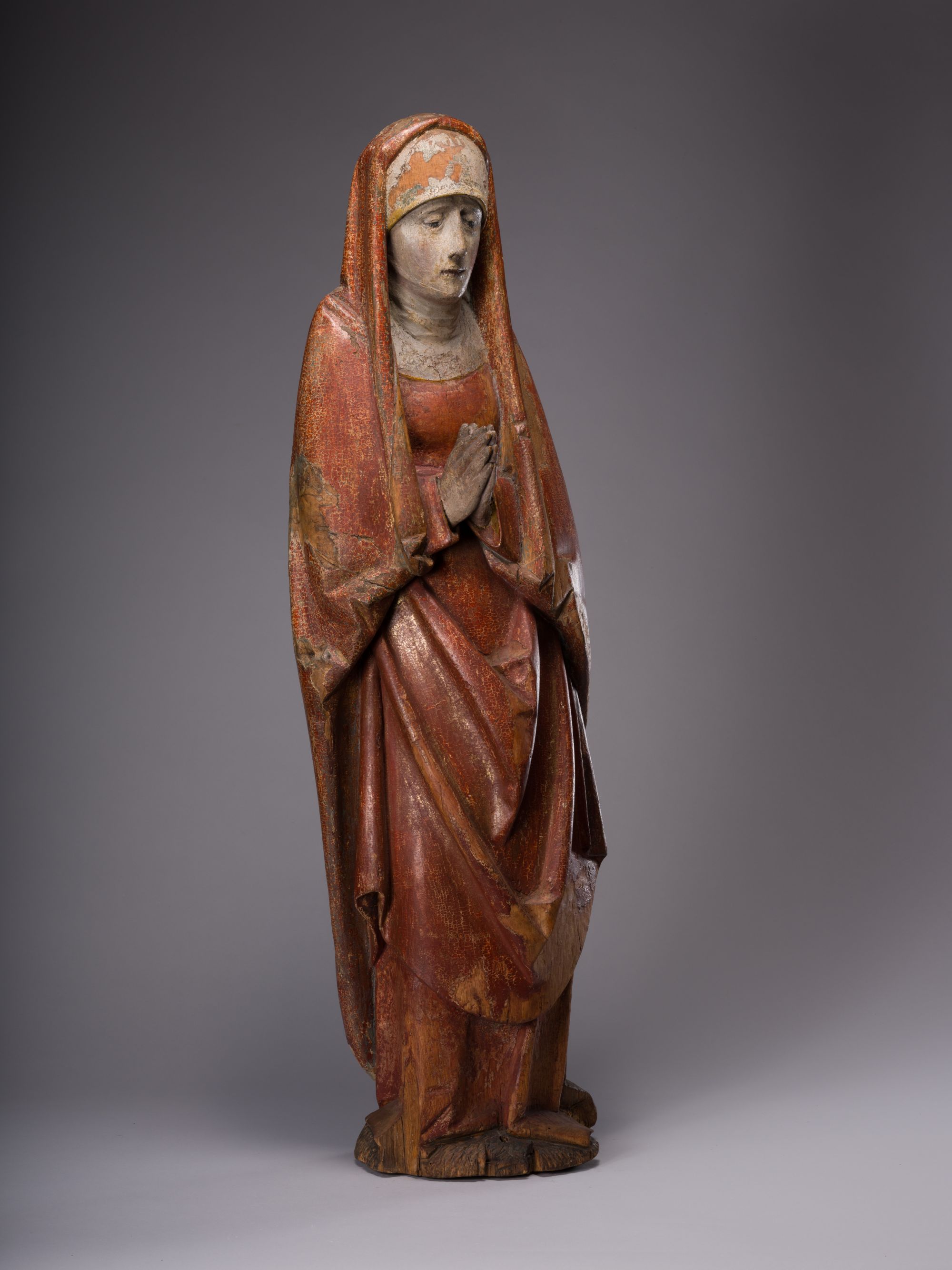
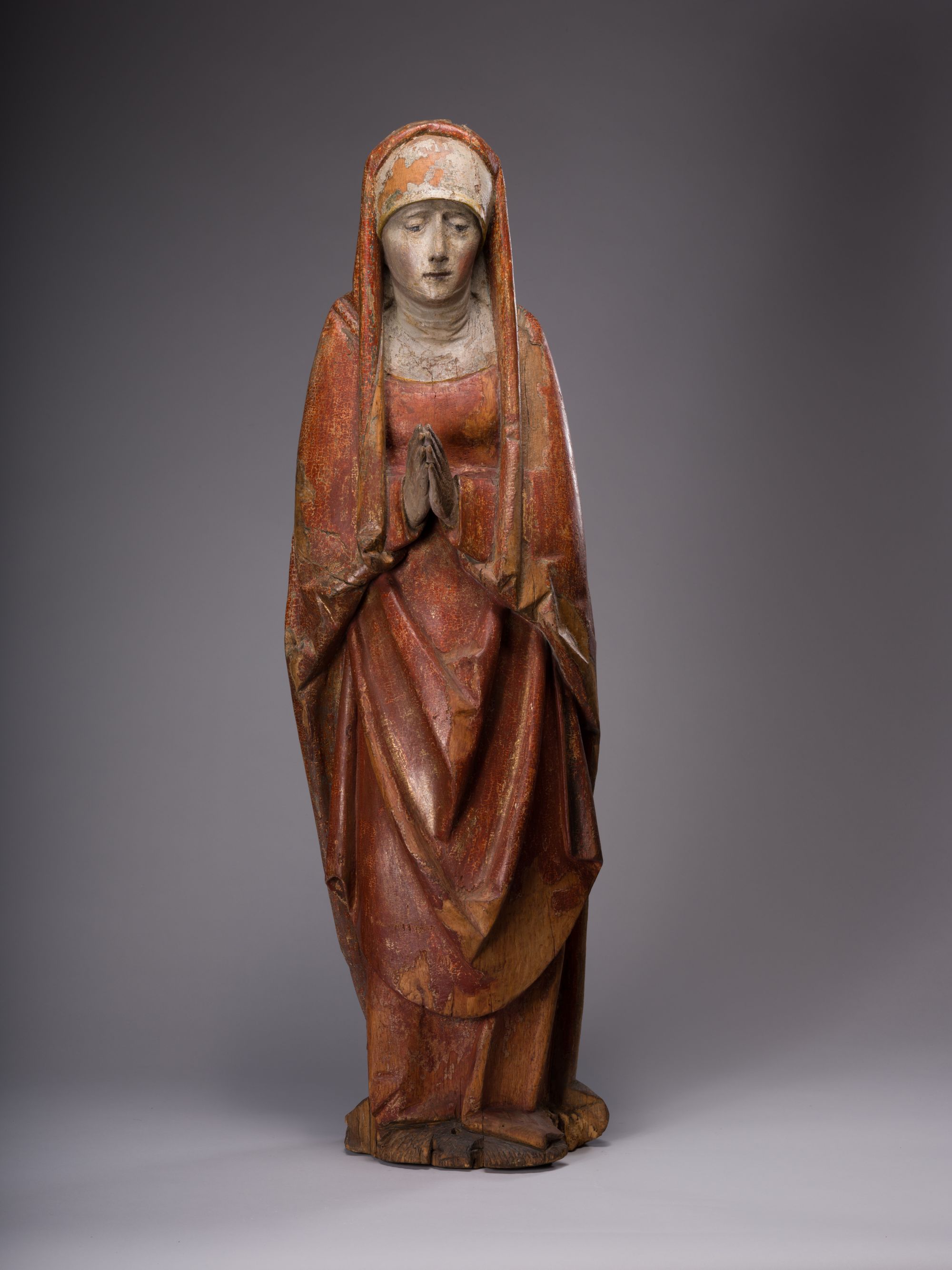
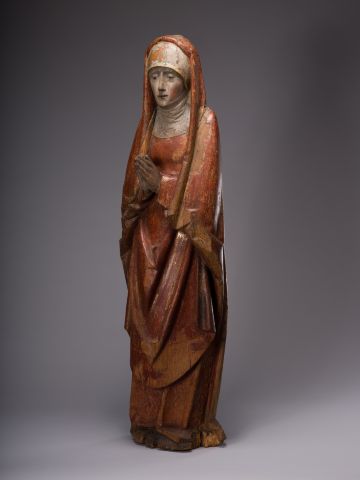
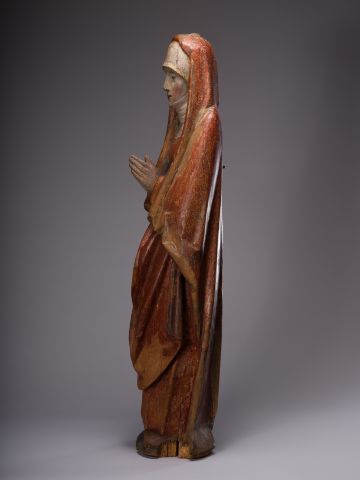
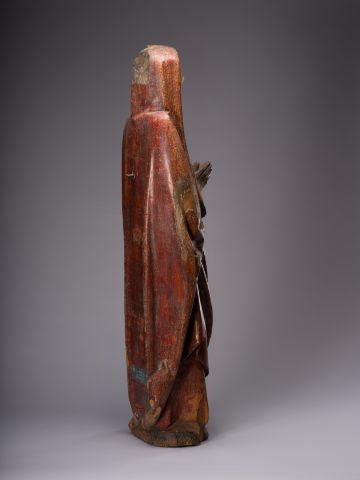
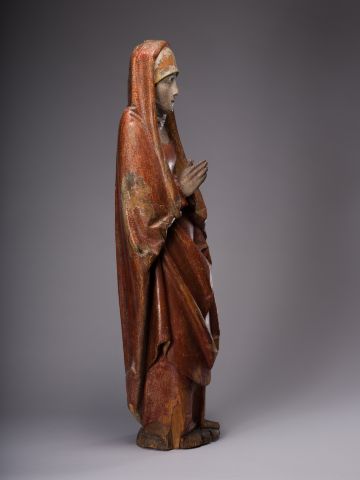
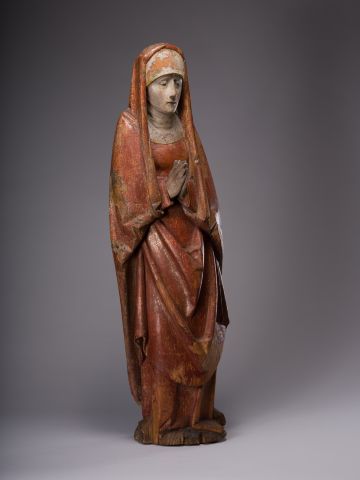
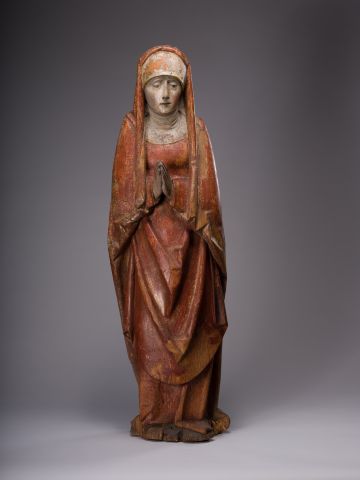
The frontal sculpture of Saint Anne is presented in a posture of adoration. In accordance with the medieval canon, wherein the spiritual dominates the corporeal, the figure is elongated. The hands clasped upon the chest, the slightly tilted head, the eyes with downturned gazes and partially closed lids, alongside an overall sorrowful expression, characterise this image. The forehead is covered by a white wimple, symbolising righteousness, purity, and holiness. The face of the righteous saint is stripped of medieval conventionality: it is individualised, filled with a deep sense of melancholy and internal concentration. The tragic nature of the image is underscored by the finely carved eyelids, the straight line of the nose, and the firmly closed, small lips.
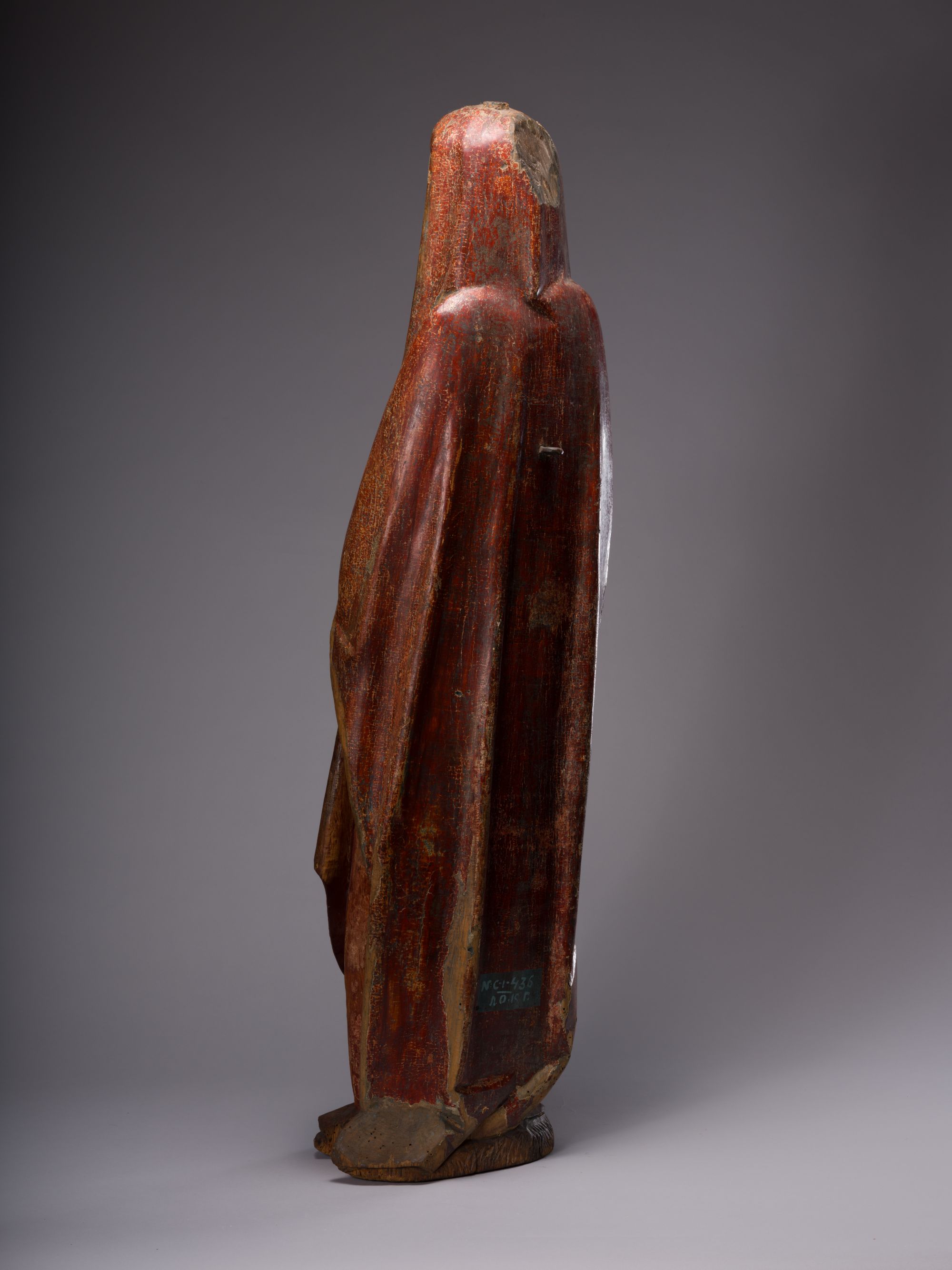
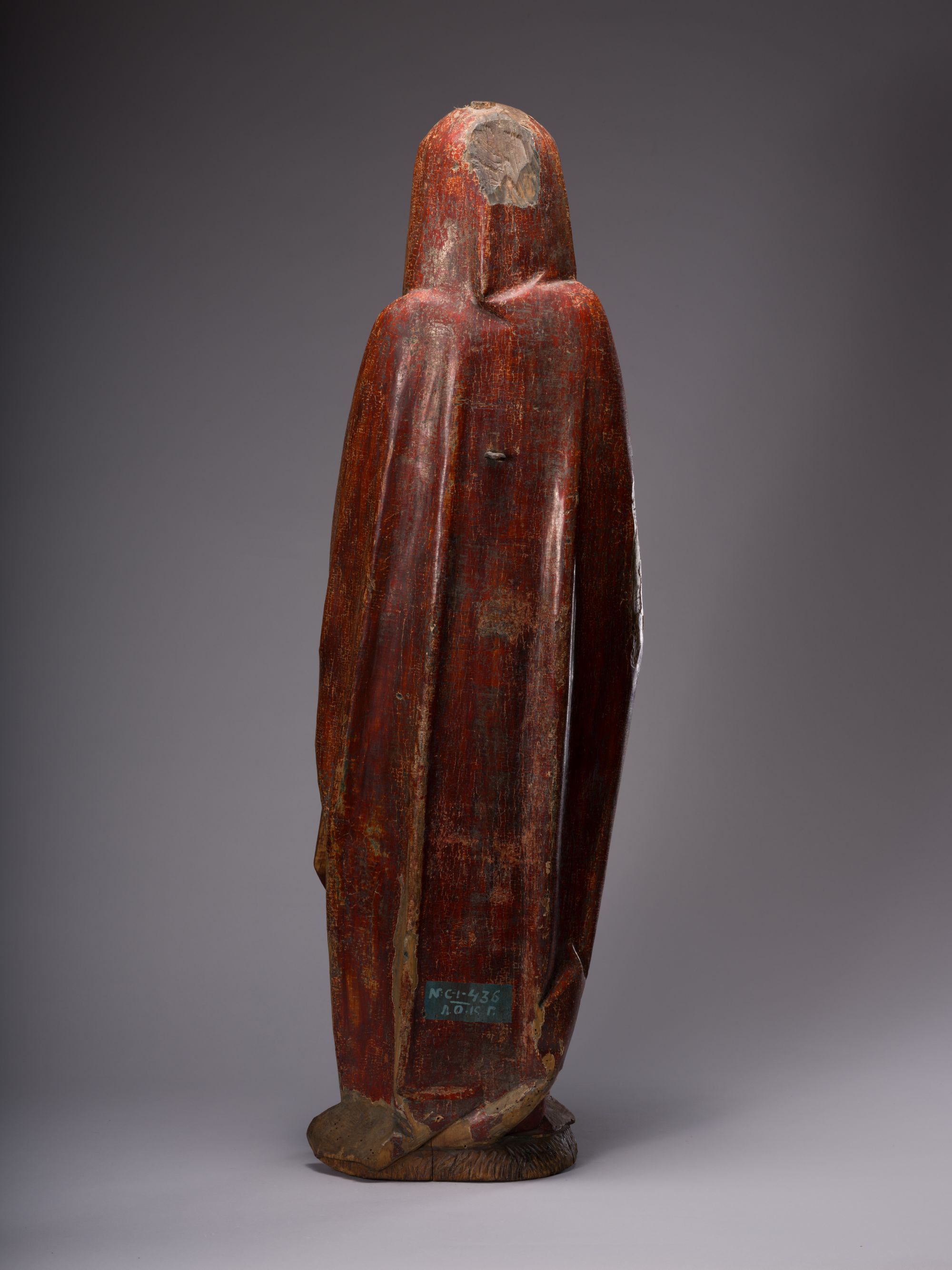
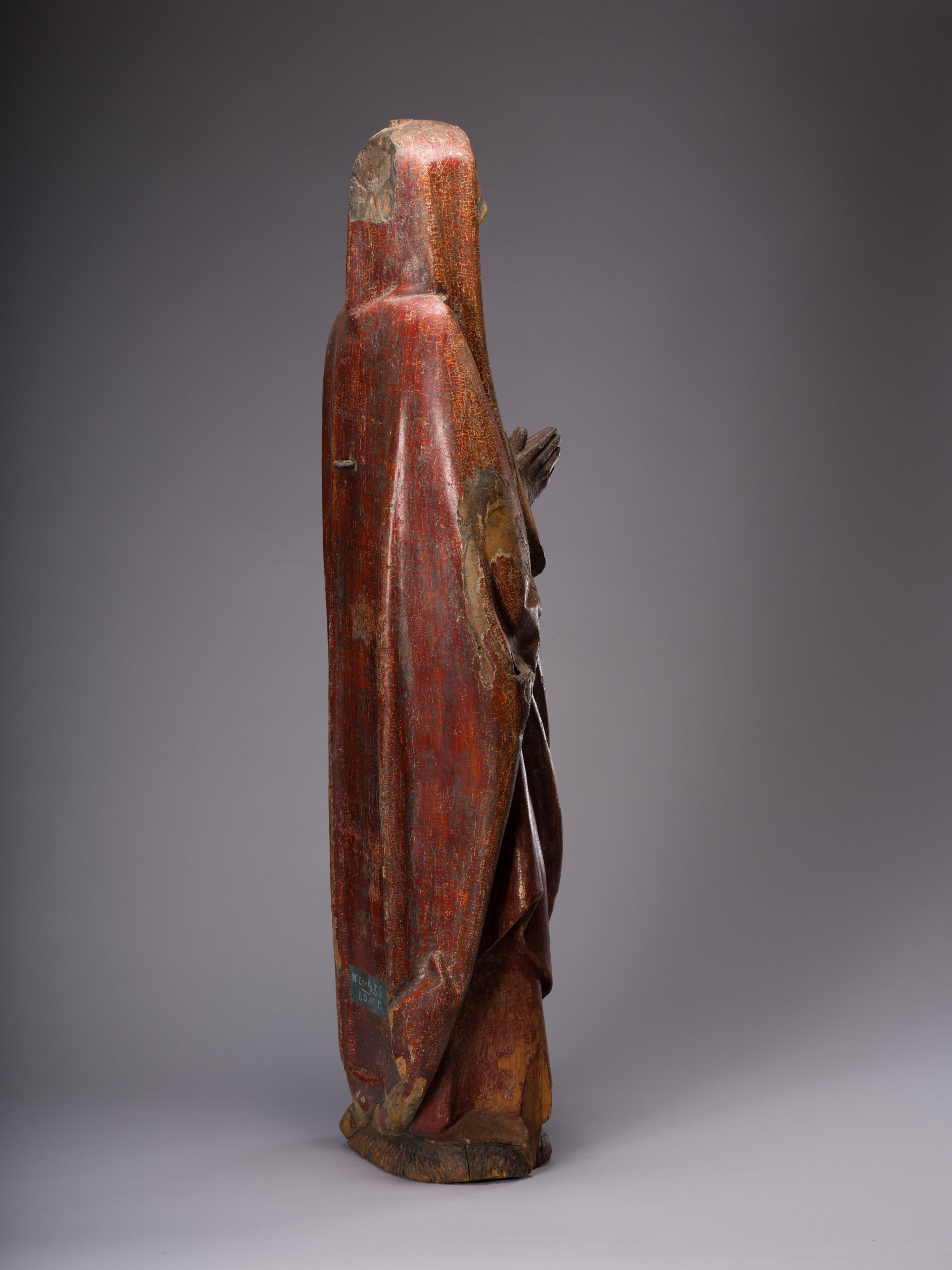
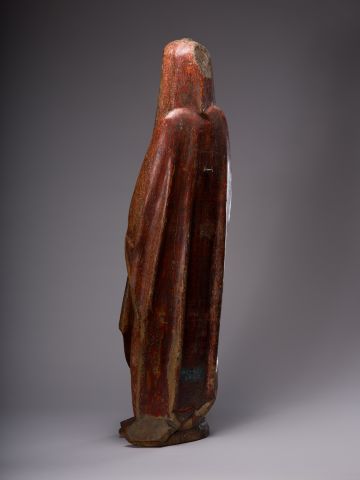
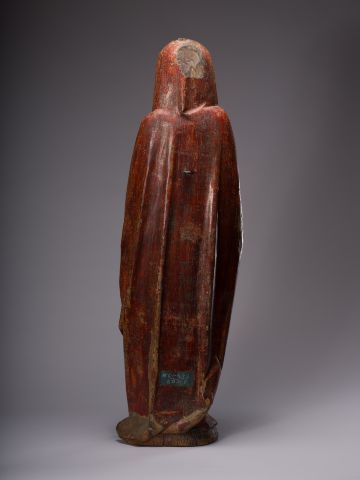
The modelling of the hands and the visage testifies to the master's high level of skill. This proficiency is also manifest in the treatment of the volumetric folds of the tunic and maphorion, where the sharp, Gothic broken lines are somewhat softened. The vertical rhythm of the garment's folds emphasises the stateliness, internal grandeur, and serene composure of the image, whilst deep undercut incisions create an expressive play of light and shadow.
The sculptural depiction is polychrome. The colour scheme is dominated by terracotta, ochre, and brown tones that contrast with the pale carnation of the flesh. The artwork demonstrates a superior artistic level of craftsmanship and a clear connection to Western European art. The work successfully harmonises a strict religious canon with vivid emotional expressiveness and psychological depth.
Legal regulation
Borys Voznytskyi Lviv National Art Gallery