Saint Stanislaus
unknown
Basic information
- ID
- С-I-1477
- Author
- unknown
- Name
- Saint Stanislaus
- Date of creation
- 17th c.
- Country
- Ukraine
- Technique
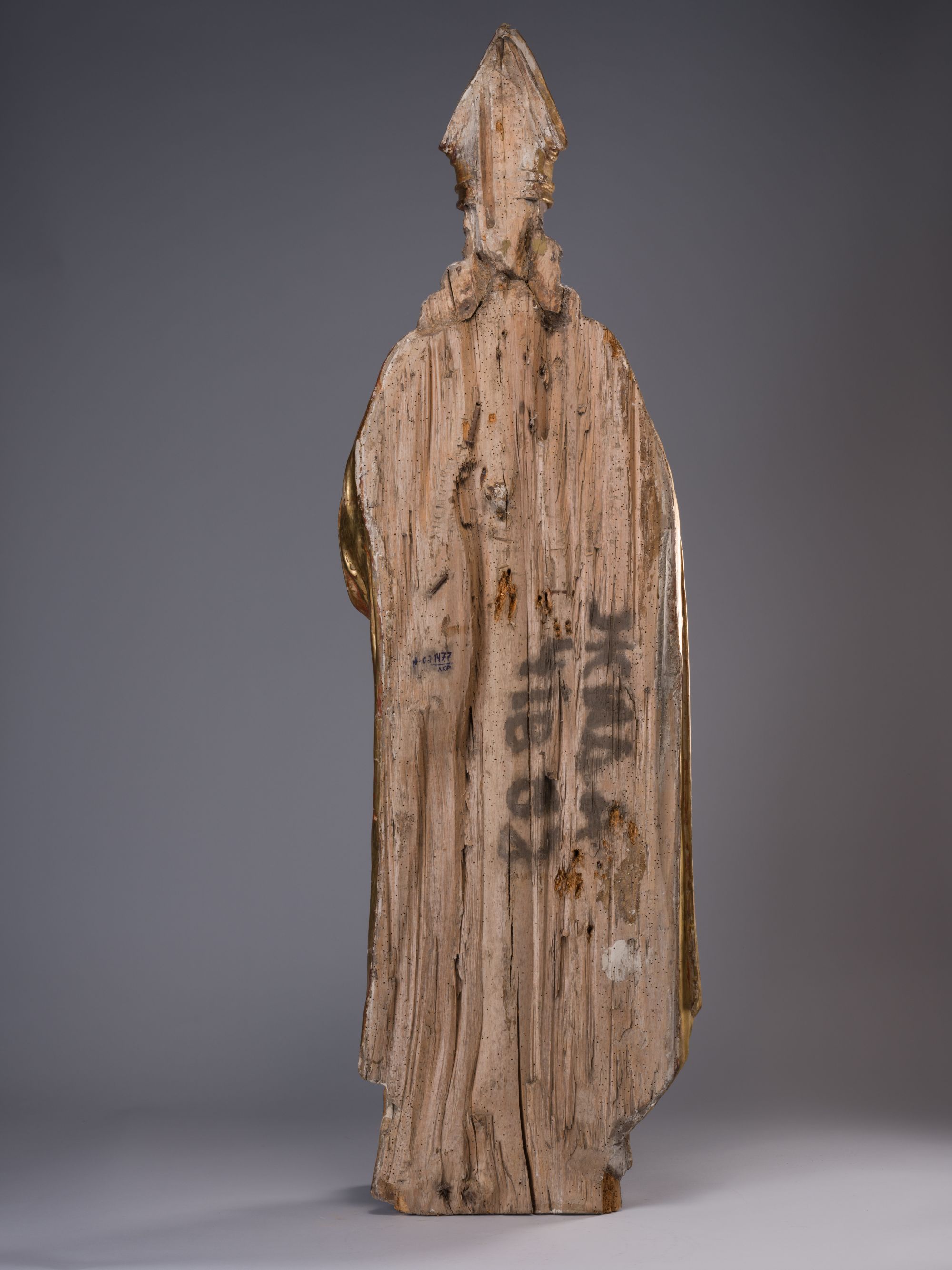
- carving polychromy gilding silver plating
- Material
- wood
- Dimensions
- 134 x 42.5 x 22.5 cm (height x width x depth)
Additionally
- Type
- sculpture
- Genre
- religious
- Plot
- Saint
- Provenance
- Zhydachiv town, Lviv region, Church of the Assumption of the Blessed Virgin Mary
Information about author
Object description
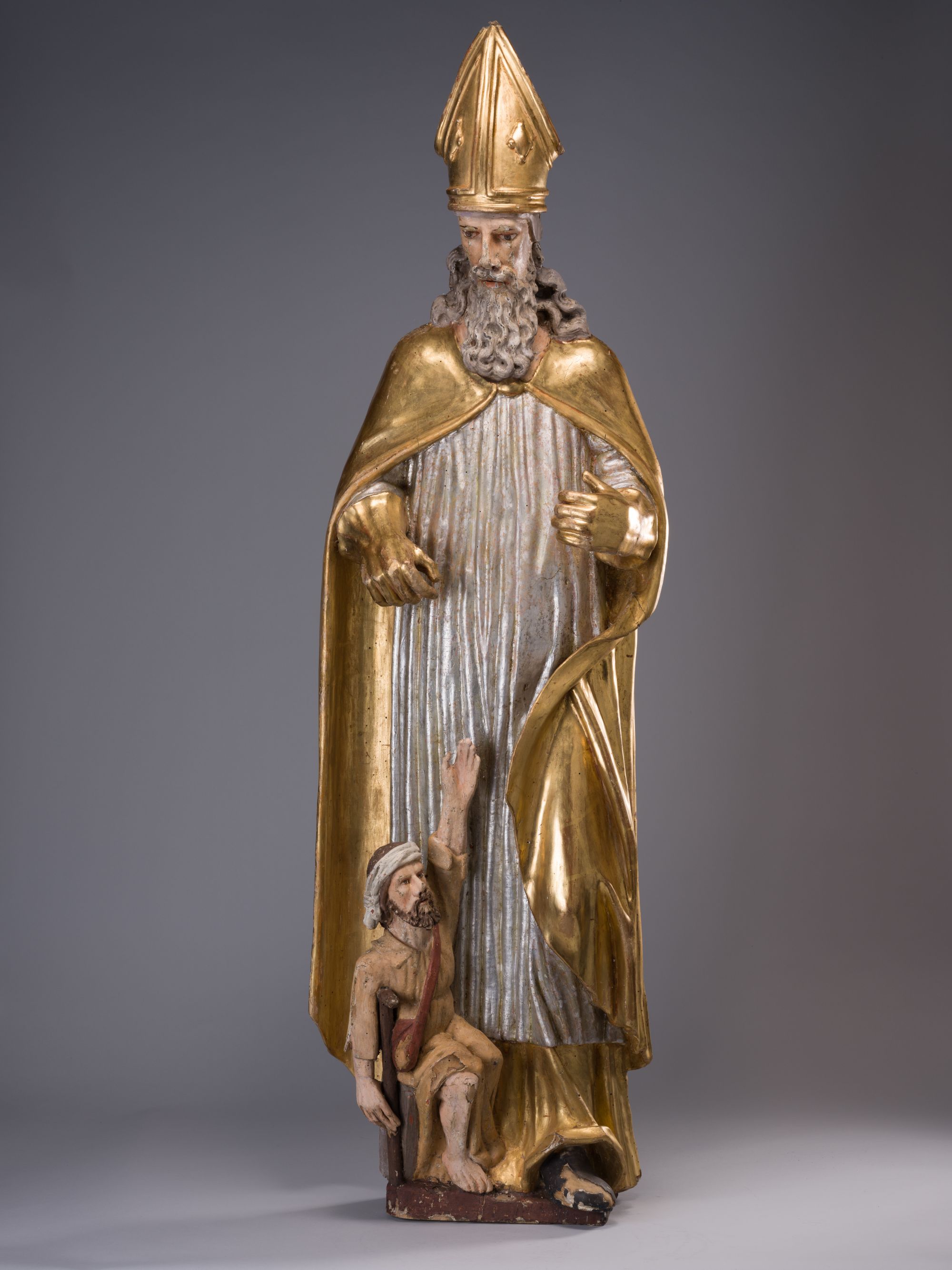
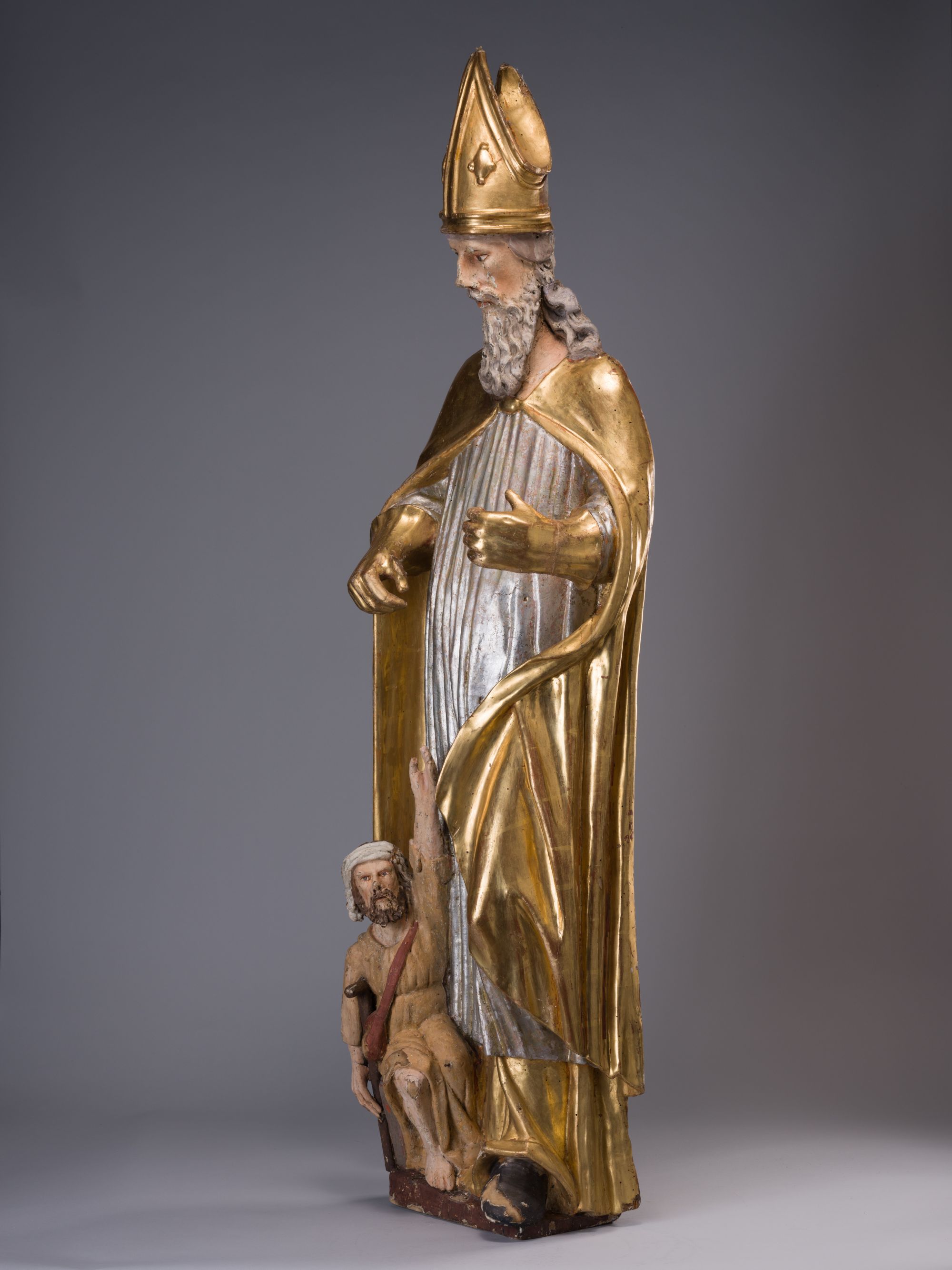
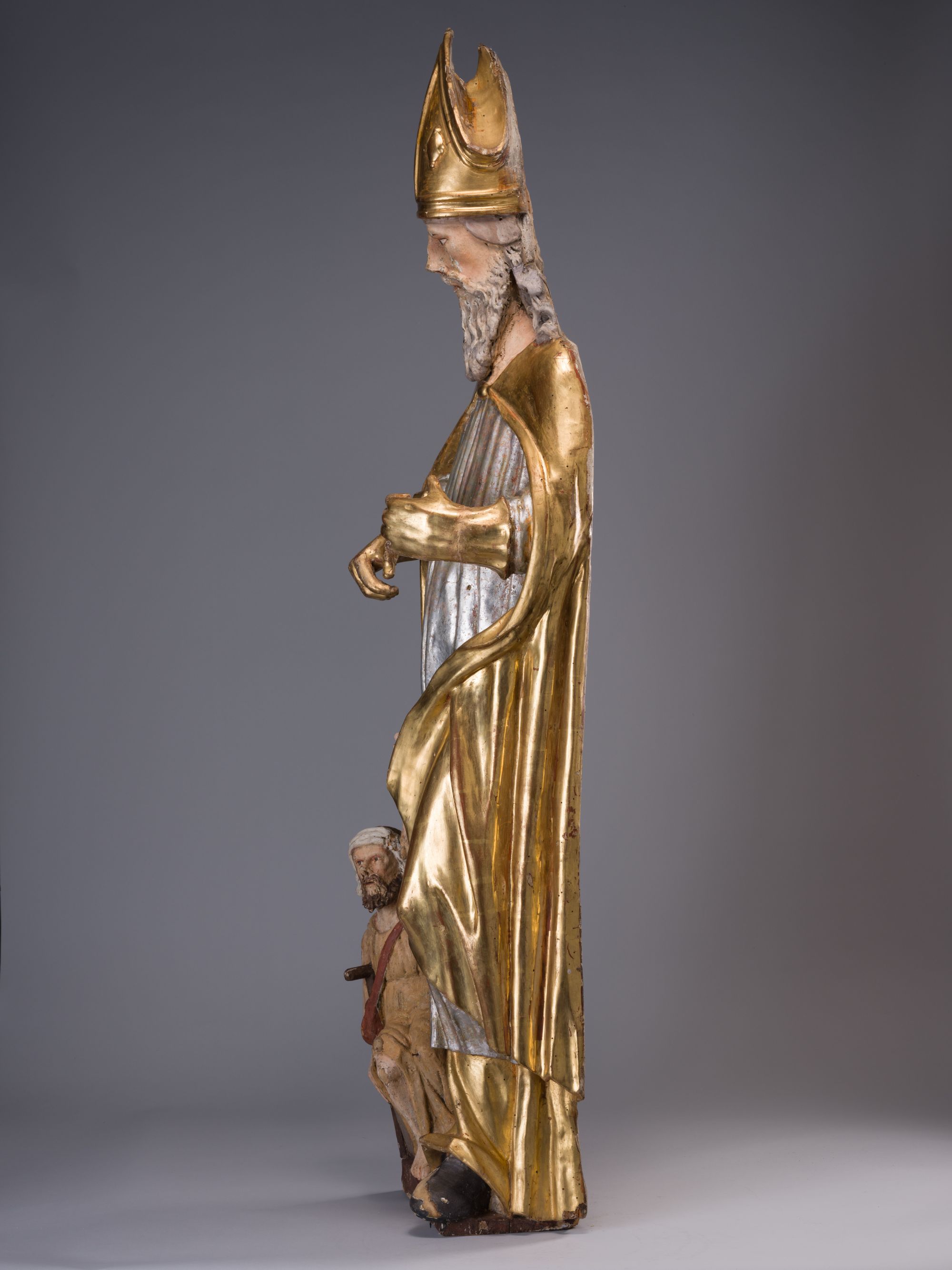
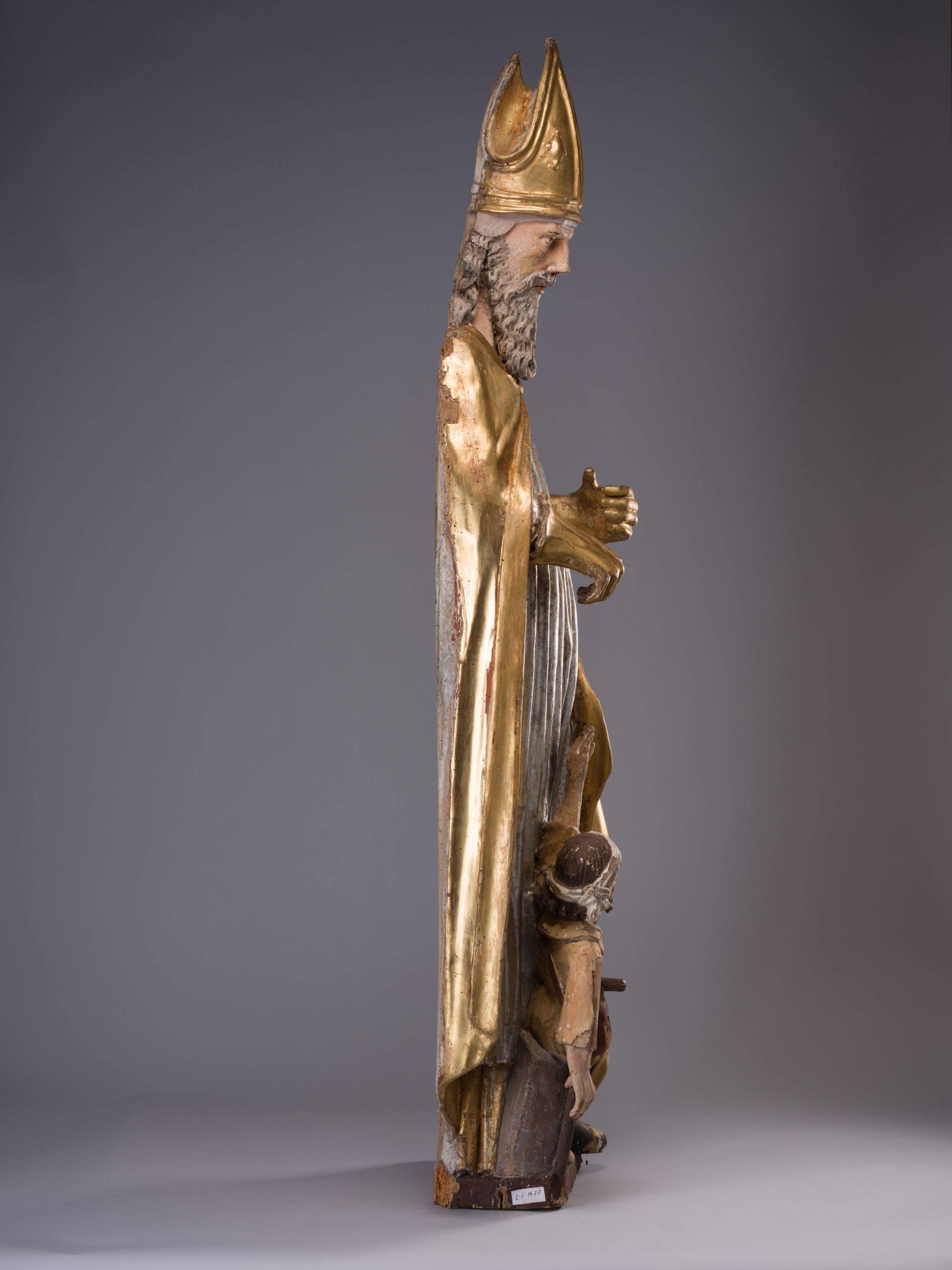
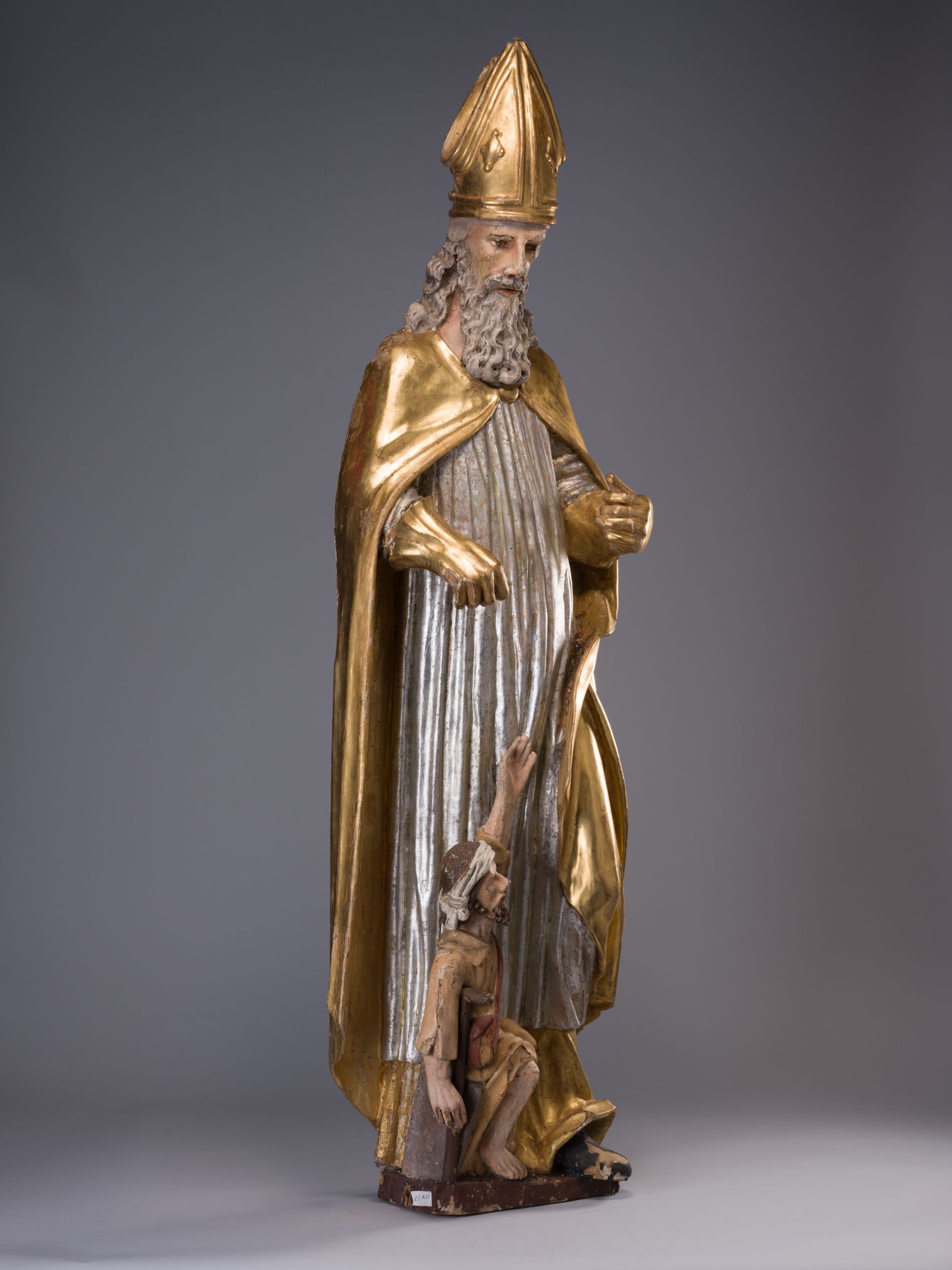
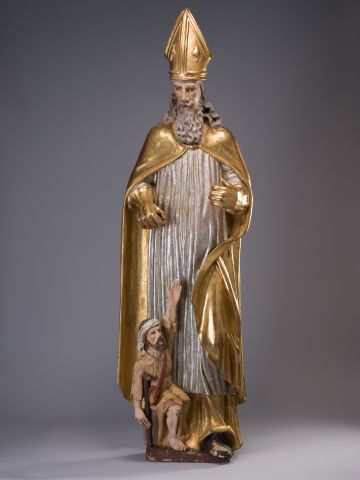
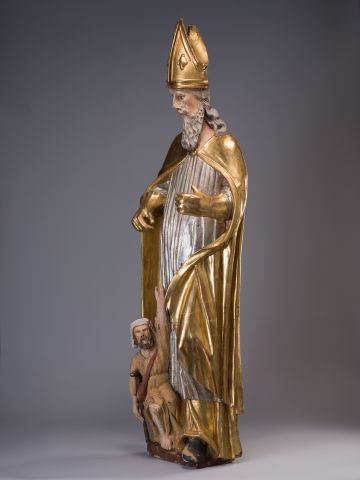
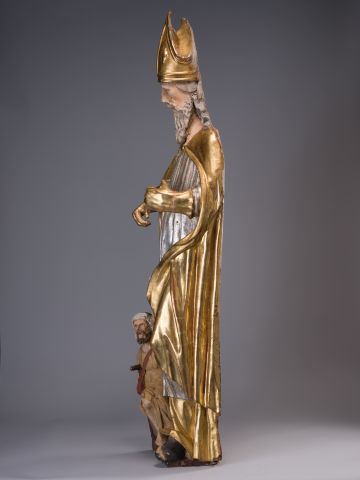
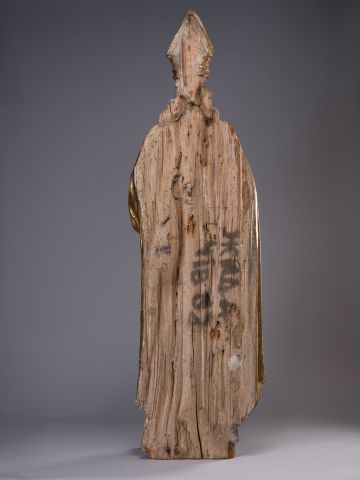
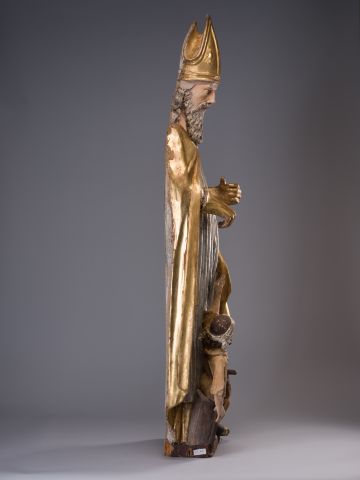
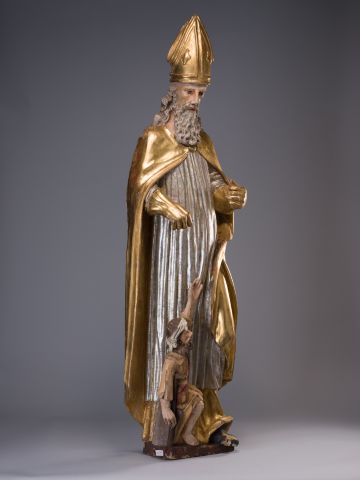
The wooden sculptural depiction presents the figure of St Stanislaus, Bishop of Kraków – one of the most revered saint-martyrs of the 11th century in the Latin Christian tradition. The frontal figure does not emphasise the bishop's martyric iconography, but rather indicates his pastoral and hierarchical mission. St Stanislaus's head is crowned with a tall, elongated mitre – the primary attribute of episcopal rank, interpreted by the viewer as a sign of archiepiscopal dignity that underscores the saint's status. The calm, focused expression on St Stanislaus's face creates an impression of spiritual concentration. The lean face is modelled meticulously and with individualised traits. The elongated oval, low brow lines, expressive almond-shaped eyes with a downward gaze, a long straight nose, and a beard rendered in gentle waves of tresses falling onto the chest all lend the image a sternness and mature wisdom inherent to the hagiographic image of a holy martyr.
The bishop's vestments are modelled with heavy, parallel vertical folds that fall to his feet, creating an impression of monumentality and statics in the figure. The colouristic treatment of the saint's robes is built on the contrast between warm gold and cold silver, which heightens the sense of holiness and heavenly presence. At the bishop's feet is the figure of a man with his hand raised upwards. The sculptural composition demonstrates an iconographic narrative from the life of St Stanislaus – the resurrection of Piotrowin (Peter). According to legend, the bishop resurrected the deceased man so that he could testify to the legality of the bishop's acquisition of land plots.
The compositional solution of the artwork is based on the principle of vertical hierarchy: the tall figure of the saint dominates the significantly smaller figure of the resurrected man, thereby emphasizing the saint's spiritual power. The majestic verticality of the bishop's stature, the gleam of gold and silver, and the dramatic narrative at his feet transform the sculpture into a symbolic image of the triumph of spiritual truth over death.
Legal regulation
Borys Voznytskyi Lviv National Art Gallery