Christ after the Resurrection
unknown
Basic information
- ID
- С-I-435
- Author
- unknown
- Name
- Christ after the Resurrection
- Date of creation
- 18th c.
- Technique
- carving polychromy gilding
- Material
- wood
- Dimensions
- 118 x 43 x 22 cm (height x width x depth)
Additionally
- Type
- sculpture
- Genre
- religious
- Plot
- Jesus Christ
- Provenance
- Collection of Leon Pininski
Information about author
Object description
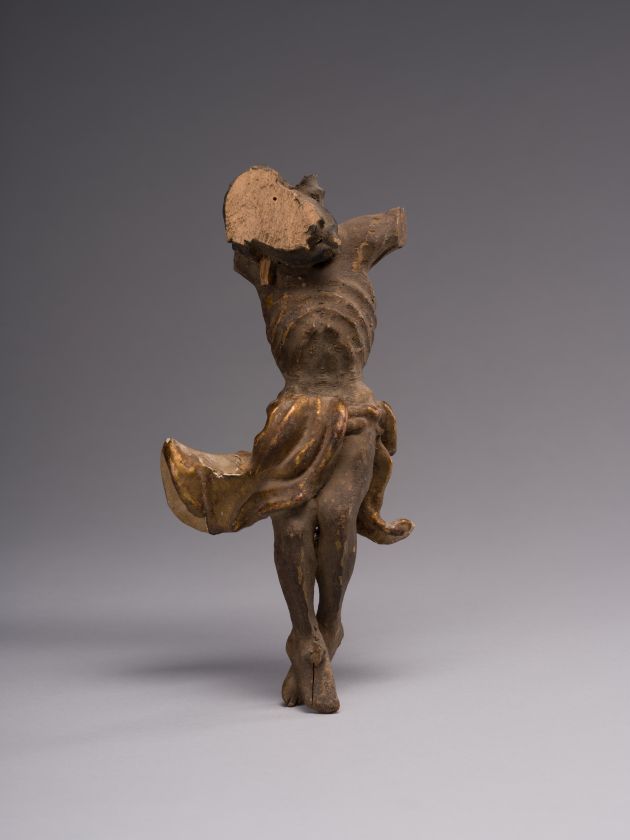
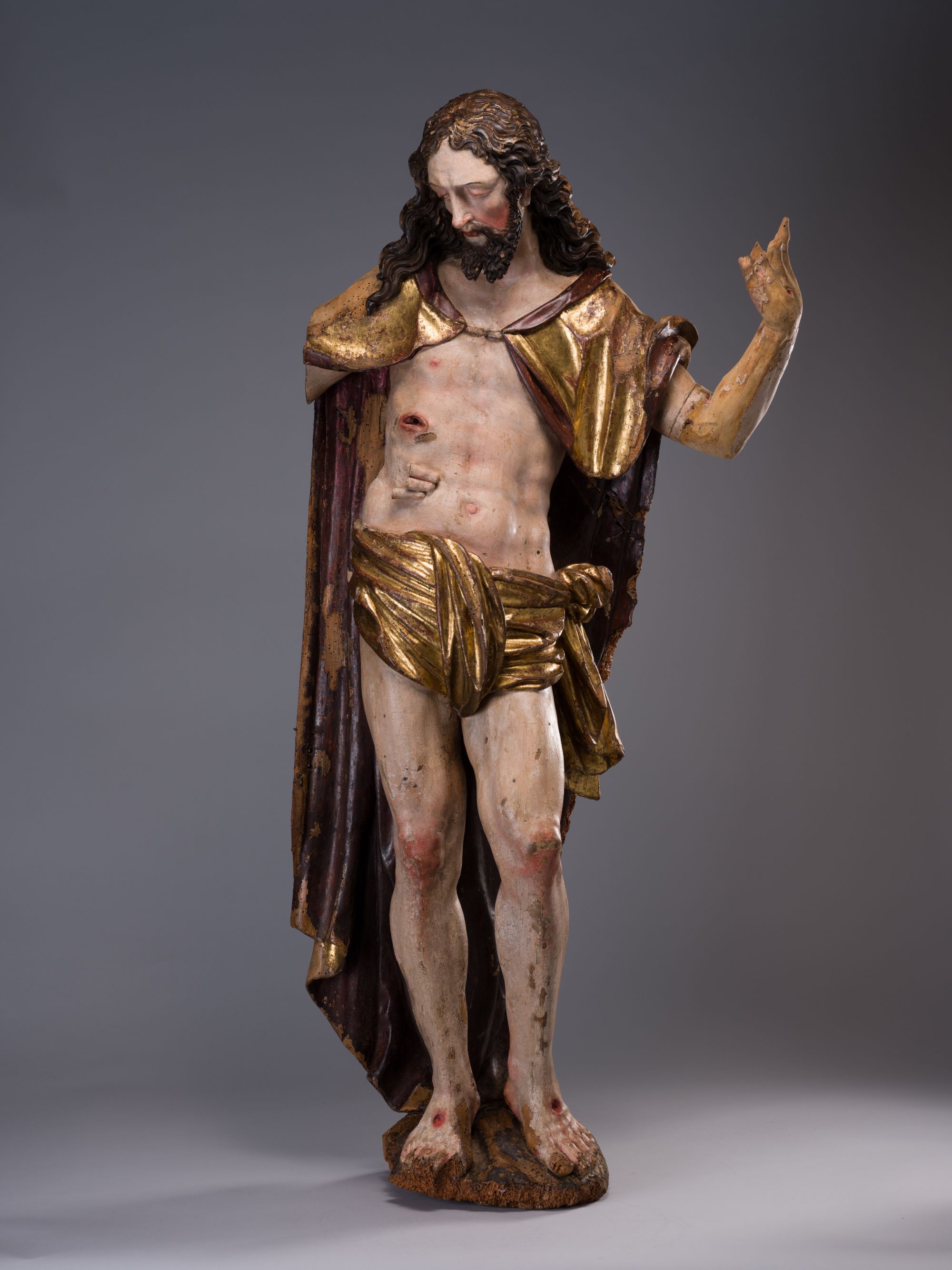
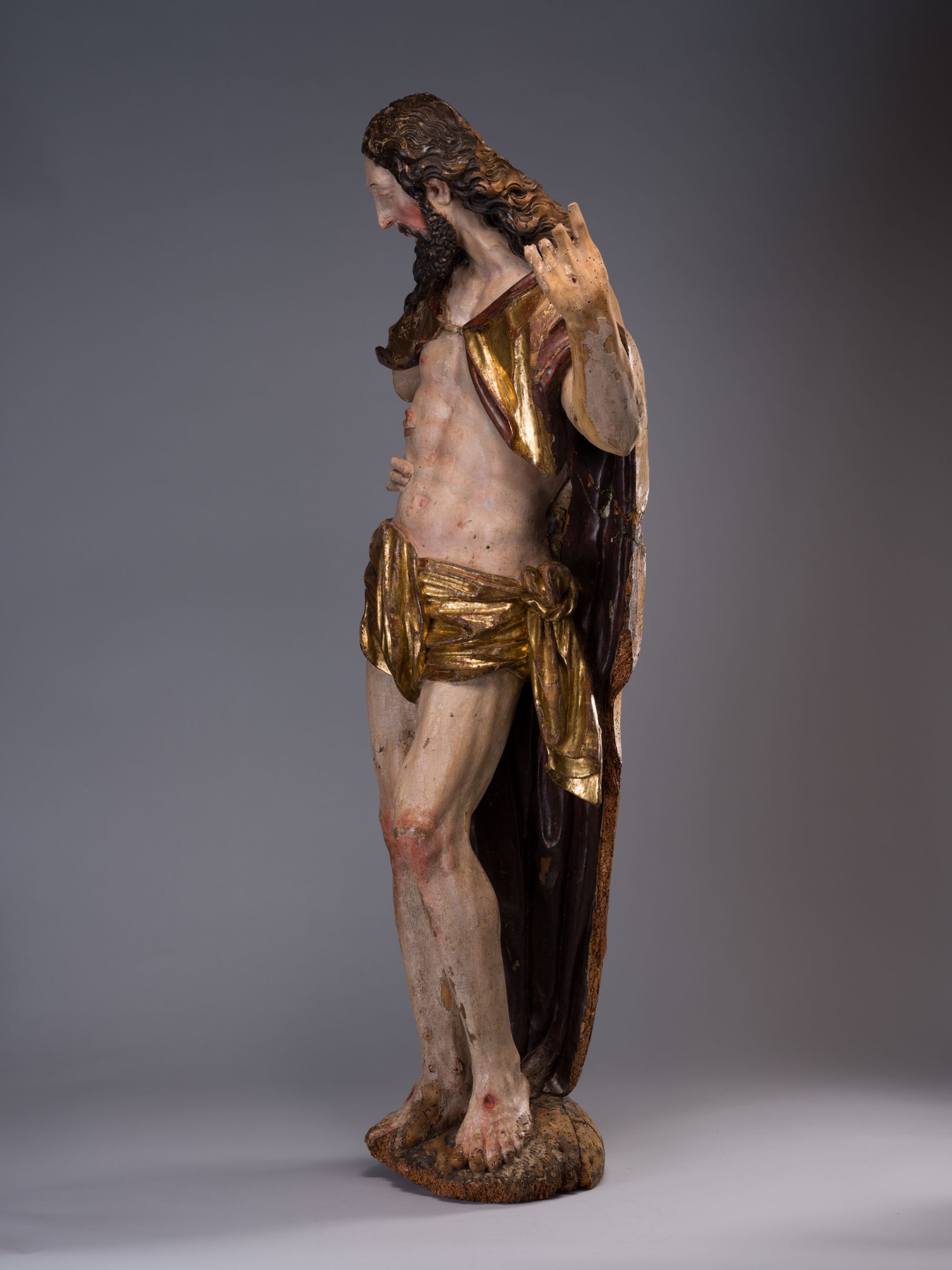
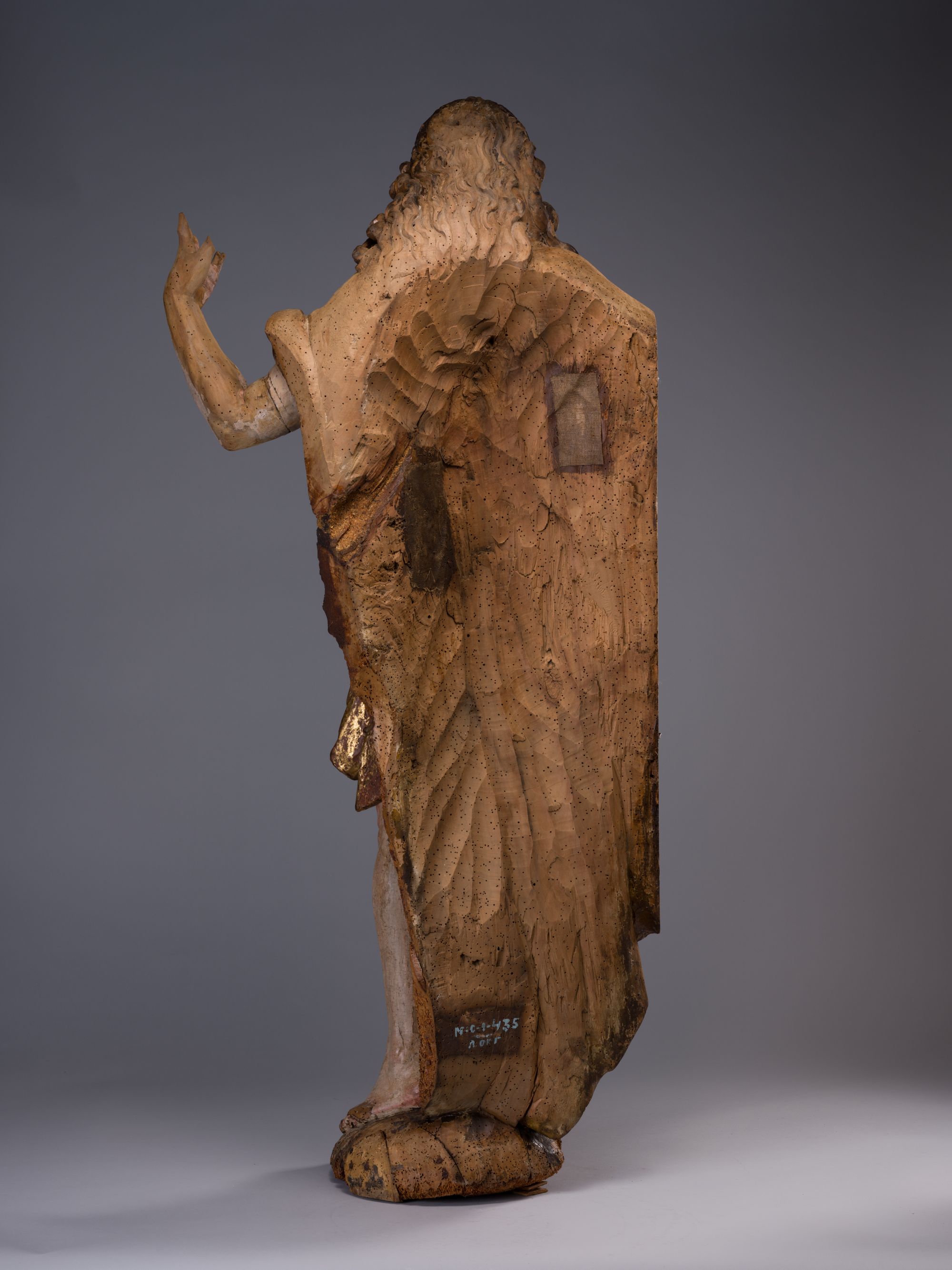
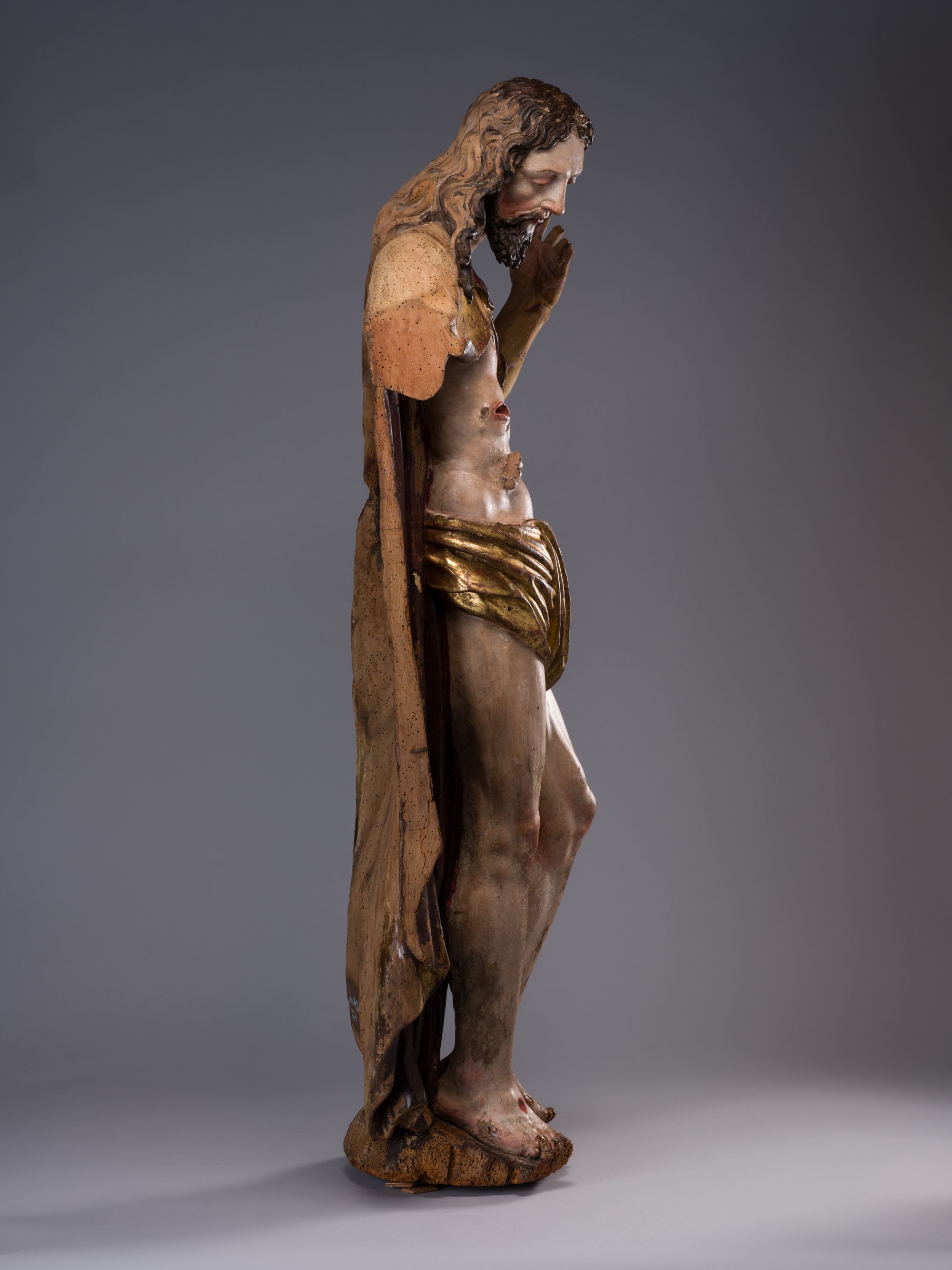
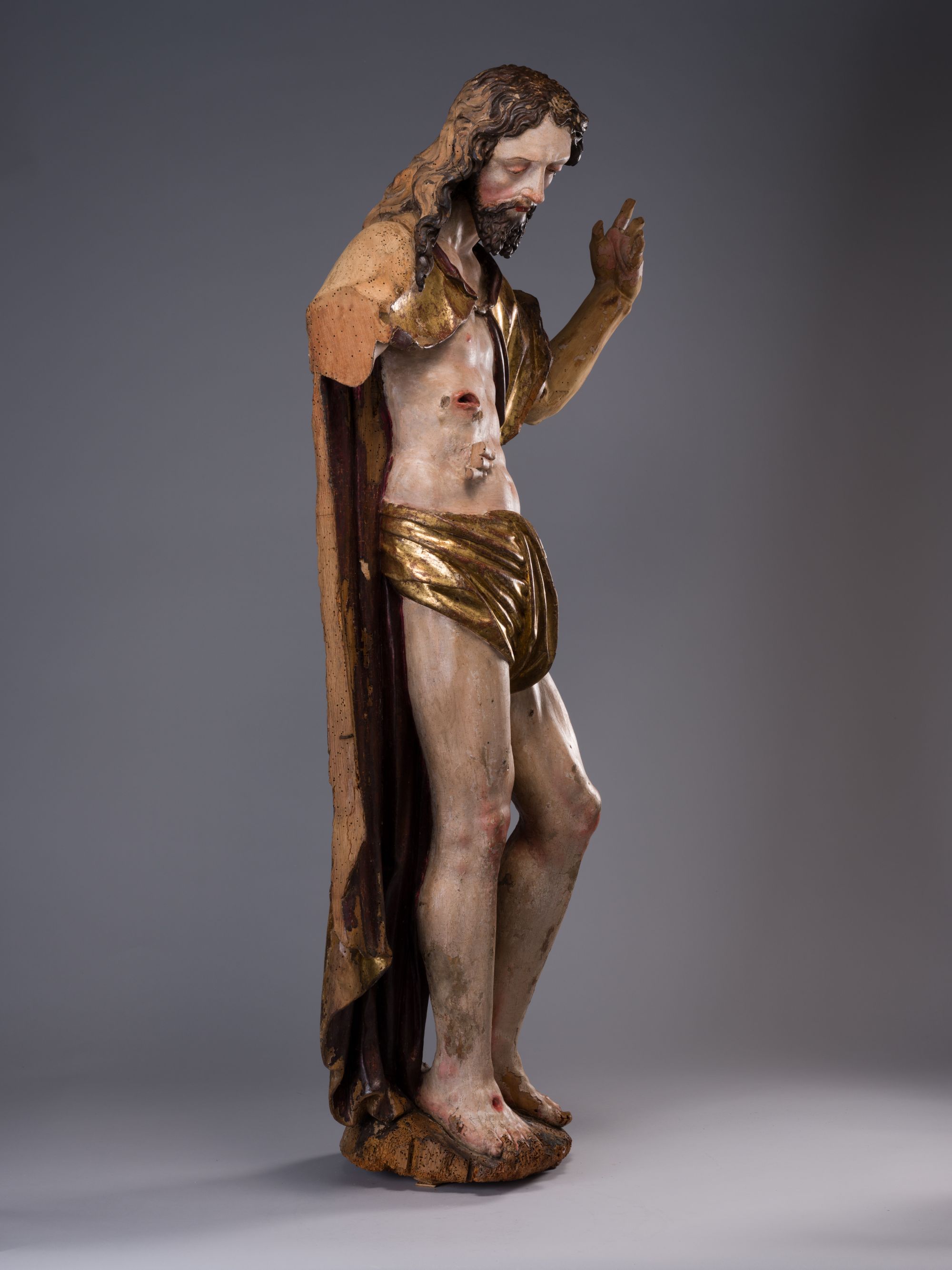
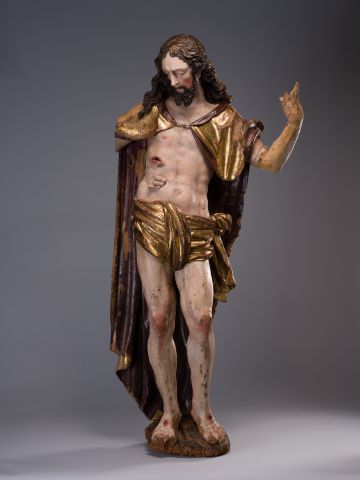
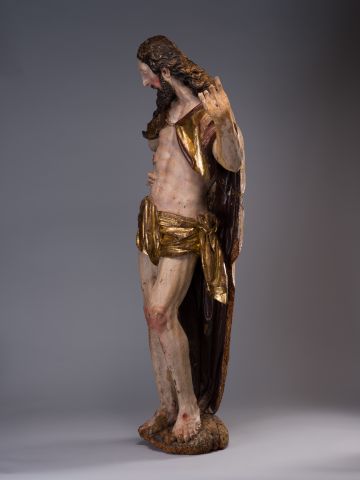
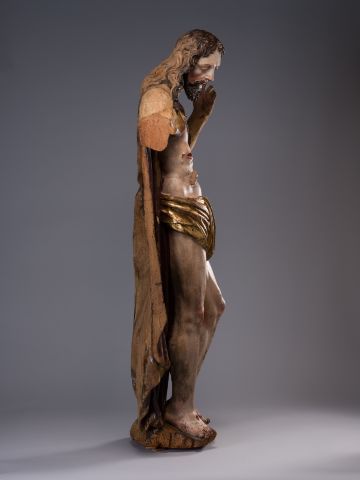
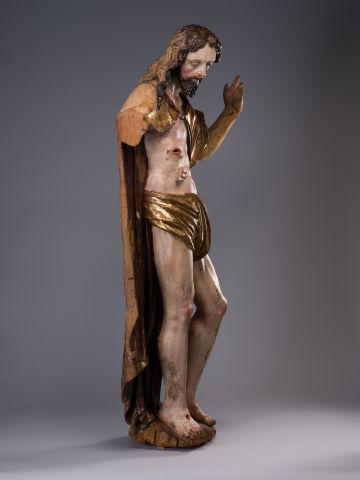
The polychrome sculptural representation depicts the Risen Christ – a pivotal Christian subject in sacred art, associated with the victory of life over death and the affirmation of faith in the Resurrection. The full-length figure is rendered in a subtle contrapposto stance, with the weight shifted onto one leg, creating a gentle curve in the torso and hips that infuses the image with internal dynamism and lifelike plasticity. This sculptural depiction follows Western iconography, which gained widespread popularity in Ukraine starting from the 16th century.
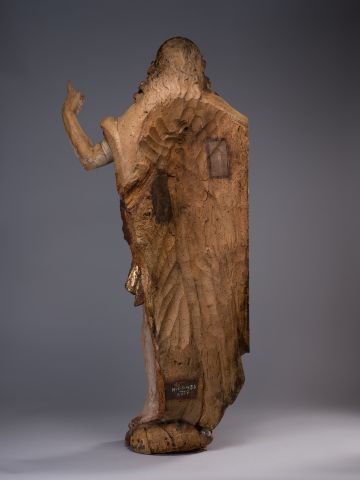
The naked body of Christ is draped with a short golden perizonium and a long cloak fastened at the chest, which cascades downwards while enveloping the shoulders. The Saviour's body is sculpturally modelled and anatomically expressive, emphasizing the reality of Christ's human nature. Traces of the Crucifixion are visible on the body, with the wound from the Holy Lance (Spear of Longinus) appearing particularly prominent. These marks speak eloquently of past suffering while simultaneously bearing witness to the triumph over death. The master rendered Christ's face with exceptional care and meticulousness, featuring eyes with heavy lids, prominent cheekbones, and hollow cheeks. The drama of the image is heightened by the contrast between the light carnation of the face and the dark, wavy hair and short, bifurcated beard. The Saviour's gaze is directed downwards, imbuing the image with a sense of profound inner contemplation.
The viewer is presented with the Risen Saviour, where the core focus shifts from the narrative action of the Resurrection itself to the figure of Christ as a testament to the victory of life over death. The colour scheme of the sculpture is built upon a contrast of golden, ochre, brown, and flesh tones. Light accentuates Christ's face and body, lending the figure a distinctive sculptural expressiveness. The artistic approach relies on a combination of realistic anatomical rendering, dramatic intensity, and realistic symbolism, which is highly characteristic of 18th-century European art. The image harmonises the physical vulnerability of the body with the spiritual power of the Risen Christ. The interplay between the human and divine natures constitutes the central emotional core of the sculpture.
Legal regulation
Borys Voznytskyi Lviv National Art Gallery