Christ Blessing
unknown
Basic information
Additionally
- Type
- sculpture
- Genre
- religious
- Plot
- Jesus Christ
- Provenance
- Collection of Leon Pininski
Information about author
Object description
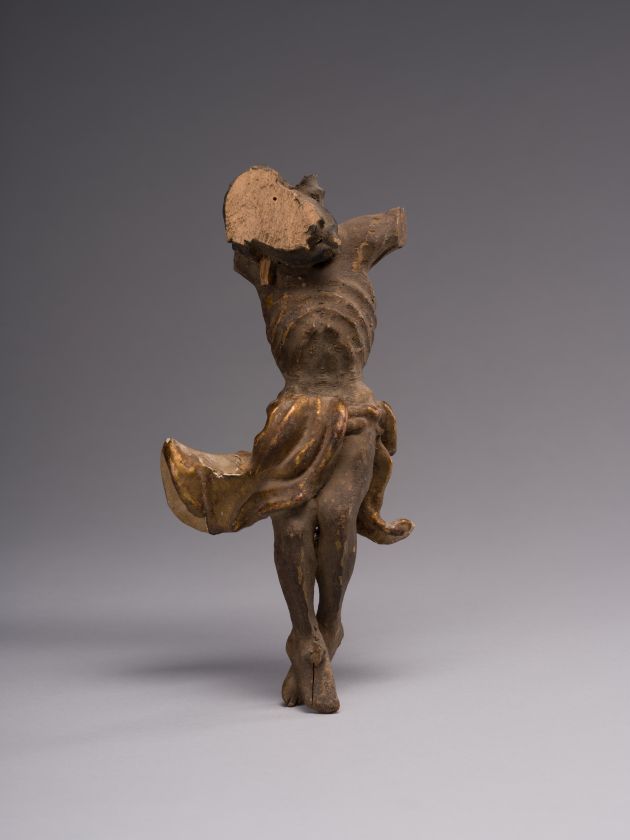
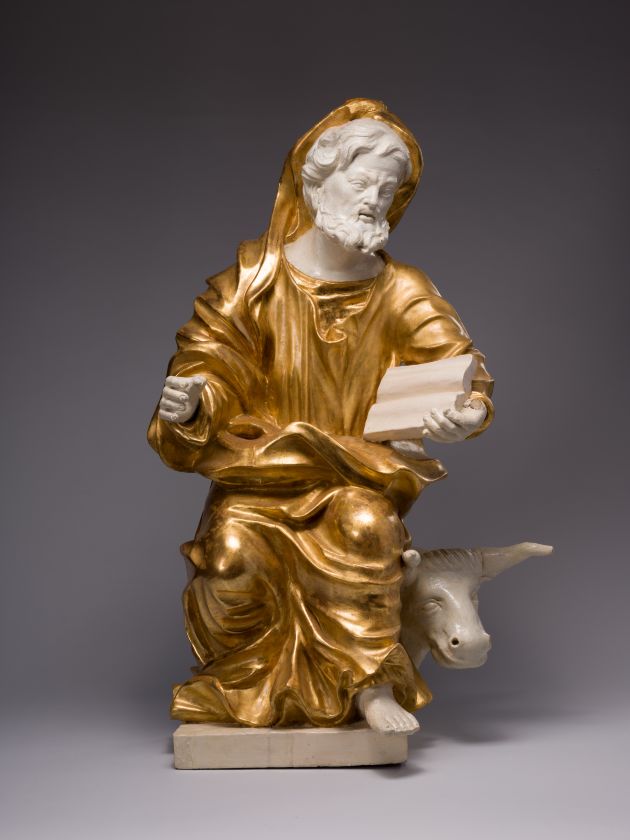
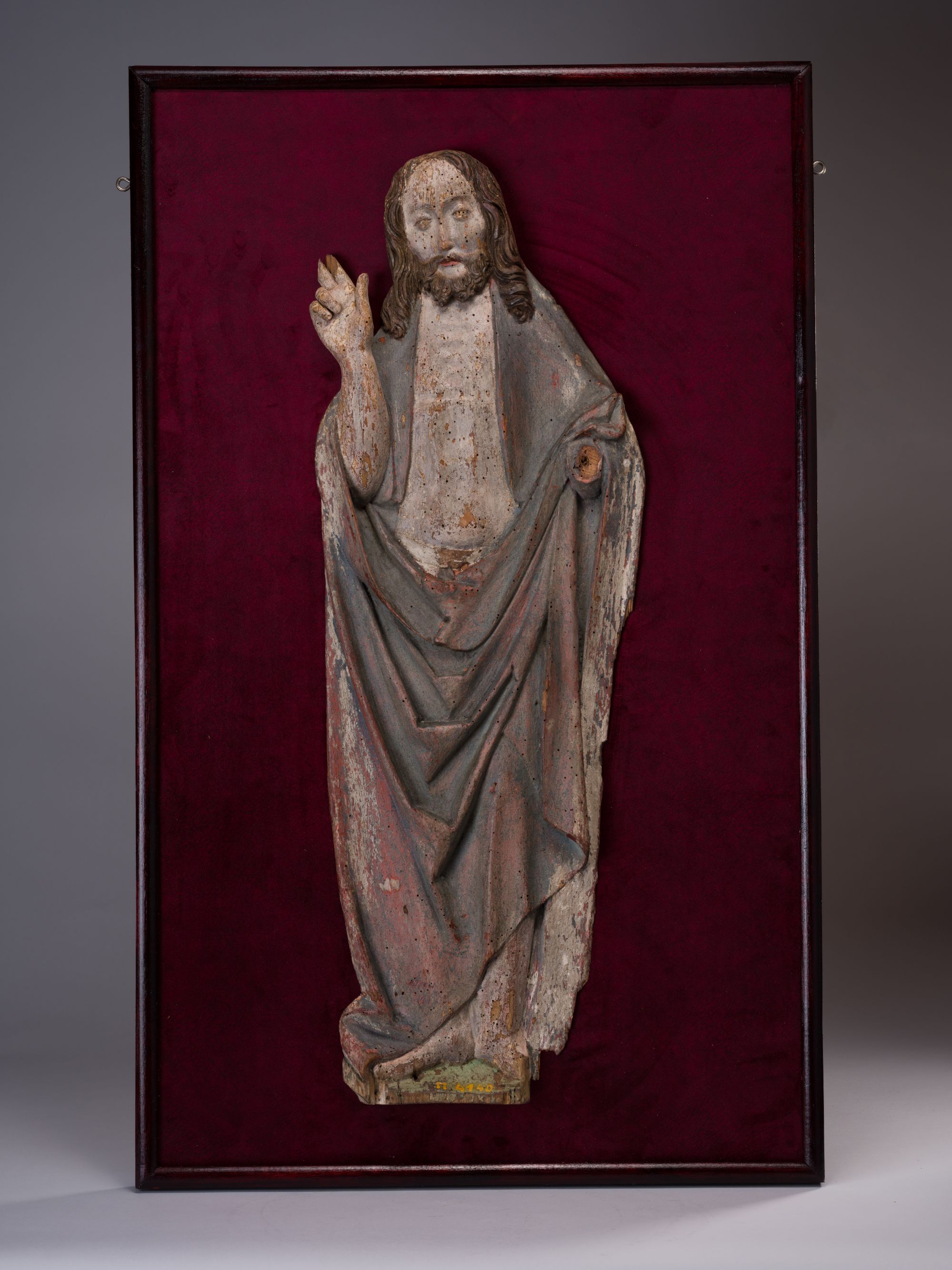
The work presents a relief frontal representation of Christ with a gesture of blessing. The compositional content forms the image not so much of a suffering Christ, but rather of the Saviour addressing the viewer. Christ's gaze is directed almost straight ahead, creating an impression of profound spiritual contact. The vertical construction of the composition corresponds to the medieval symbolism of directing thoughts from the earthly to the heavenly realms. At the same time, a certain disproportionality of the figure is one of the characteristic features of sacred art of the 15th century, where spiritual expressiveness was deemed more important than anatomical accuracy.
Christ's body is wrapped in a himation, the folds of which form a complex system of patterns defined by diagonal and vertical lines. They do not merely convey the materiality of the fabric, but organise the surface and emphasise the vertical movement of the composition. The rhythm of the folds creates a unique plastic flow that unites the upper and lower parts of the figure. Deep recesses between the draperies enhance the play of chiaroscuro, ensuring that the relief was distinctly perceived within the temple space. In the modelling of the face and body, an aspiration towards greater concretisation is noticeable, reflecting the author's tangible interest in individualizing the human image. The preserved polychrome bears witness to the original multifaceted colour scheme of the work, which served not only a decorative function but also heightened the emotional resonance of the image.
The relief representation of Christ features a fully material, physical face, yet its frontality, gesture of blessing, calm, and serenity impart a timeless character to the figure. The absence of expressive movement and dramatic intensity focuses attention on the silent presence of the divine. The viewer does not merely contemplate the sacred image but feels as if they are under the direct address and protection of the Saviour.
The combination of the symbolic construction of the image with a strive for plastic and psychological concentration characterises the art of the transition period from the High Gothic tradition to the new principles of artistic vision.
Legal regulation
Borys Voznytskyi Lviv National Art Gallery