Saint Augustine
unknown
Basic information
- ID
- С-I-422
- Author
- unknown
- Name
- Saint Augustine
- Date of creation
- 18th c.
- Technique
- carving polychromy
- Material
- wood
- Dimensions
- 96 x 40 x 26.5 cm (height x width x depth)
Additionally
- Type
- sculpture
- Genre
- religious
- Plot
- Saint Augustine
- Provenance
- Collection of Leon Pininski
- Exposition
- Olesko Castle
Information about author
Object description
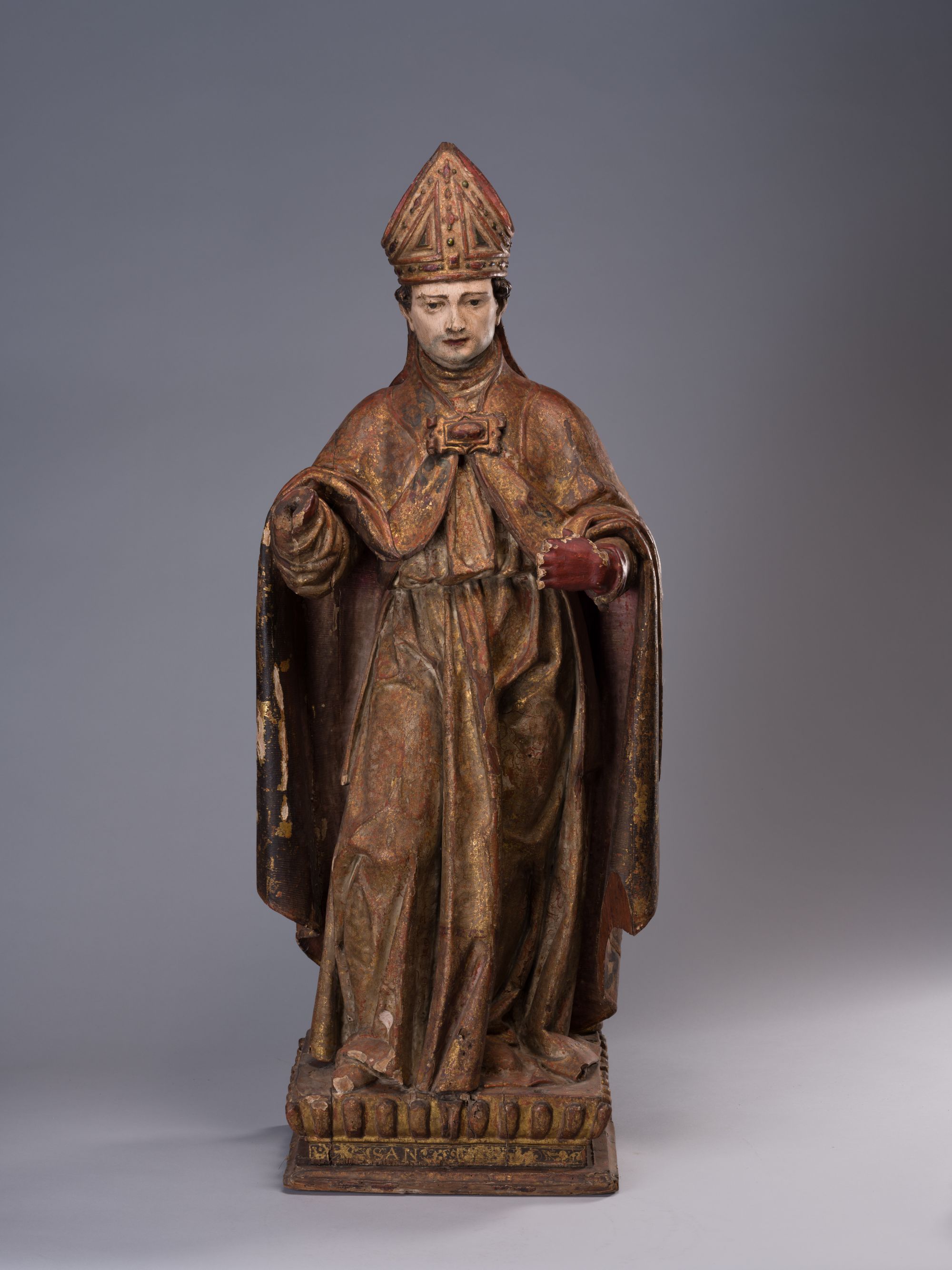
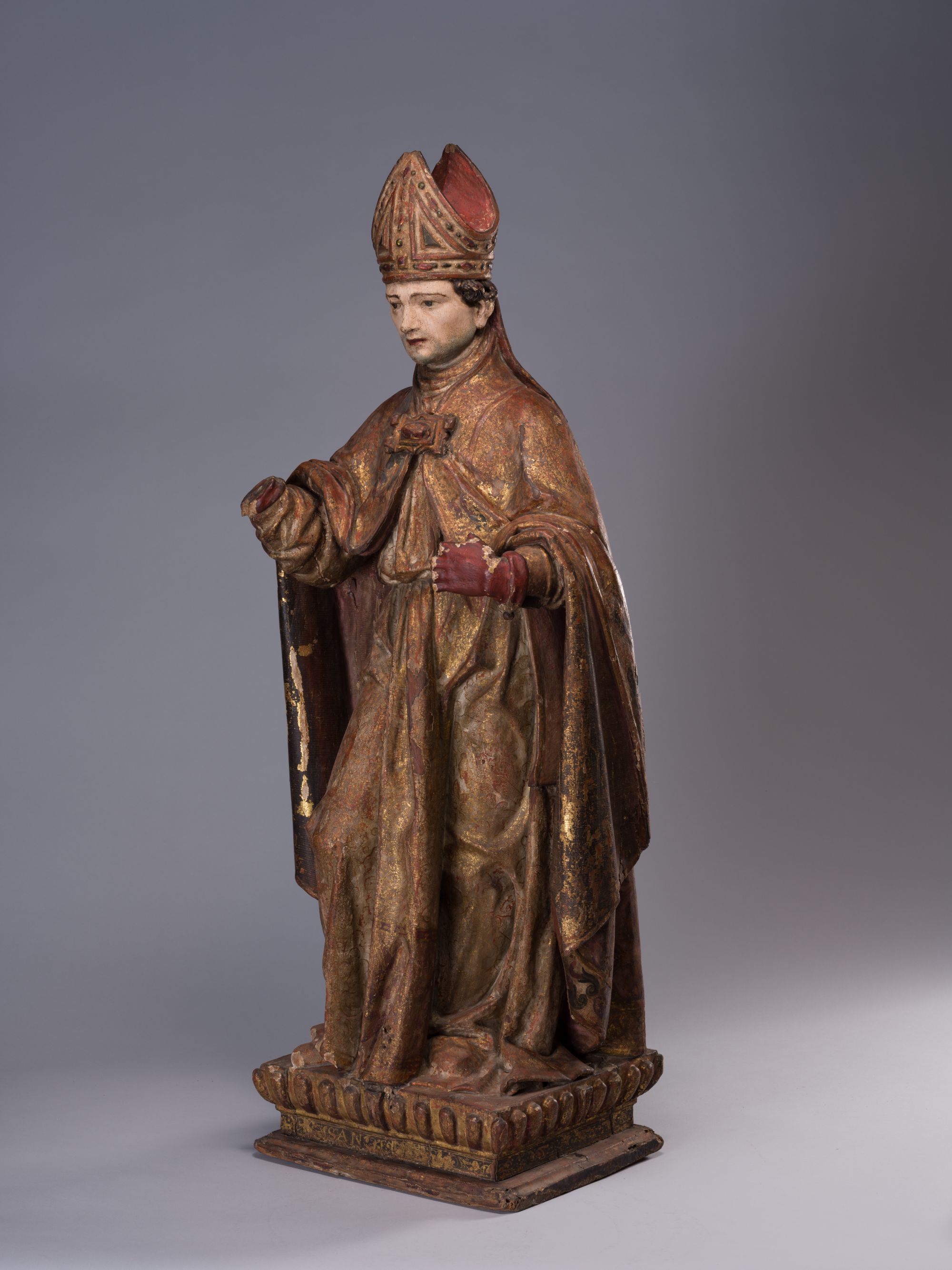
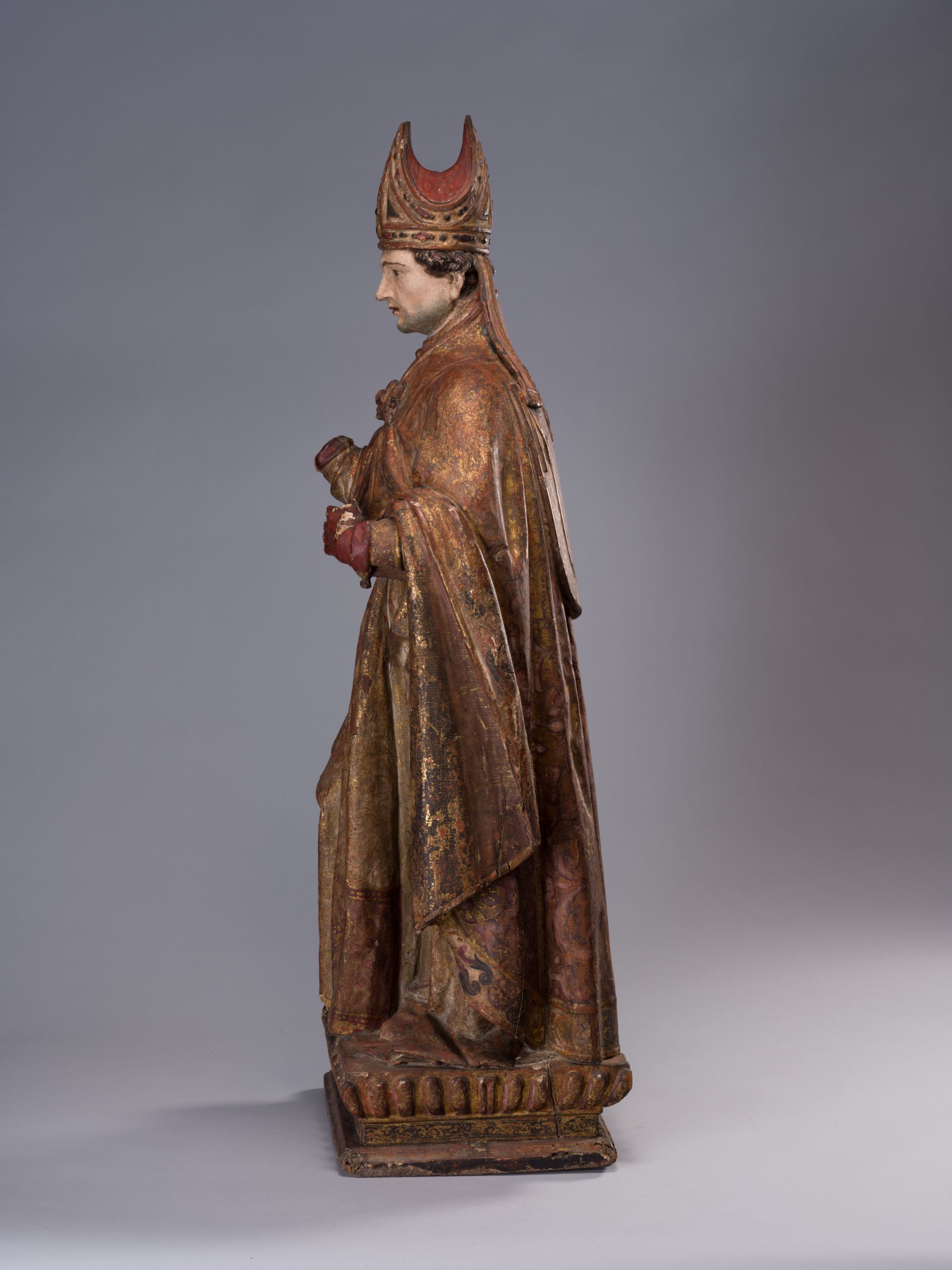
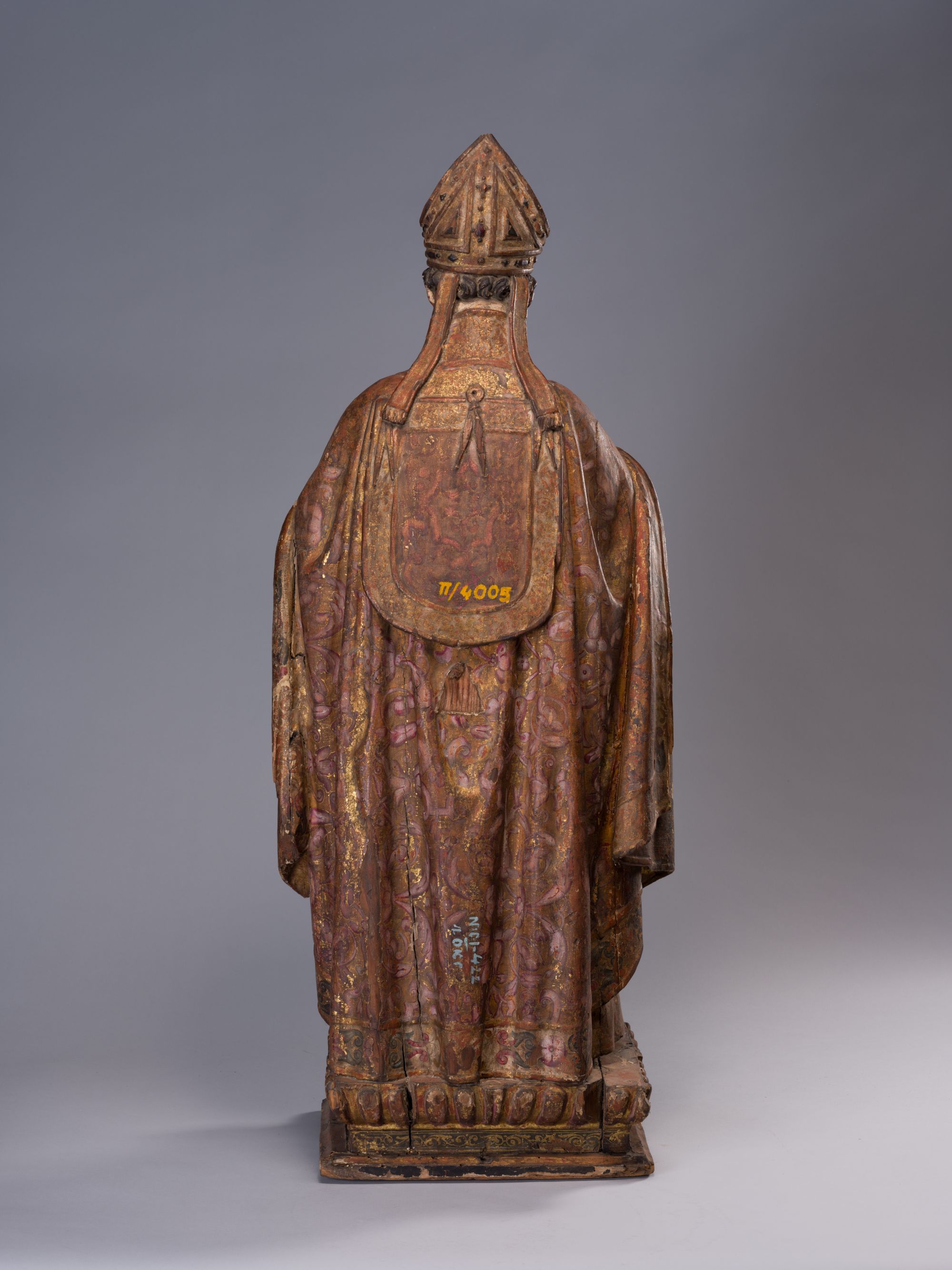
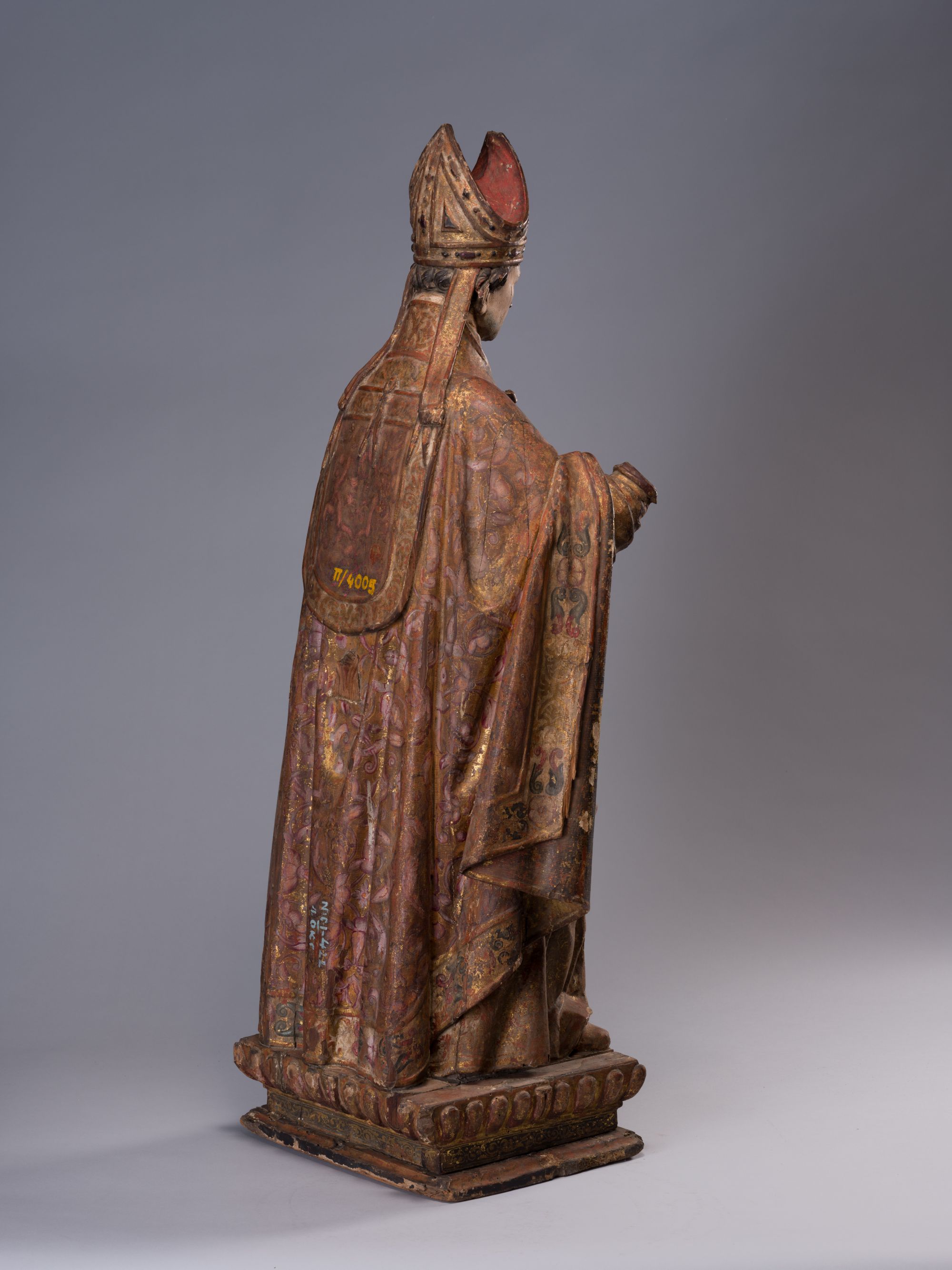
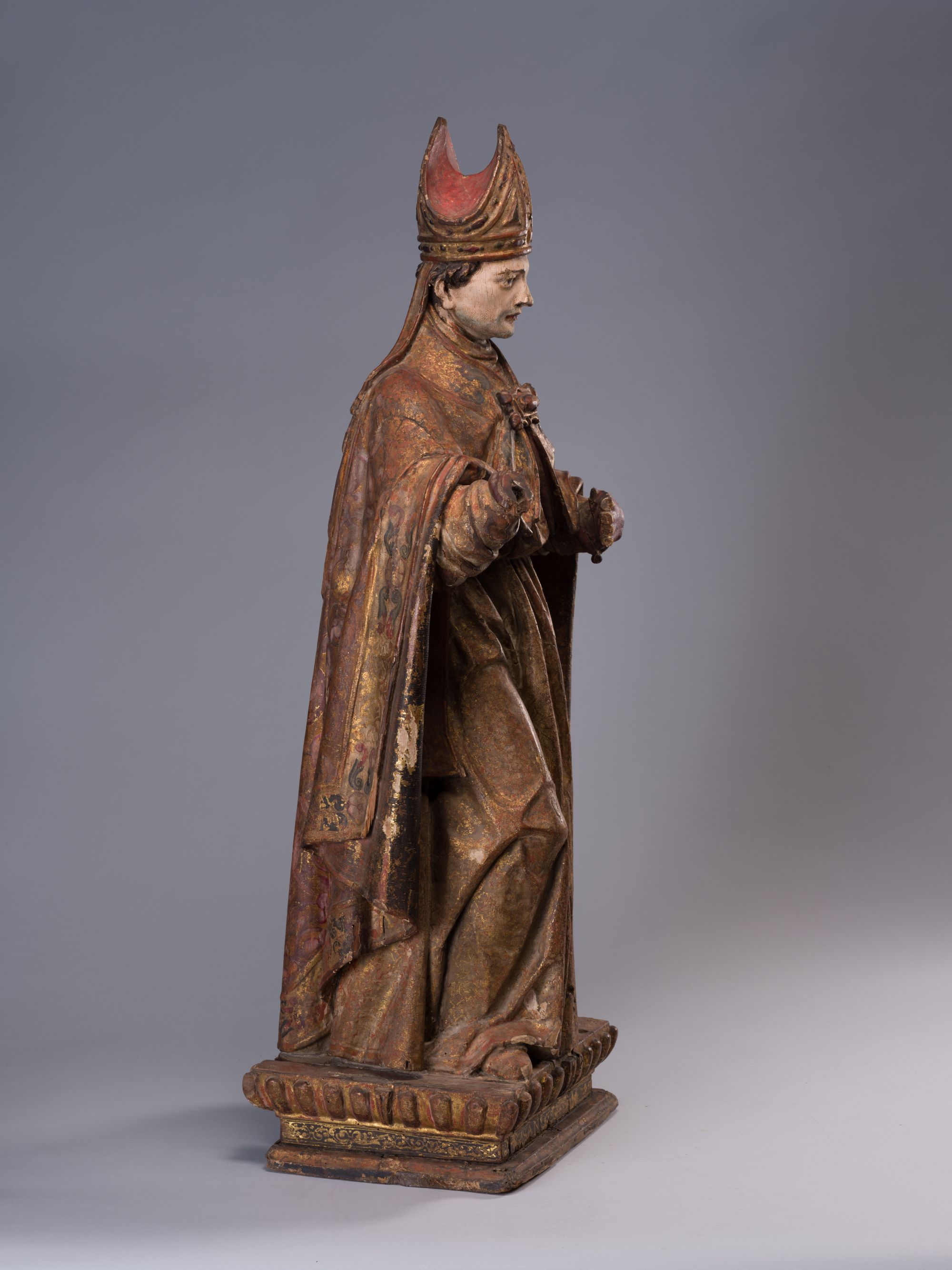
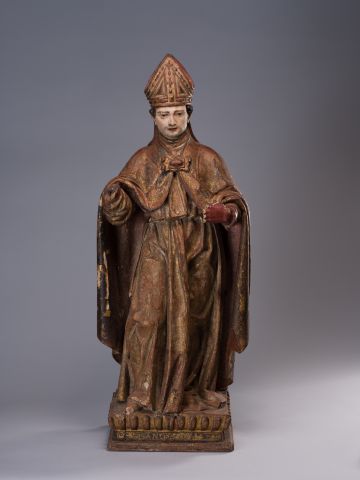
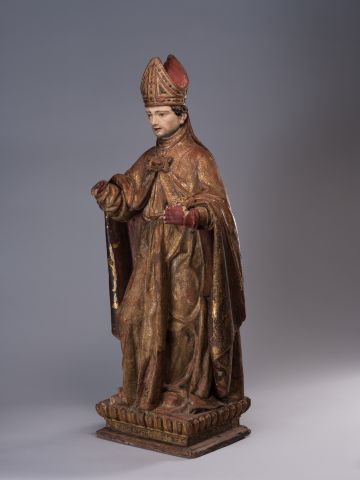
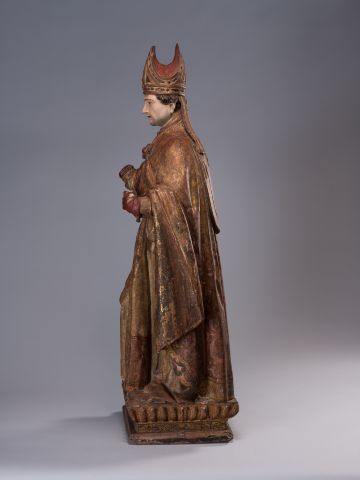
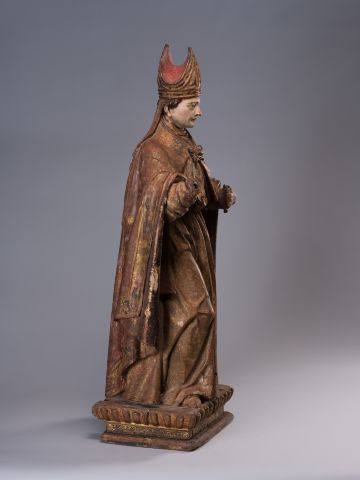
The contrapposto figure of Saint Augustine is presented frontally in full length, with a clearly defined vertical axis. The sculptural depiction belongs to the tradition of Western European sacred plastic arts. The figure stands on a low, carved plinth; its posture is serene and static. The symmetrically constructed composition underscores the high spiritual status of the saint and lends a representative character to the image.
The head of the saint is crowned with a bishop's mitre featuring a relief geometricised ornament. The young face of Augustine is distinguished by regular yet generalised features. The master does not strive for individual portrait depiction – the saint's face is treated in a typified manner adhering to the traditions of sacred plastic arts. The clear lines of straight eyebrows, expressive almond-shaped eyes, firmly closed lips, and a soft oval characterise the saint's countenance. The calm gaze and absence of sharp facial expressions create an impression of inner concentration and spiritual discipline.
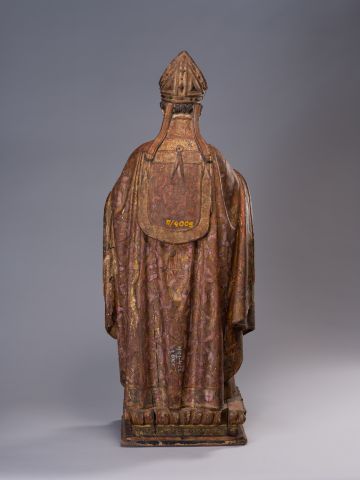
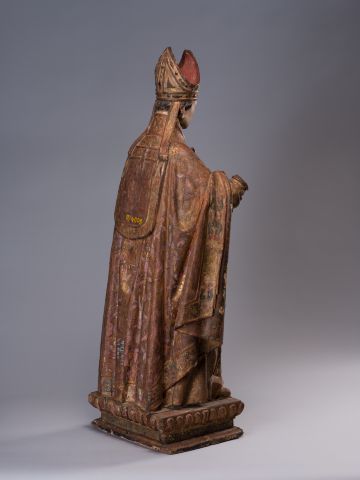
Augustine is dressed in long robes, over which is a pluvial (cope) fastened on the chest with a decorative fibula. The drapery is modelled with deep vertical and diagonal relief folds which, while enveloping the figure, create volume and simultaneously conceal the anatomical structure of the body. In the lower part of the sculptural depiction, there is a pedestal with a decorative inscribed band. It is this element that visually separates the bishop from the earthly realm, transforming his figure into a kind of sacred sign.
In the rendition of the saint's image, a contrast between the stillness of the figure and its inner energy is palpable. Augustine appears not as a specific historical individual, but primarily as a bearer of the spiritual. The majesty of the image is highlighted by the mitre, rich attire, gilded details, and the vertical construction of the composition. The representative character of the image is softened by the calm expression of the face.
Legal regulation
Borys Voznytskyi Lviv National Art Gallery