Figure of an Angel
unknown folk craftsman
Basic information
- ID
- С-I-932
- Author
- unknown folk craftsman
- Name
- Figure of an Angel
- Date of creation
- 18th c.
- Country
- Ukraine
- Culture
- Folk
- Technique
- carving polychromy
- Material
- wood
- Dimensions
- 38 x 14 x 12 cm (height x width x depth)
Additionally
- Type
- sculpture
- Genre
- religious
- Provenance
- Demivka village, Stryi district, Lviv region
Information about author
Object description
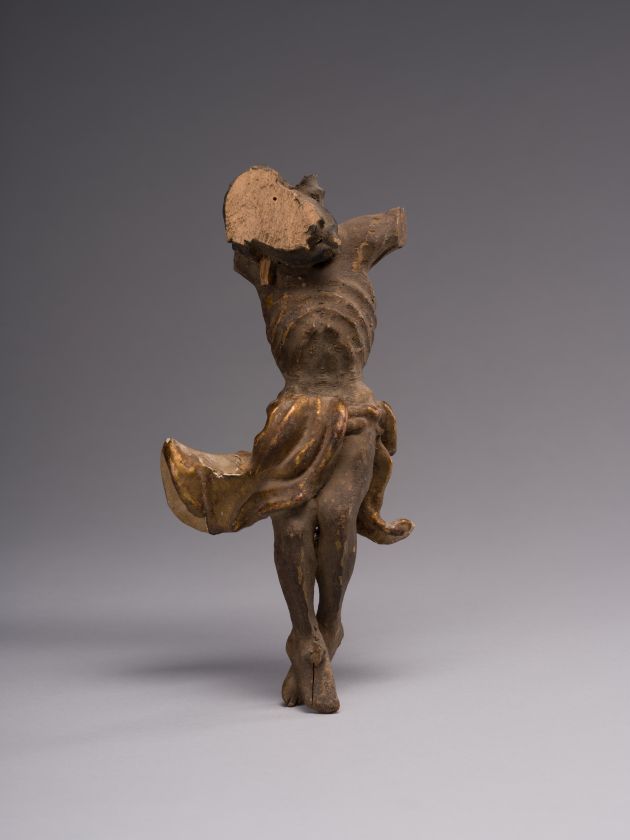
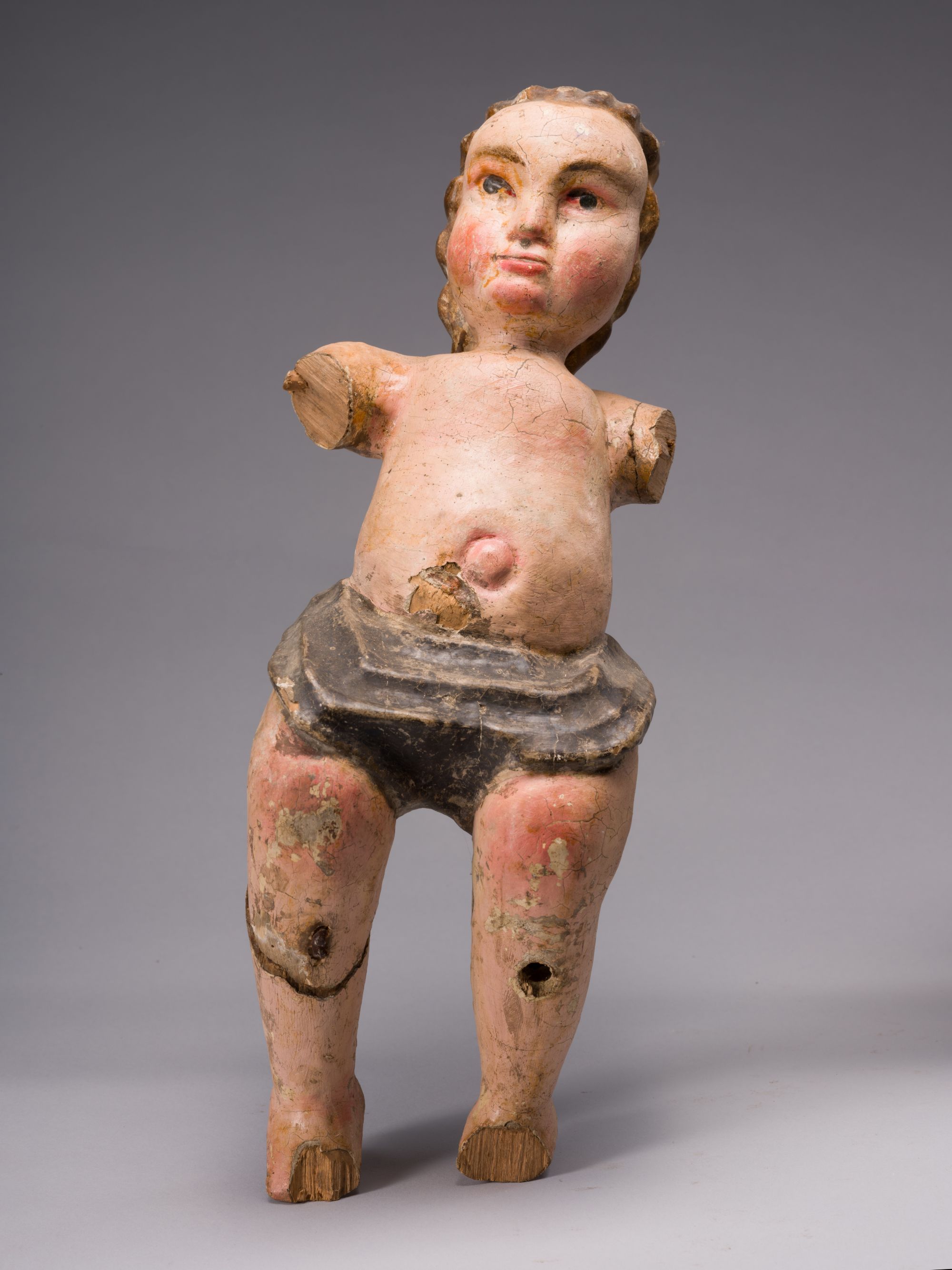
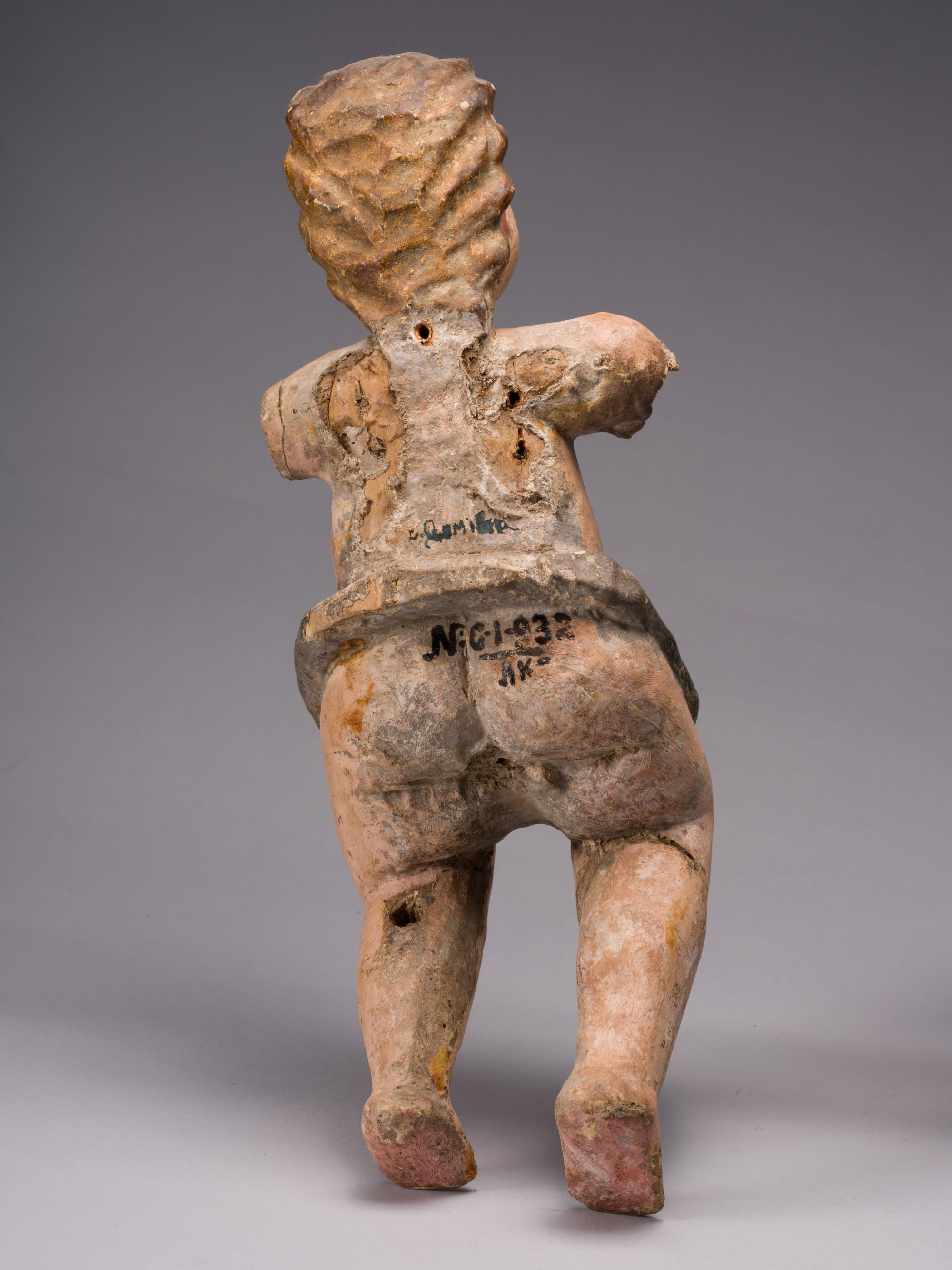
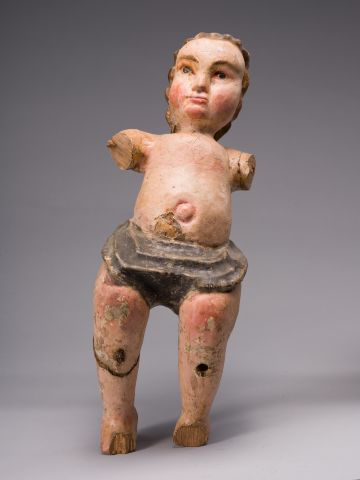
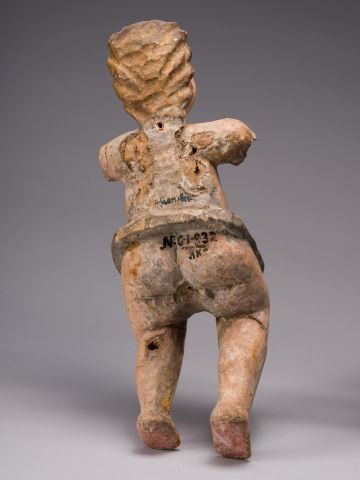
The work reproduces the childish figure of a putto angel – one of the favourite images of Ukrainian Baroque sacred plastic art, which used to adorn altar compositions and iconostases in the churches of Galicia. The sculptural depiction is distinguished by the naive spontaneity of a folk interpretation, seamlessly integrated with the skills of the plastic language of the Western Ukrainian sculptural school acquired by the master. The figure of the angel is presented with legs apart and slightly bent at the knees, a gently turned torso, and a subtly raised head with a gaze directed upwards. The round childish face with chubby cheeks, a turned-up nose, a softly contoured chin, and small lips conveys an idealised depiction of an angelic image typical of Baroque sculpture.
The rounded abdomen with an accentually carved navel, alongside the smooth lines of the shoulders and hips, are carved in a generalised manner without anatomical detail, which is a characteristic feature of a folk interpretation of an academic model. A short drapery, modelled with crisp horizontal folds, envelopes the hips. The sculpture has sustained significant losses, making it difficult to reconstruct the original compositional layout of the image. The plastic treatment of the form, the fluid, rounded volumes of the body, and the slight asymmetry of the pose indicate the craftsman's familiarity with the emotional language of the Late Baroque. However, the disproportionate figure and simplified rendering of details point to the authorship of a folk master who worked relying on their own understanding of the borrowed image. The polychrome painting of the sculpture is executed in a warm palette: the angel's body is rendered in a flesh-pink tone, while the flush gives the face a lively, warm appearance. A dark blue drapery covering the naked body acts as a dark contrast. Despite the losses of parts of the work and the polychrome layers, this sculptural depiction of an angel remains a valuable example of 18th-century Western Ukrainian folk sacred sculpture and a distinct testament to the local artistic tradition.
The rounded abdomen with an accentually carved navel, alongside the smooth lines of the shoulders and hips, are carved in a generalised manner without anatomical detail, which is a characteristic feature of a folk interpretation of an academic model. A short drapery, modelled with crisp horizontal folds, envelopes the hips. The sculpture has sustained significant losses, making it difficult to reconstruct the original compositional layout of the image. The plastic treatment of the form, the fluid, rounded volumes of the body, and the slight asymmetry of the pose indicate the craftsman's familiarity with the emotional language of the Late Baroque. However, the disproportionate figure and simplified rendering of details point to the authorship of a folk master who worked relying on their own understanding of the borrowed image. The polychrome painting of the sculpture is executed in a warm palette: the angel's body is rendered in a flesh-pink tone, while the flush gives the face a lively, warm appearance. A dark blue drapery covering the naked body acts as a dark contrast. Despite the losses of parts of the work and the polychrome layers, this sculptural depiction of an angel remains a valuable example of 18th-century Western Ukrainian folk sacred sculpture and a distinct testament to the local artistic tradition.
Legal regulation
Borys Voznytskyi Lviv National Art Gallery