Images of Prophets
unknown
Basic information
Additionally
- Type
- painting
- Genre
- religious
- Plot
- Prophet
- Provenance
- Berezhnytsia village, Zhydachiv district, Lviv region
Information about author
Object description
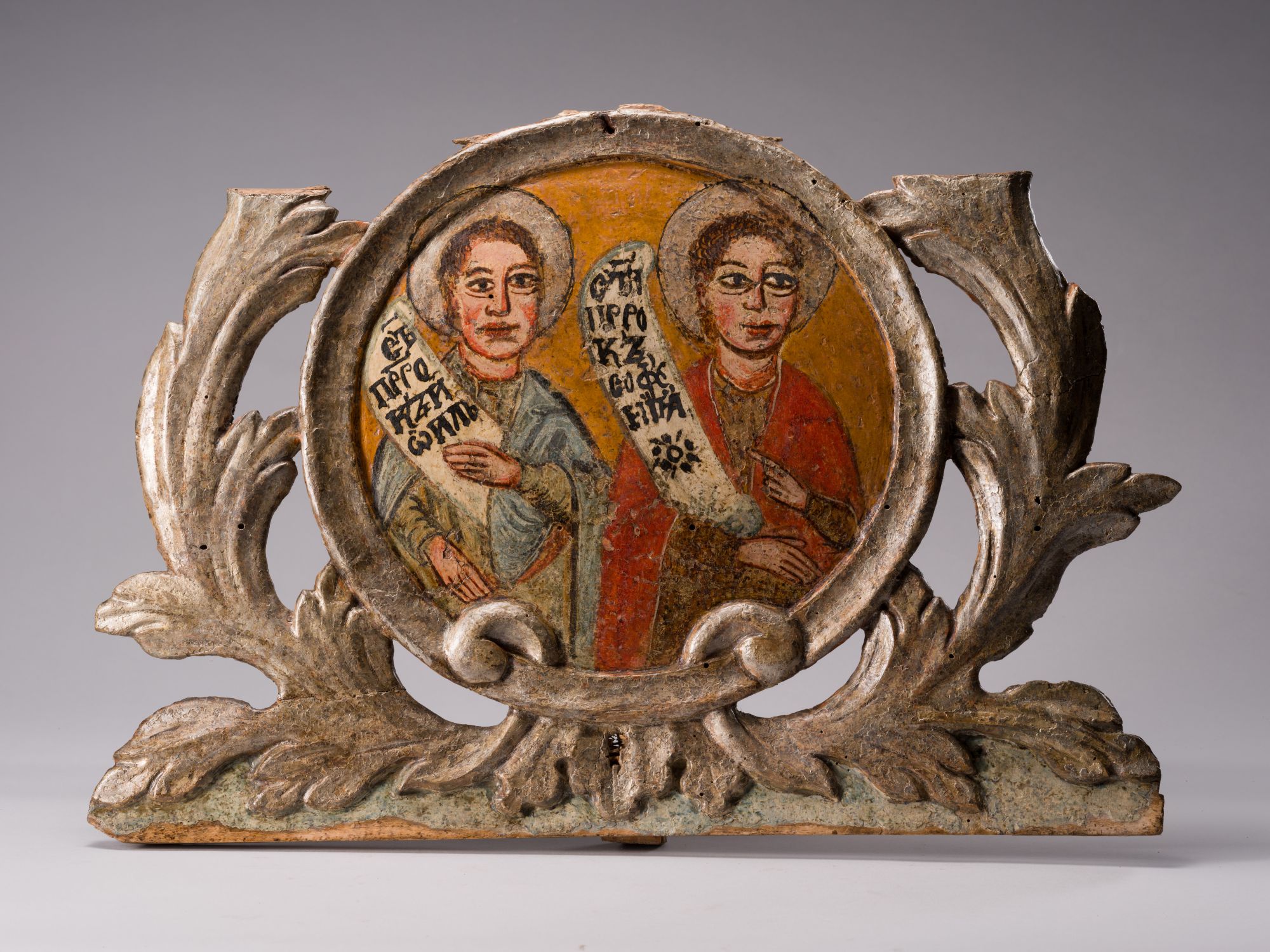
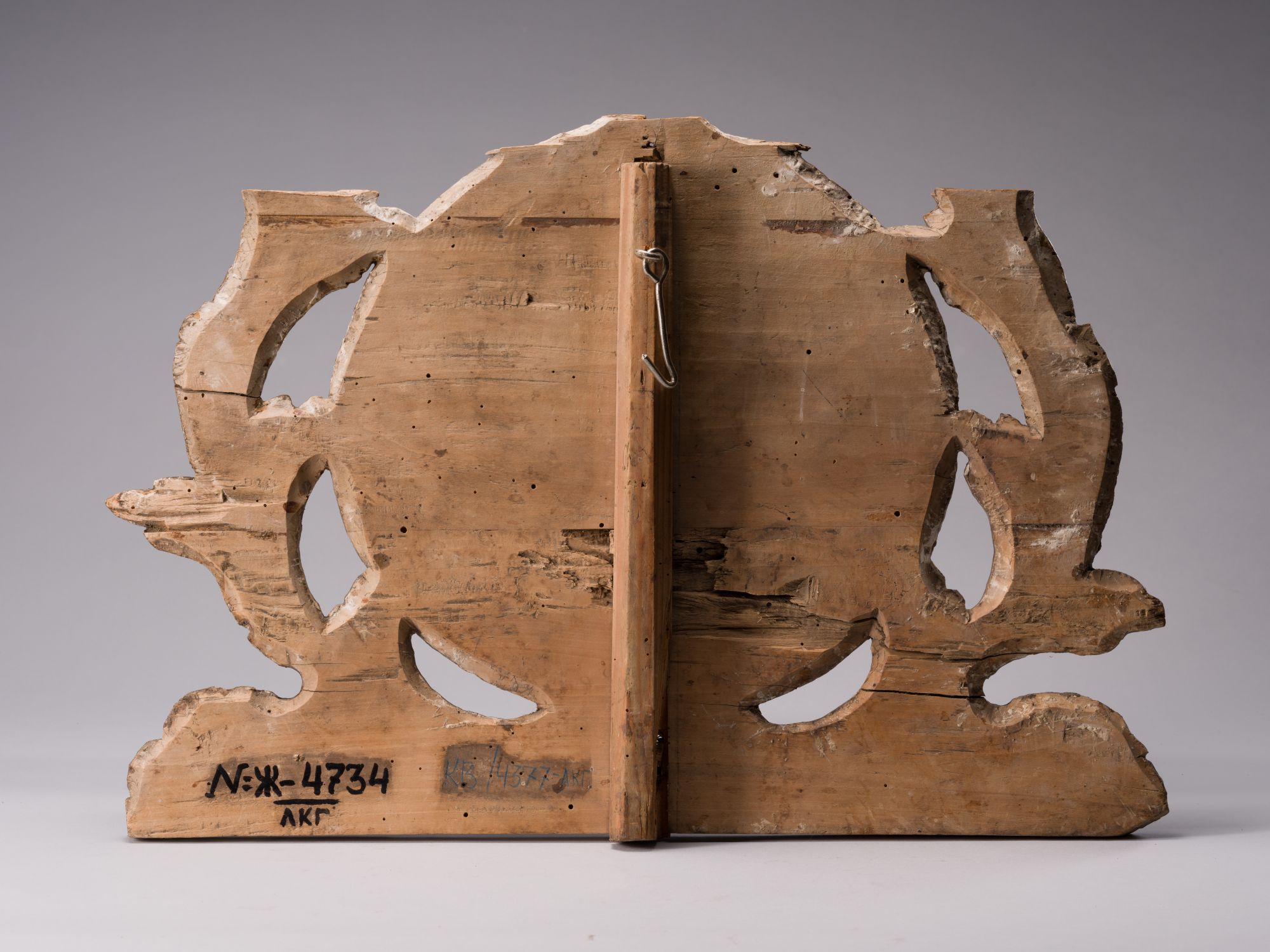
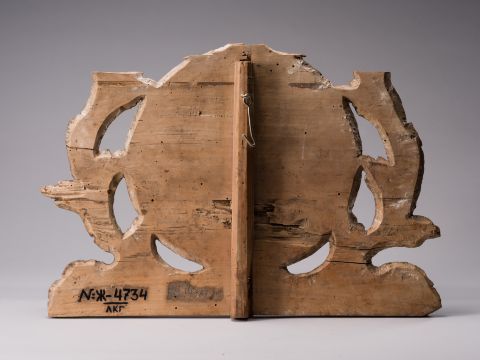
Set within a circular medallion featuring a carved decorative frame, this double portrait depicts two prophets who were once part of a Baroque iconostasis composition. This piece originated from the prophetic tier, where Old Testament figures were traditionally portrayed in medallions, with the frame itself blending seamlessly into the carved decoration of the iconostasis ensemble. The half-length figures of the saints are presented holding unfurled scrolls, the traditional attribute of prophets. Their hands are pressed to their chests in gestures of reverent, silent prayer. The youthful faces of the saints are static, modelled flatly with graphically rendered features and dominant, large, almond-shaped eyes. The gazes of the men are directed at the viewer, creating an effect of internal dialogue wherein the prophets emerge as witnesses speaking across time.
Both figures densely occupy the background of the medallion, touching its edges and leaving virtually no negative space. Despite the modest dimensions of the artwork, this compositional solution creates an impression of monumentality. The colour palette is expressive and laconic – a warm golden-ochre background contrasts with deep red and cool blue-grey tones of the garments. Against the general background, the white scrolls with black inscriptions function as the dominant elements. The faces of the prophets are painted in a manner characteristic of folk masters: simplified features, sharp graphic lines of the eyebrows, eyes, and nose, piercing gazes, and translucent blushing cheeks. This suggests an iconographer from a local, provincial school working within a tradition where meticulous details give way to directness of expression, imbuing the images with sincerity and spiritual power. The craftsman's skill is evident in the sculptural carving of the medallion's decorative ornamentation. The lush frame of stylized acanthus-like leaves and scrolls generates a striking chiaroscuro contrast. The artwork demonstrates that in the eighteenth century, masterful carving and the naive honesty of painting coexisted on Western Ukrainian lands to forge a unified sacred space.
Both figures densely occupy the background of the medallion, touching its edges and leaving virtually no negative space. Despite the modest dimensions of the artwork, this compositional solution creates an impression of monumentality. The colour palette is expressive and laconic – a warm golden-ochre background contrasts with deep red and cool blue-grey tones of the garments. Against the general background, the white scrolls with black inscriptions function as the dominant elements. The faces of the prophets are painted in a manner characteristic of folk masters: simplified features, sharp graphic lines of the eyebrows, eyes, and nose, piercing gazes, and translucent blushing cheeks. This suggests an iconographer from a local, provincial school working within a tradition where meticulous details give way to directness of expression, imbuing the images with sincerity and spiritual power. The craftsman's skill is evident in the sculptural carving of the medallion's decorative ornamentation. The lush frame of stylized acanthus-like leaves and scrolls generates a striking chiaroscuro contrast. The artwork demonstrates that in the eighteenth century, masterful carving and the naive honesty of painting coexisted on Western Ukrainian lands to forge a unified sacred space.
Legal regulation
Borys Voznytskyi Lviv National Art Gallery