Clergyman Figure
unknown folk craftsman
Basic information
- ID
- С-I-1472
- Author
- unknown folk craftsman
- Name
- Clergyman Figure
- Date of creation
- 18th–19th c.
- Country
- Ukraine
- Culture
- Folk
- Technique
- carving polychromy
- Material
- wood
- Dimensions
- 47 x 14.5 x 13 cm (height x width x depth)
Information about author
Object description
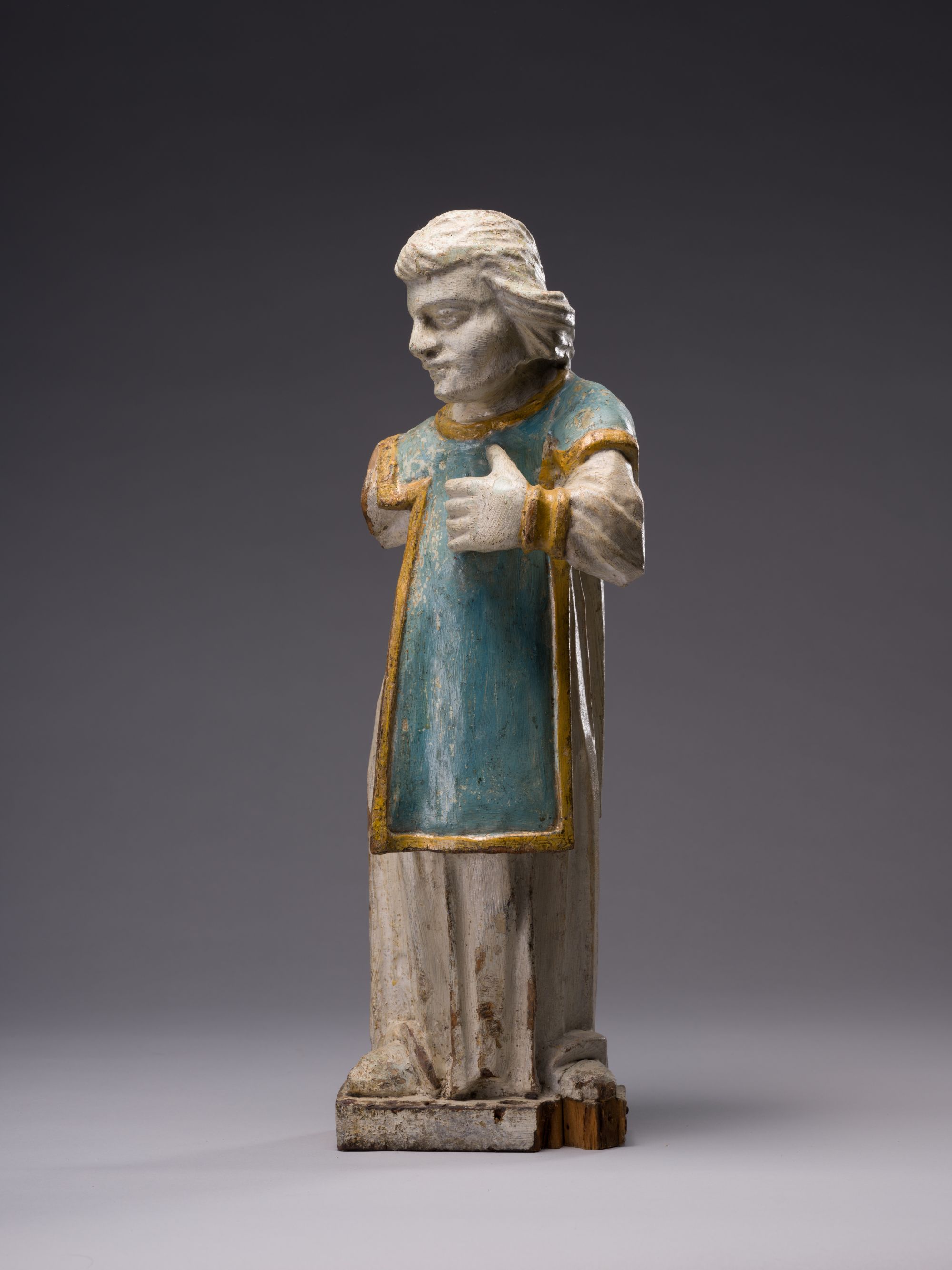
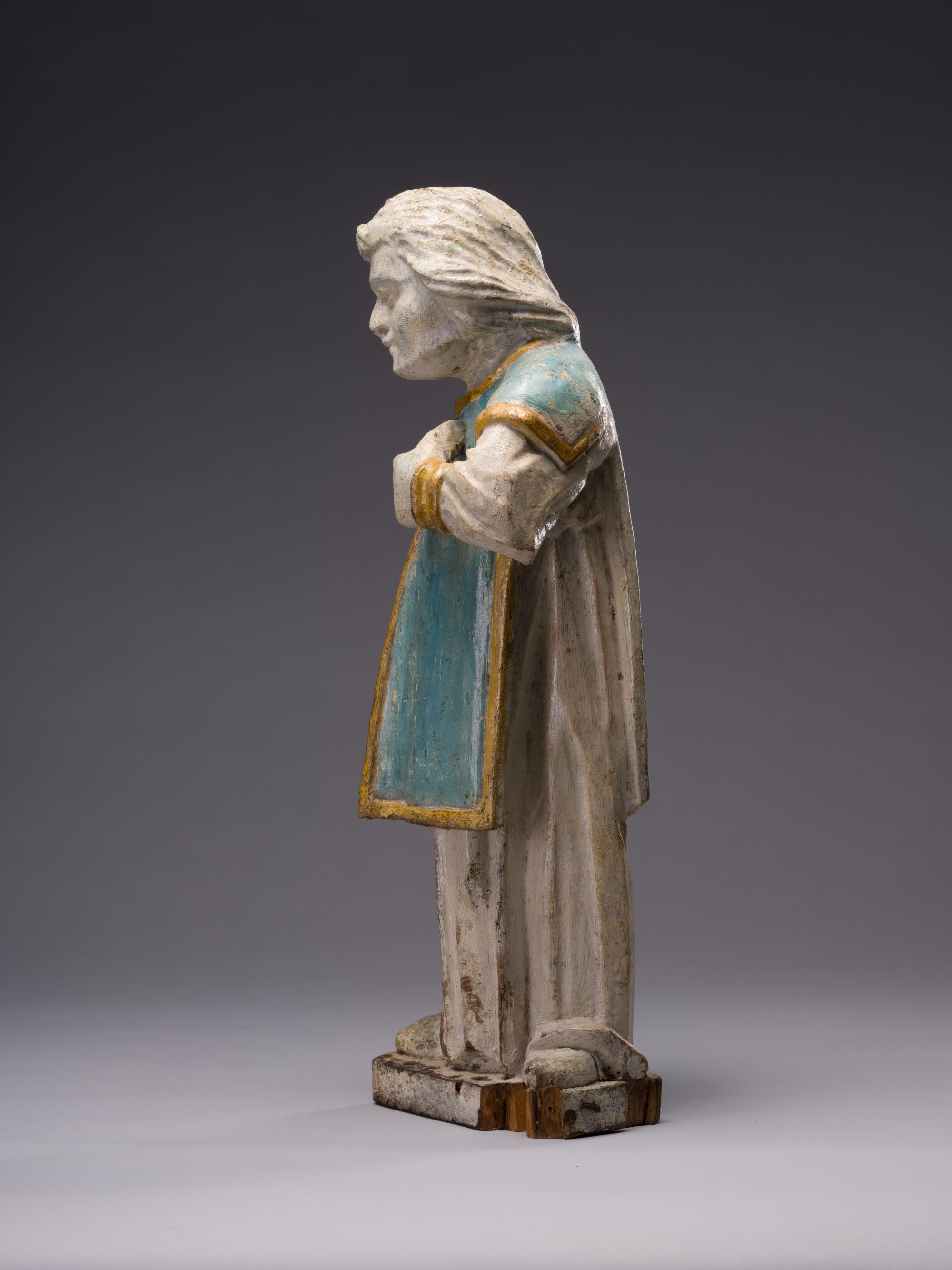
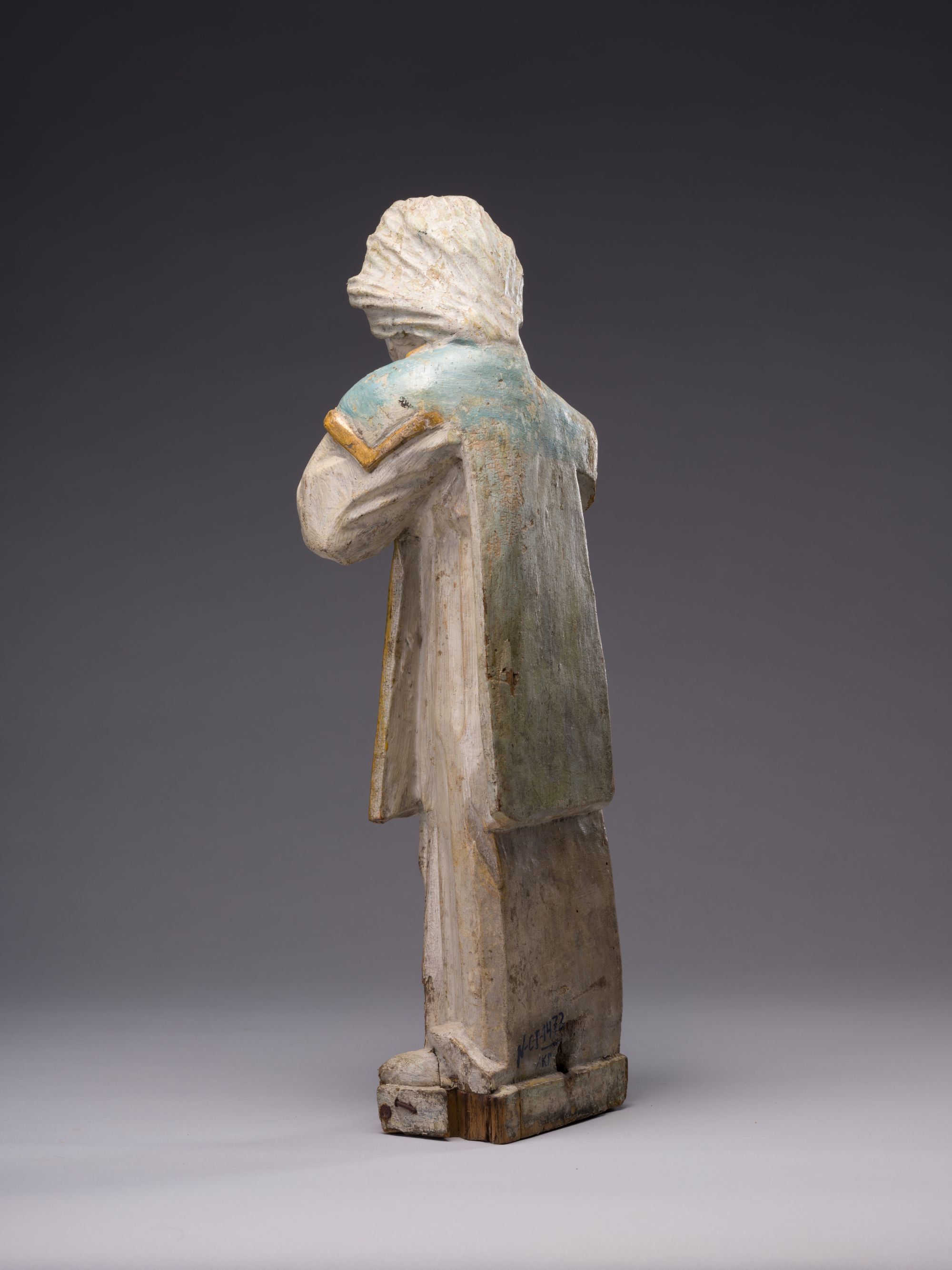
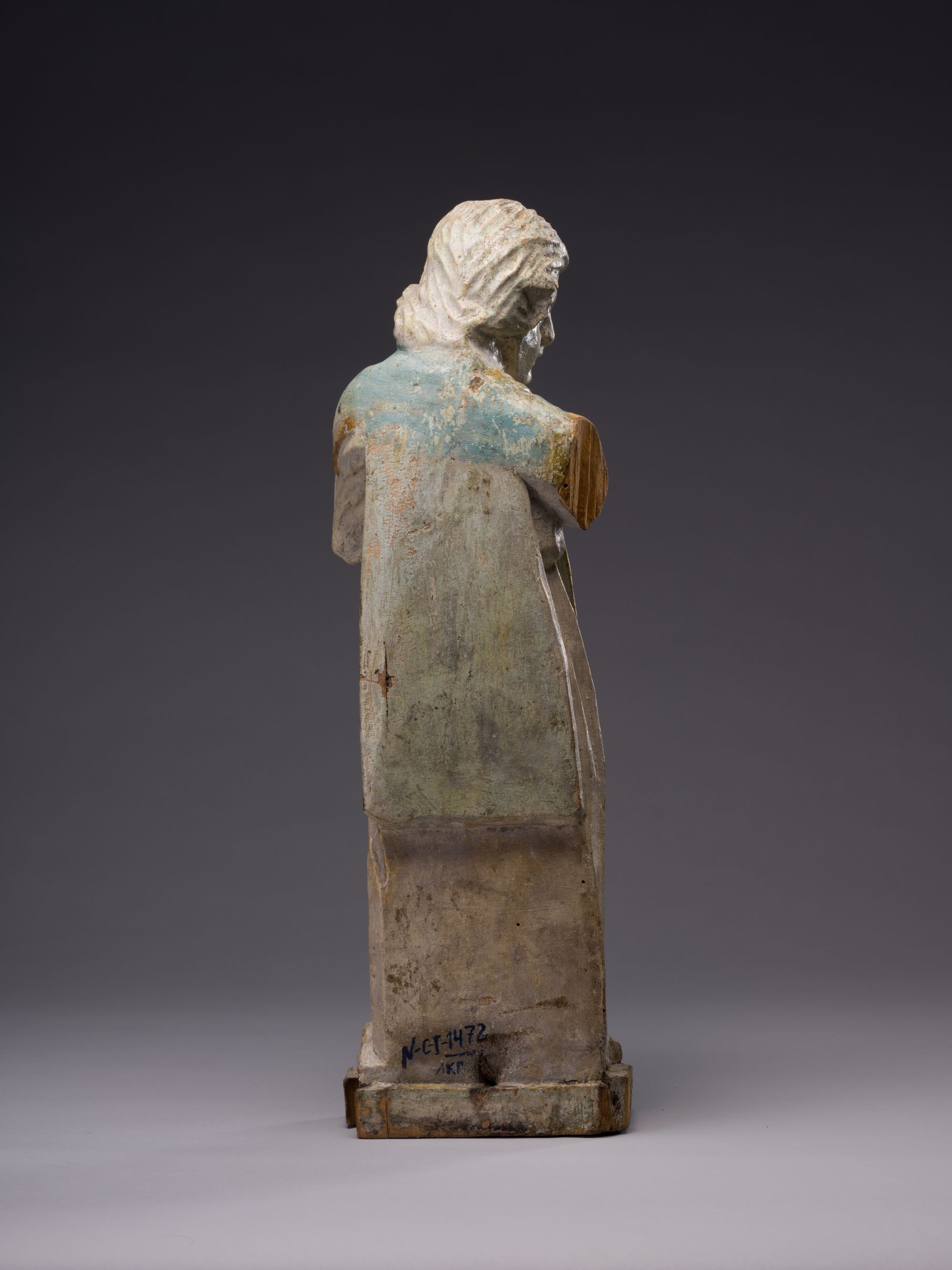
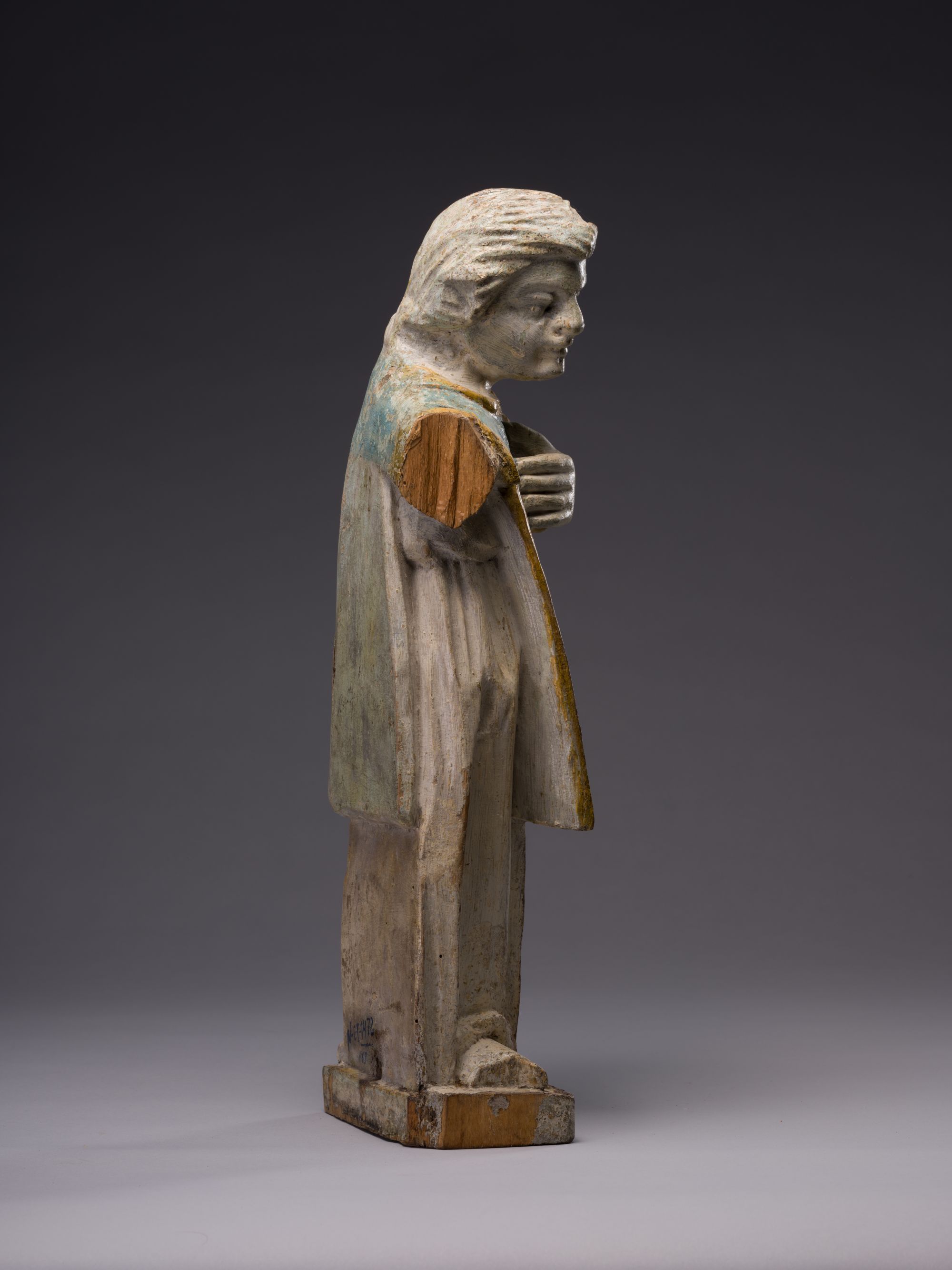
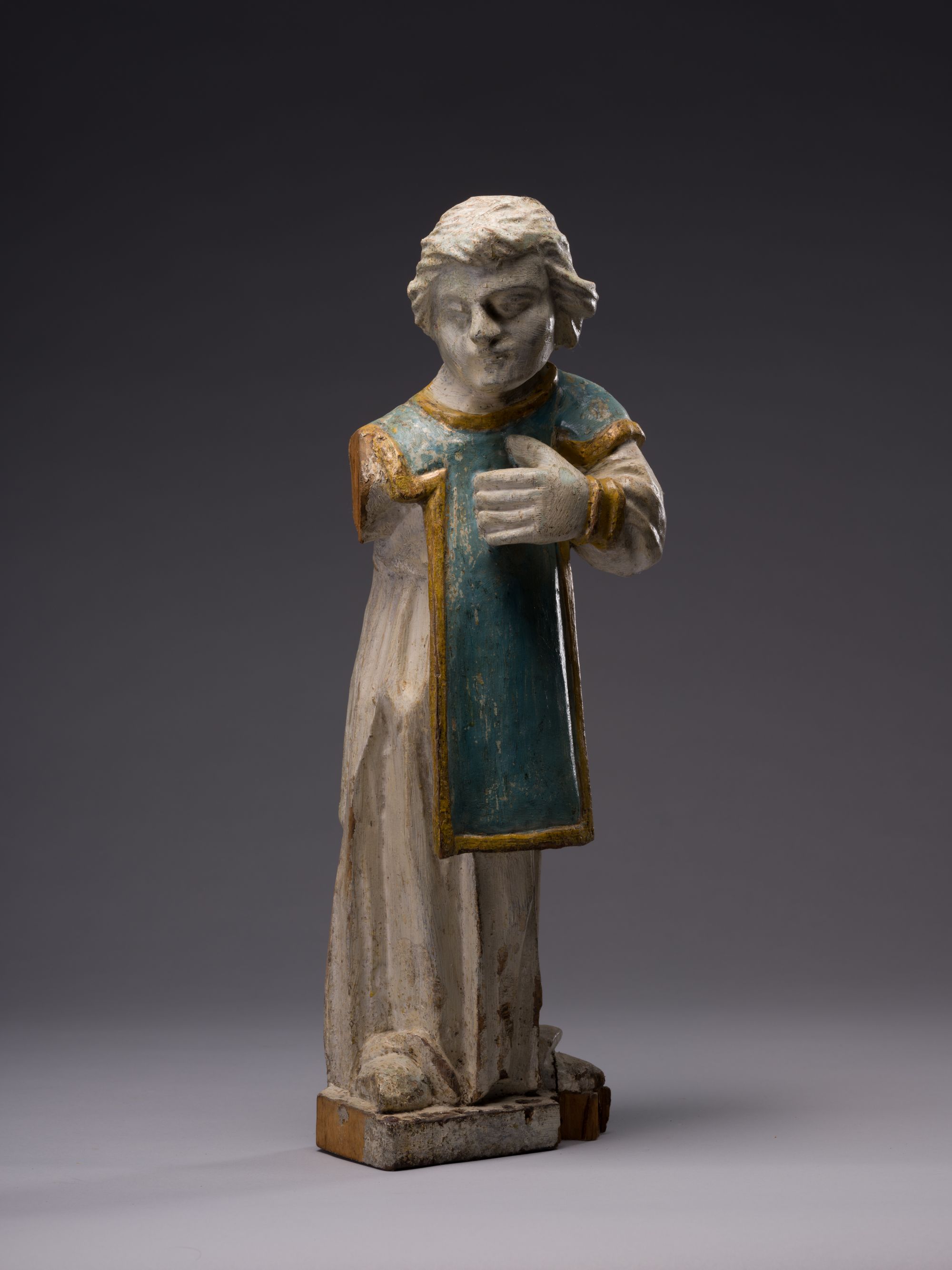
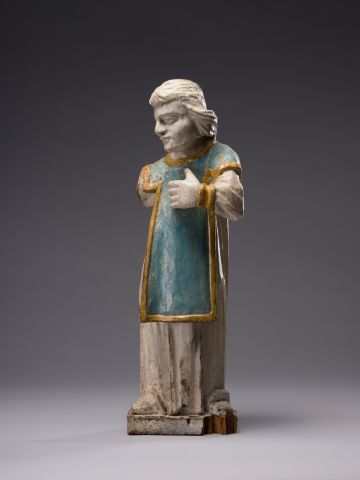
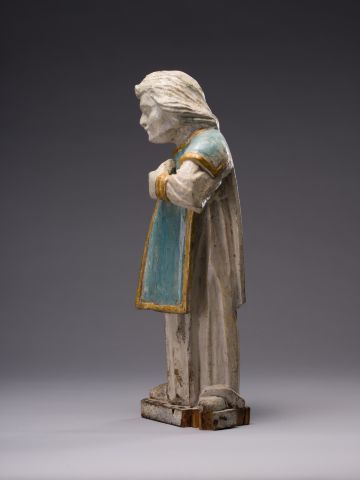
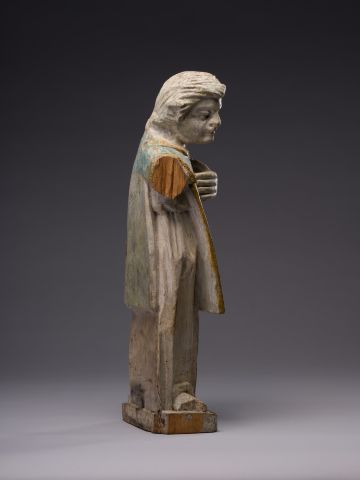
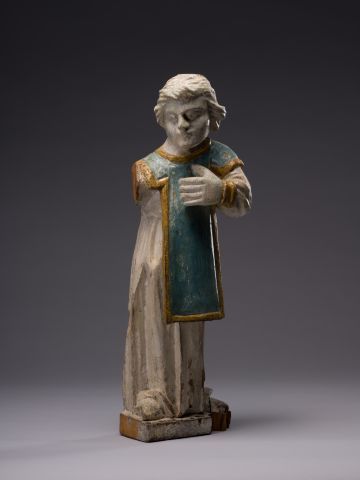
This small wooden sculpture presents a full-length, frontal figure of a man in clerical attire. The figure is static, modelled in plastic volumes, and carved from a single piece of wood, creating an impression of monolithism. The man's head is slightly turned and tilted towards his right shoulder. The softly modelled round face, with large expressive eyes, modestly lowered eyelids, a straight nose, and calmly closed lips, is devoid of individualised features, yet radiates a quiet concentration and silent prayerfulness. The hair is thick, short, brushed back, and volumetrically modelled with laconic strands arranged in a neat hairstyle. Together, this creates a generalised image of a clergyman – a symbolic sign-image typical of folk art, rather than a portrait.
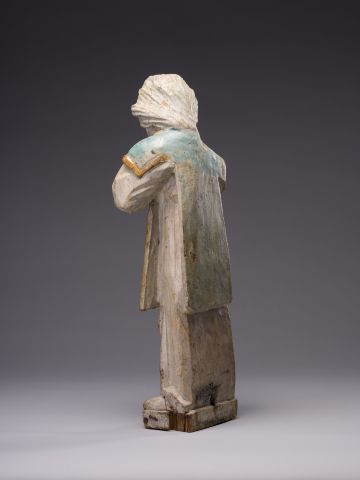
His left arm is bent and pressed against his chest, which is a traditional gesture of piety, humility, and inner focus. The hand is distinctively modelled with clearly defined fingers, though treated somewhat roughly and anatomically simplified. Such laconism of form is typical of folk carving, where the main focus is not anatomical accuracy, but the clarity of the gesture and the expressiveness of the image. The man is dressed in a long white alb, over which is a short light blue cloak edged with a gold border. In terms of structure and colour scheme, the image resembles a deacon: a white under-vestment with a short upper tunic trimmed with gold. No attributes that could help identify a specific figure have survived.
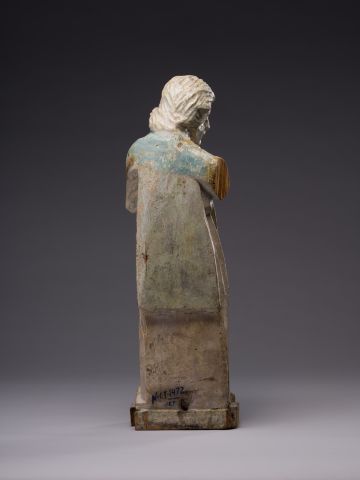
The colour scheme is very restrained, defined by the contrast of two colours – white and light blue, with minor touches of gold. The counterposition of blue and gold distinguishes the figure against the white background and emphasises the vestments as a sacred sign. Here, colour primarily serves a symbolic and decorative function: blue is traditionally associated with the heavenly realm, purity, and grace; gold with the light of divine glory; and white with purity and holiness. Despite the losses, the sculpture has preserved the integrity of its form and reads as a coherent artistic image. It is characterised by simplified plastic forms, conventional proportions, bright local colour, decorativeness, and sincere emotional simplicity.
Legal regulation
Borys Voznytskyi Lviv National Art Gallery