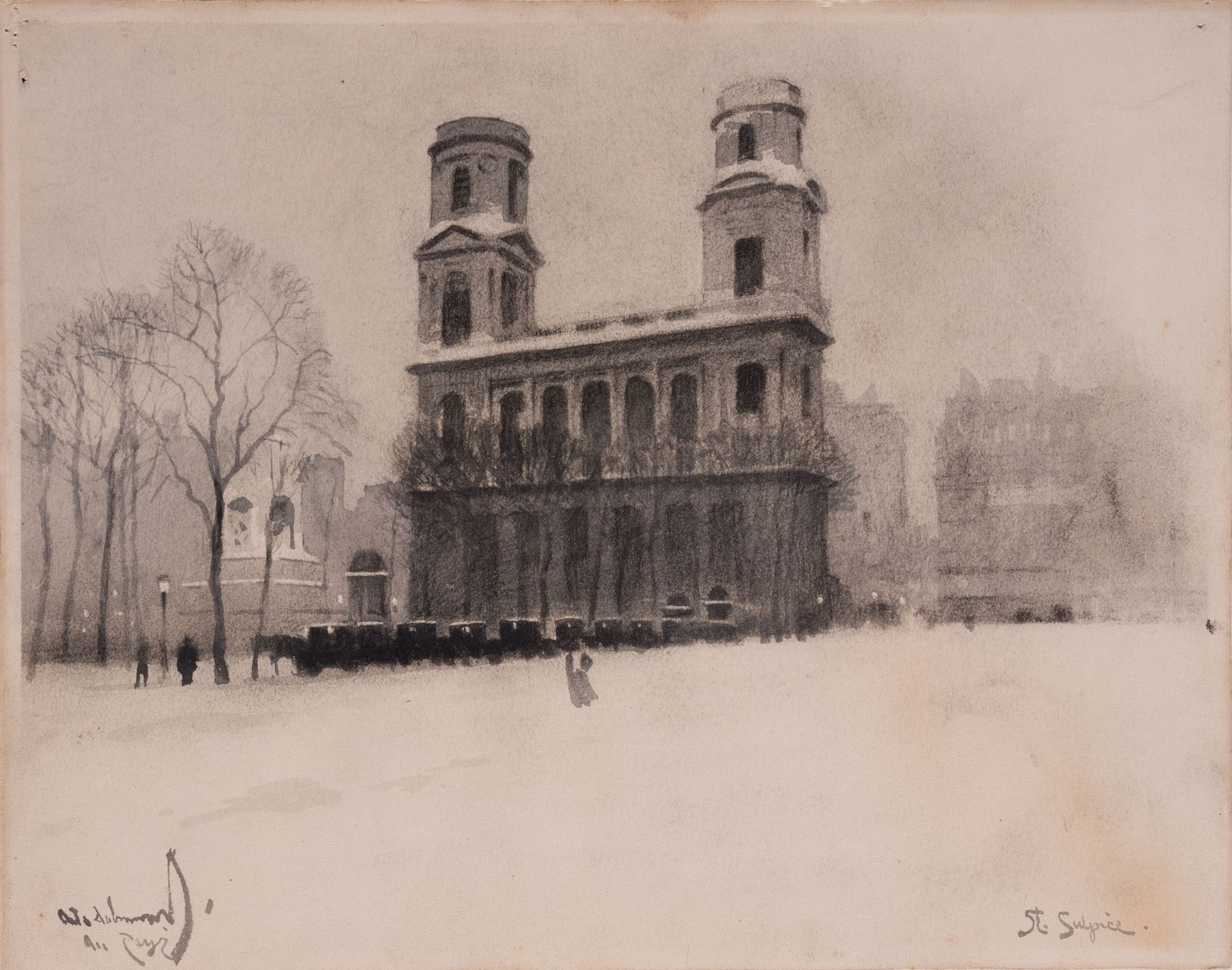
Church of Saint-Sulpice in Paris
Odo Dobrowolski

Basic information
- ID
- Г-V-29
- Author
- Odo Dobrowolski
- Name
- Church of Saint-Sulpice in Paris
- Date of creation
- 1911
- Technique
- drawing
- Material
- paper on cardboard coloured pencil Indian ink
- Dimensions
- 26.5 x 33.2 cm (height x width)
Additionally
- Type
- graphic art
- Genre
- landscape
Information about author
Object description
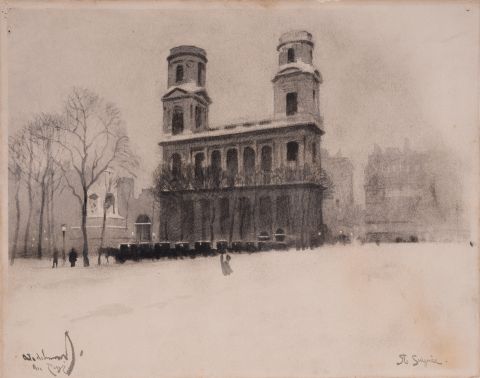
The work was executed during the artist's second stay in Paris (1911–1912). The Parisian sanctuary is depicted in winter, confirming the special place of winter vedute (city views) in the artist's oeuvre. At the centre of the composition is a twin-towered church in the Classical style. In front of it, the structure of the fountain (the Fountain of the Four Bishops) stands out as a bright patch. Horse-drawn carriages are lined up by the façade – a wedding ceremony is likely taking place inside. In the background, the tall buildings of Haussmannian Paris are visible.
The Church of Saint-Sulpice (Église Saint-Sulpice) is located in the central part of Paris, near the Luxembourg Gardens, and has been known since the 12th century. The building acquired its present appearance in 1870. It was here that Victor Hugo was married.
The Church of Saint-Sulpice (Église Saint-Sulpice) is located in the central part of Paris, near the Luxembourg Gardens, and has been known since the 12th century. The building acquired its present appearance in 1870. It was here that Victor Hugo was married.
Inscriptions
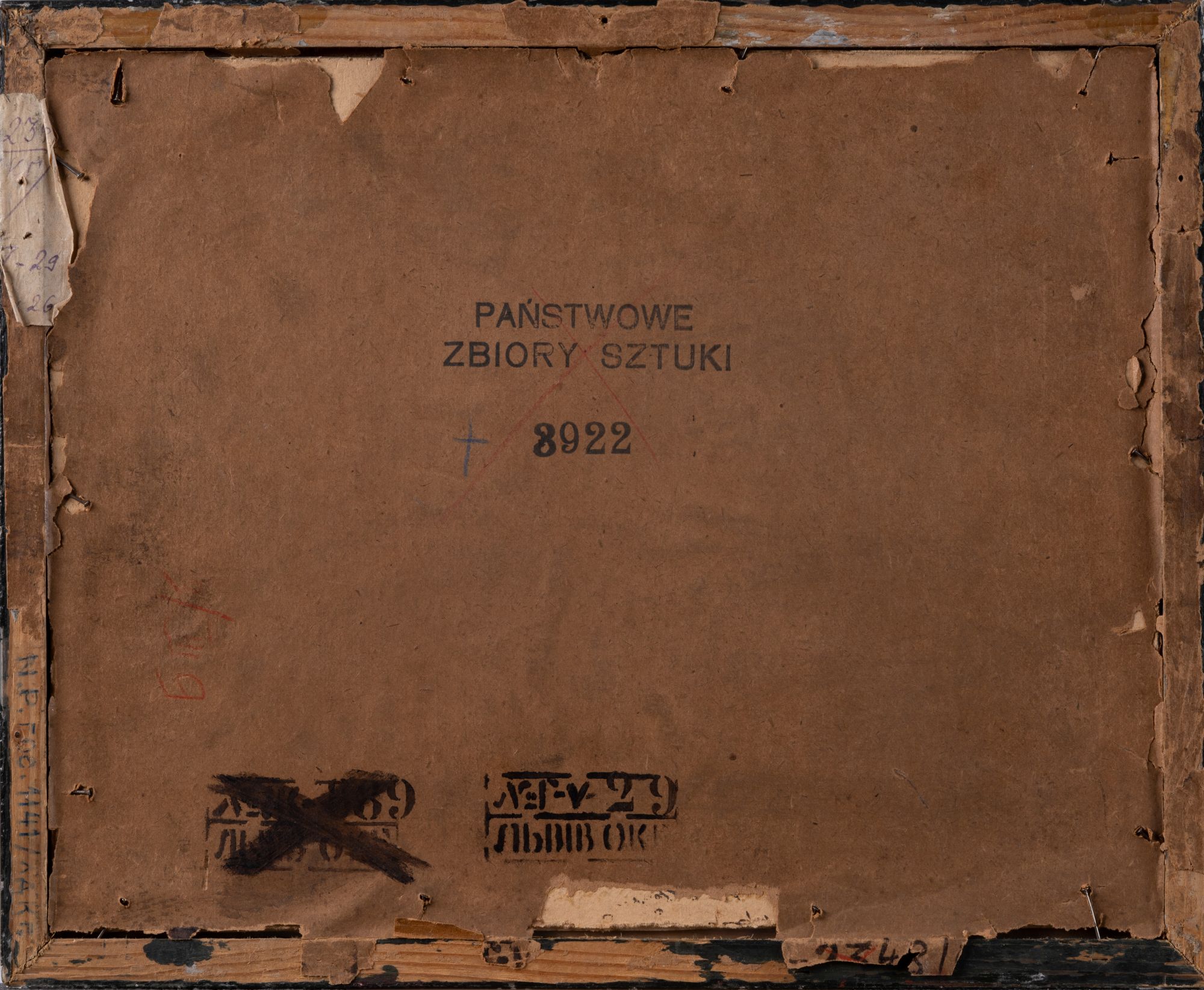
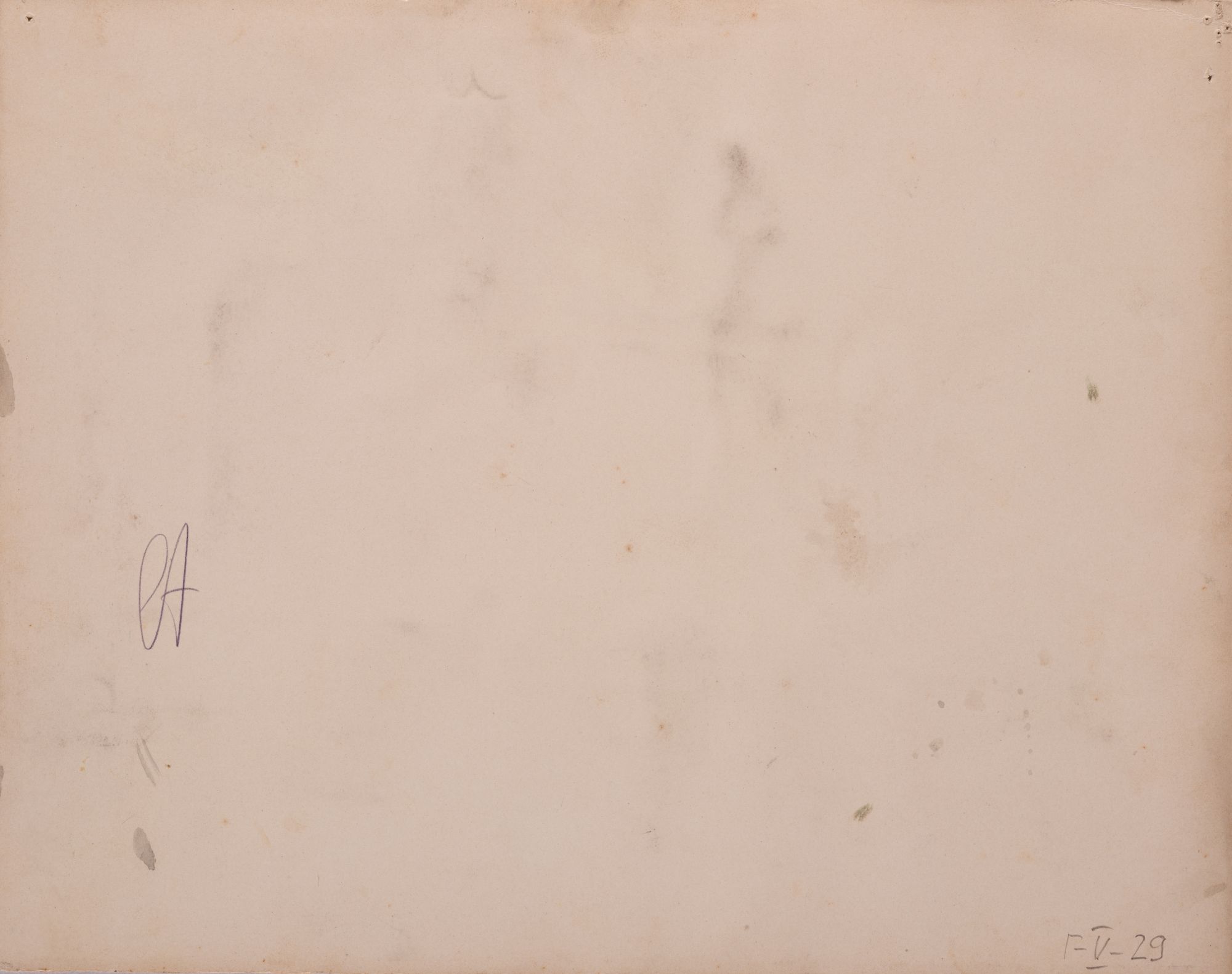
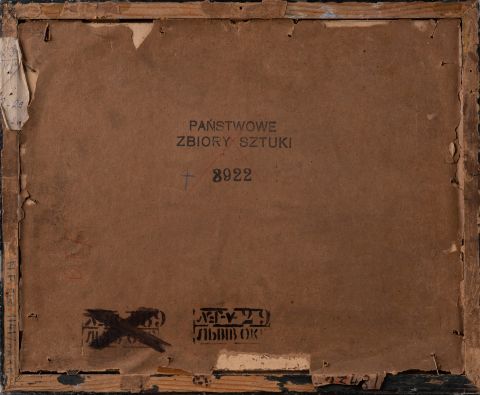
In the lower left corner, there is a place of the creation of the painting and the author's signature "Odo Dobrowolski / 911 Paryż" in italics. On the right – the title of the work "St. Sulpice". On the back, there is a stamp "Państwowe zbiory sztuki" and stamps of numbers.
Legal regulation
Borys Voznytskyi Lviv National Art Gallery