Sketch for a Mural
Vasyl Poliovyi


Basic information
- ID
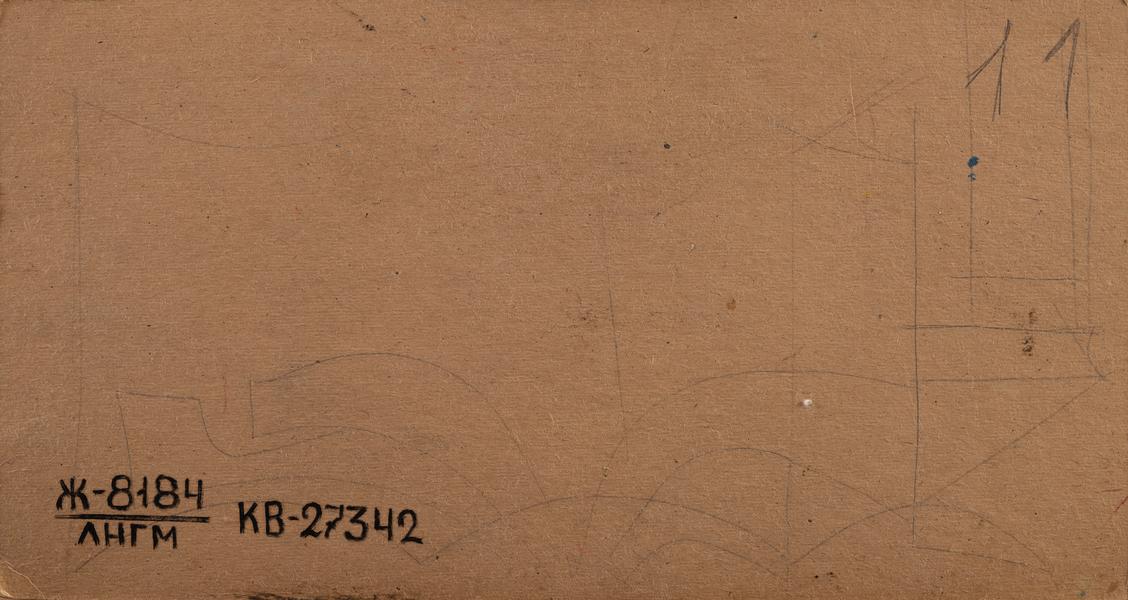
- Ж-8184
- Author
- Vasyl Poliovyi
- Name
- Sketch for a Mural
- Date of creation
- 1970s (?)
- Country
- the USSR
- Culture
- Ukrainian art of the Soviet period
- Technique
- original technique
- Material
- cardboard mixed media
- Dimensions (height x width, cm)
- 24.3 x 45.2
Additionally
- Type
- painting
- Genre
- symbolic art
- Plot
- Allegory
- Provenance
- Handed over to the museum from Vasyl Poliovyi
Information about author
Object description
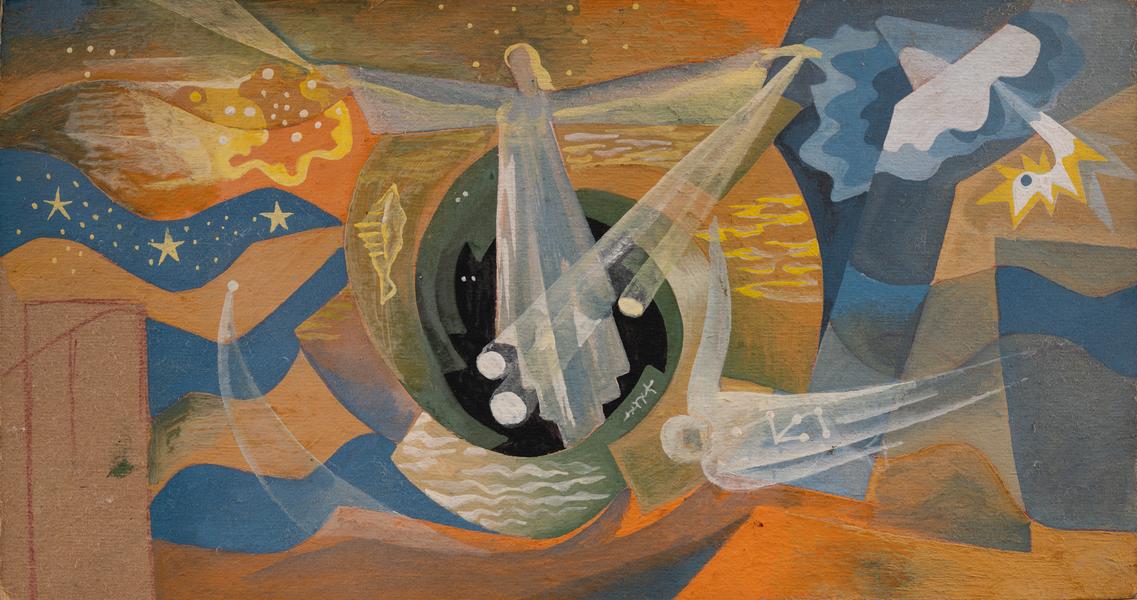
The work is a sketch for a space-themed mural. Like many of the artist's other projects, the work aligns with the ideas of cosmism and incorporates specific approaches inherent in monumental religious art. The horizontal composition is built around a central female (?) figure, likely an allegorical representation of enlightenment, illuminating the path of humanity in the universe (the cross-shaped arms are characteristically illuminated by light rays, as if from a lantern). This figure is interpreted in a somewhat symbolic manner, dressed in a light (white?) antiquated long garment that cascades down in vertical folds. The broad arms, lack of pronounced secondary sex characteristics, a specific protective gesture known in religious painting, and long golden hair allow for the assumption that this is an allusion to an angelic figure who, given the context and period, is simply devoid of a halo. This figure is depicted against the background of a contrasting dark shape, which can be a stylised representation of a "black hole" or an allegorical reference to the unexplored depths of space. In the dynamic background of the lower part, to the left of the figure, there is a translucent horizontal figure in flight with a graphic constellation on its back (probably Cassiopeia, which was dominant and almost constantly visible over the European territory of the USSR at the time). Almost the entire background is filled with stylised motifs that are either directly related to or can be associated with cosmic space. In the lower right part of the composition, there is a stylised depiction of a doorway opening (portal, arch?), indicating that the mural was intended for a fairly large space, possibly a public one, with an entrance to a staircase (as suggested by the handrails in the background beyond the portal). The colour scheme of the painting is warm, ochre-golden, with occasional harmonious inclusions of cooler tones.
Legal regulation
Borys Voznytskyi Lviv National Art Gallery