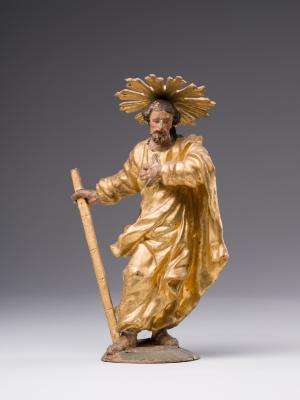
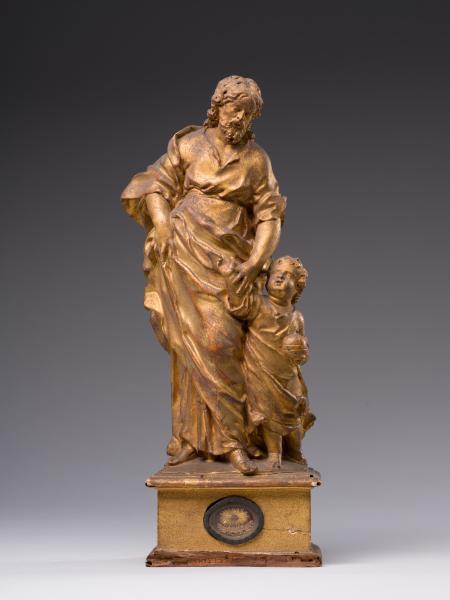
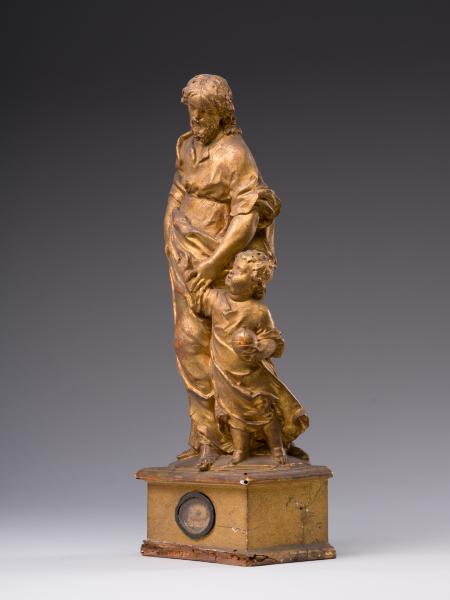
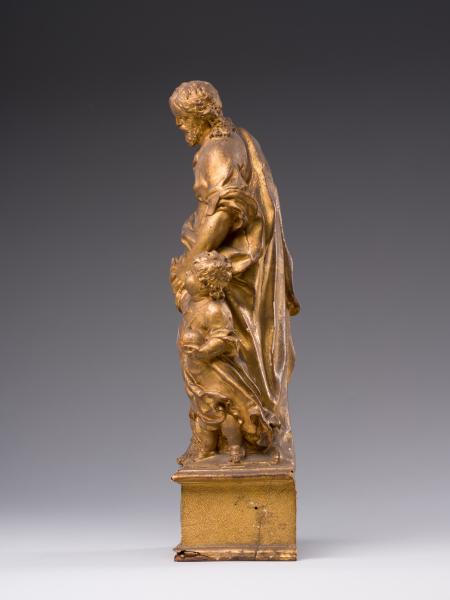
St. Joseph with the Child
unknown (Austrian School)


Basic information
- ID
- С-I-271
- Author
- unknown (Austrian School)
- Name
- St. Joseph with the Child
- Date of creation
- late 18th c.
- Country
- Austria
- Culture
- Modern times
- Technique
- carving
- Material
- wood gilt
- Dimensions (height x width x depth, cm)
- 10.5 x 6.5 x 32
Additionally
- Type
- sculpture
- Genre
- religious
- Plot
- Saint Joseph
- Provenance
- Collection of Leon Pininski
Information about author
Object description
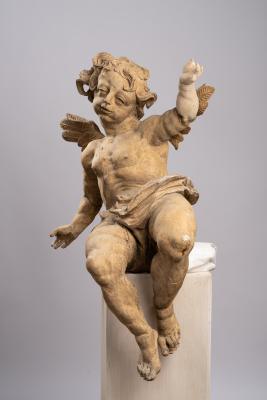
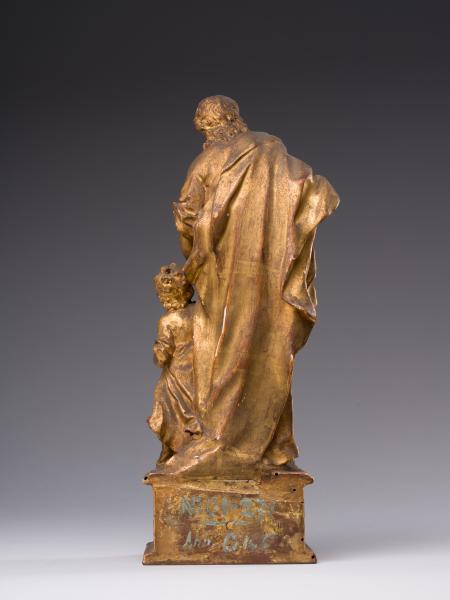
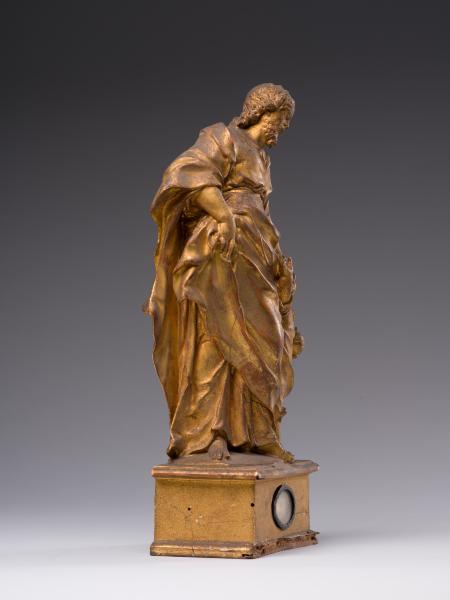
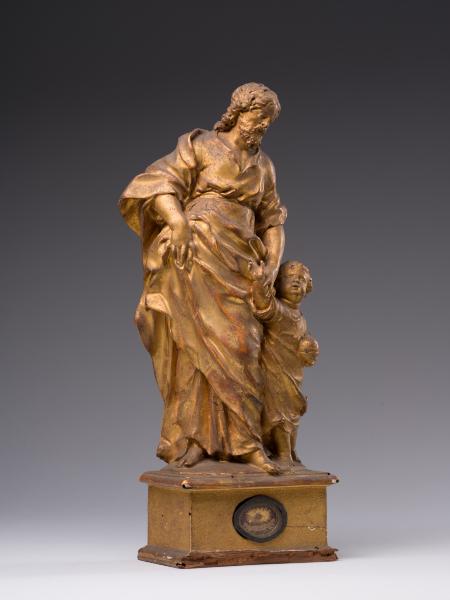
According to the biblical tradition, St. Joseph is Mary's groom, the nurturing father and educator of Jesus. The Church Fathers and writers emphasise that God's Providence chose a man of extraordinary purity to live so closely with Jesus and Mary. Origen mentioned St. Joseph as a "righteous man". His purity, preserved until his death, was written about by St. Jerome, St. Theodoret, St. Augustine, St. Bede, St. Rupert, St. Peter Damian, St. Peter Lombard, St. Albert the Great, St. Thomas Aquinas, and many others. The Gospel of Matthew emphasises the royal origin of St. Joseph, who is directly descended from King David. St. Luke also speaks of St. Joseph as one of the lineage of David when he describes the birth of Jesus. Despite his royal birth, Joseph earned his living as a carpenter. Betrothed to Mary, he was confronted with the mystery of the miraculous conception of the Son of God. The Gospel tells us that Joseph knew nothing about the Immaculate Conception of Mary or the Annunciation of the angel who brought the news. However, with complete trust in God, he devoted himself to doing God's will by accepting Mary, loving her and the life conceived in her. St. Joseph is chosen as the patron saint of many monastic orders, countries, cities, and dioceses. He is venerated as the patron saint of Christian families, parents, orphans, the poor, artisans, and all workers and fugitives. On 8 December 1870, Pope Pius I proclaimed St. Joseph the Patron Saint of the Ecumenical Church. The peculiarities of the sculptural image of the saint from the collection of Borys Voznytskyi Lviv National Art Gallery are the solemnity of the image and the skilful modelling of the forms. The expression of the folds of the vestments and the active interaction of volumes with space evidence Baroque inspirations.
Legal regulation
Borys Voznytskyi Lviv National Art Gallery