Saint Lucia
unknown (Florentine School)


Basic information
- ID
- Ж-2129
- Author
- unknown (Florentine School)
- Name
- Saint Lucia
- Date of creation
- 1st half of the 16th c.
- Technique
- oil painting
- Material
- wood oil
- Dimensions (height x width, cm)
- 137 x 39
Additionally
- Type
- painting
- Genre
- religious
- Plot
- Saint Lucia
- Exposition
- Potocki Palace
Information about author
Object description
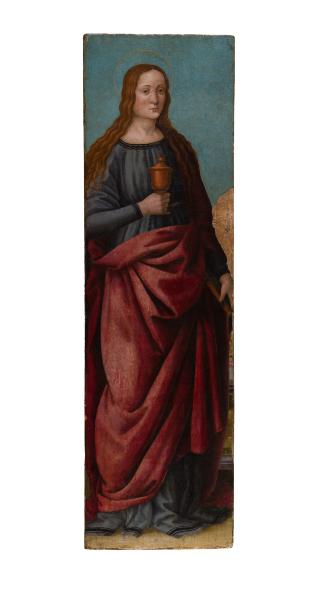
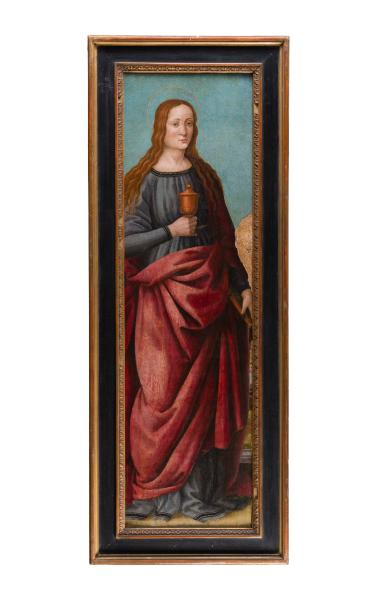
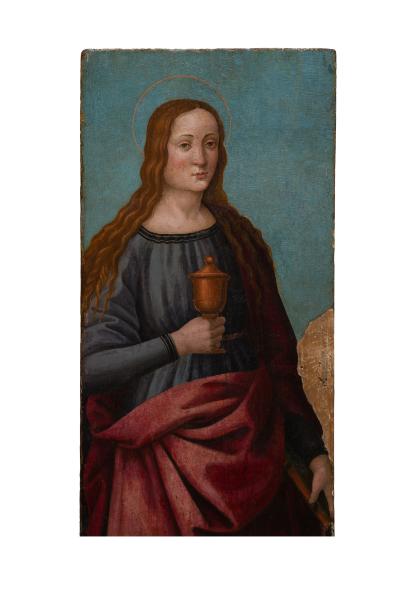
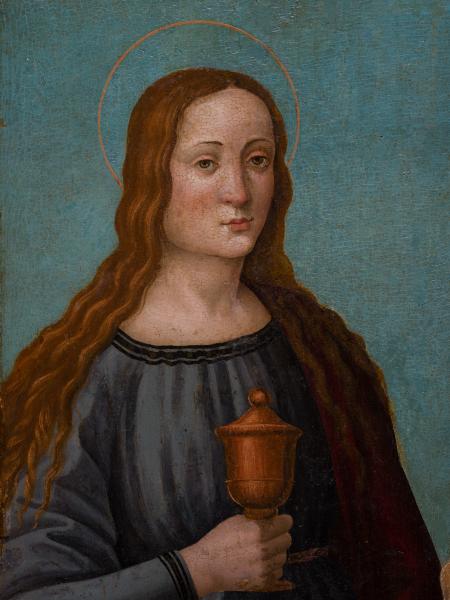
In the vertical painting (the left side of the altarpiece), Saint Lucia is depicted turned to the right with a chalice in her hand. This is one of the two altarpieces in the Gallery collection. They are attributed to a Florentine painting workshop from the early 16th century. The works display stylistic features of Mannerism. The iconographic system of the altarpiece includes two side figures depicting saints that flank the central composition. This type of altarpiece composition was characteristic of central Italy in the early decades of the 16th century. From the life of Saint Lucia, it is known that she came from a prominent family in the 3rd century from Syracuse. She was to be married; however, at the tomb of Saint Agatha in Catania, where Lucia went on a pilgrimage to pray for her mother's health, Agatha appeared to her and bequeathed the girl a martyr's death. Upon returning to Syracuse, Lucia declared that she had no intention of marrying, distributed her dowry to people experiencing poverty, and took a vow of lifelong chastity. A suitor reported her as a Christian. Even when tortured, she did not renounce her faith, and Lucia was beheaded. The girl was 23 years old. Numerous legends surround the death of Saint Lucia, and there is so little information about her that her name was even set to be removed from the Roman Martyrology. In one of the legends, Lucia had such beautiful eyes that she attracted excessive attention from those around her, and ultimately, she ordered herself to be blinded so that her eyes would not be a temptation for anyone. The saint's attributes are a lamp, a sword, a palm of martyrdom, fire at her feet, eyes on a plate, a dagger, and a chalice.
Legal regulation
Borys Voznytskyi Lviv National Art Gallery