Back

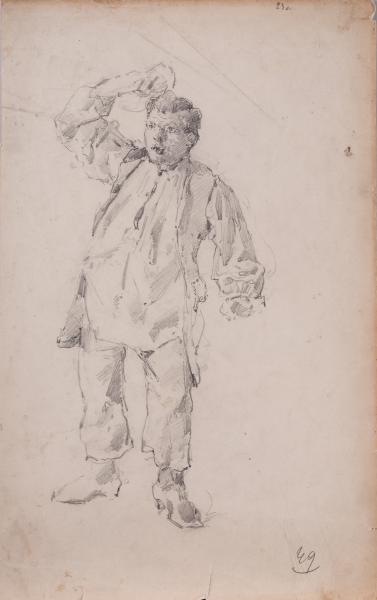
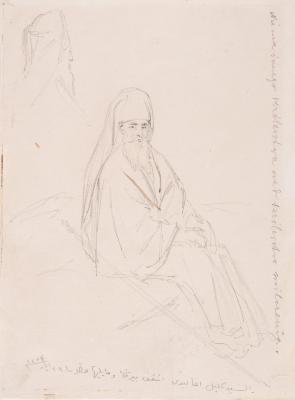
Peasant Boy

Witold Pruszkowski

  • Peasant Boy 2
  • Peasant Boy 3
Basic information
ID
Г-V-520
Author
Witold Pruszkowski
Name
Peasant Boy
Country
Kingdom of Poland (?)
Culture
Modern times
Technique
drawing
Material
paper pencil
Dimensions (height x width, cm)
41.1 x 25.8
Additionally
Information about author
Author
Witold Pruszkowski
Artist's lifetime
1846–1896
Country
russian empire, Austro-Hungarian Empire
Biography
Witold Pruszkowski (January 14, 1846, Bershad, Vinnytsia Oblast, Ukraine – October 10, 1896, Budapest, Hungary) was a Polish romantic and symbolist painter. He was born in Bershad. The artist spent his childhood in Odesa and Kyiv. In 1860, the artist's family moved to France. In Paris, W. Pruszkowski studied painting under the renowned portraitist Tadeusz Gorecki. From 1868 to 1872, he studied at the Munich Academy of Arts. From 1872 to 1876, he continued his education at the Krakow Academy of Fine Arts, where he was a student of Jan Matejko. After completing his studies, he travelled extensively to Italy, Tunisia, Morocco, and Ukraine. From 1882, Pruszkowski lived and worked in the village of Mnikow near Krakow. He actively participated in art exhibitions in Krakow, Warsaw, and Lviv. In 1892, W. Pruszkowski became the head of the committee for the construction of a monument to the artist Artur Grottger. The creative work of Witold Pruszkowski is a synthesis of all the styles and movements that existed in art during this period. These include Romanticism, Impressionism, Realism, and Symbolism. Pruszkowski is referred to as the last romantic and the first symbolist in Polish painting. The artist drew inspiration from folk tales, beliefs, legends, and anecdotes. The works of Adam Mickiewicz, Juliusz Slowacki, and Zygmunt Krasinski also influenced him. He painted genre scenes, landscapes, and portraits, combining realistic representation with romantic fantasy.
Inscriptions
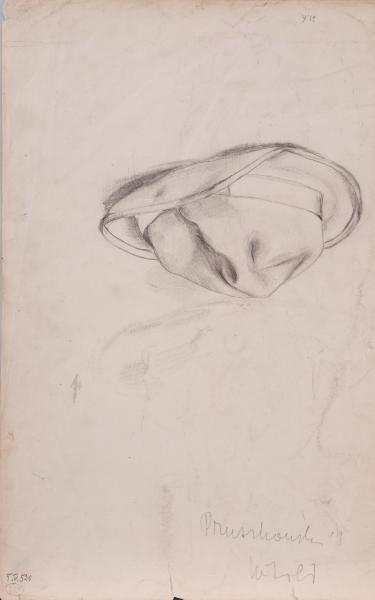
On the reverse: "Pruszkowski Witold".
Legal regulation
Borys Voznytskyi Lviv National Art Gallery