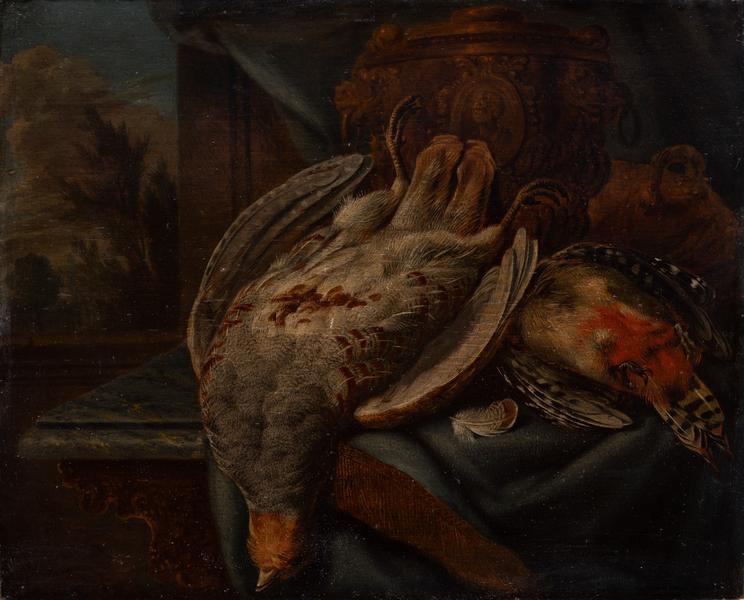
Partridges and a Vase
Peeter van Ruggenberg


Basic information
- ID
- Ж-838
- Author
- Peeter van Ruggenberg
- Name
- Partridges and a Vase
- Date of creation
- 1st half of the 18th c.
- Country
- Flanders
- Technique
- oil painting
- Material
- wood oil
- Dimensions (height x width, cm)
- 29 x 36
Additionally
- Type
- painting
- Genre
- still life
- Plot
- Still life
- Provenance
- the Goluchowski collection
Information about author
Object description
It is known that Peeter van Ruggenberg specialised in still lifes. However, only a few of his works have been identified, including the still life "Partridges and a Vase". The artist presented a hunted partridge and a quail in the picture's interior. They are depicted on a table with a marble top and a richly decorated gilded leg. Behind them is a precious bronze vase adorned with a relief depicting the emperor in the centre. A forest landscape unfolds in the background through the open window. Hunting was available mainly to the Dutch aristocracy at that time. So, the townspeople bought still lifes with hunted prey or hunting scenes to imagine themselves living a luxurious life.
Legal regulation
Borys Voznytskyi Lviv National Art Gallery