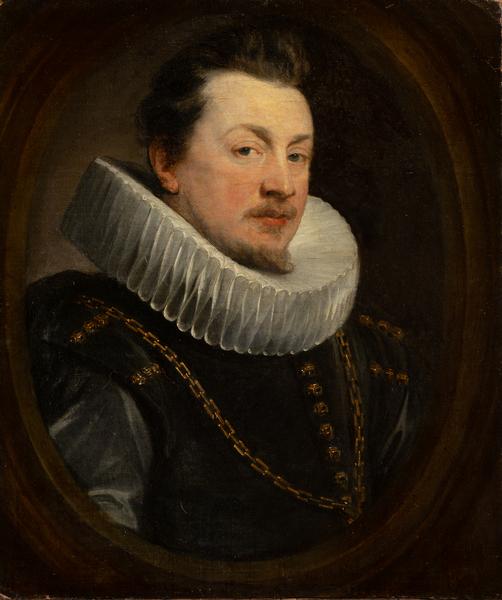
Portrait of Franciscus van der Ee
Pieter Paul Rubens (circle), Anthony van Dyck



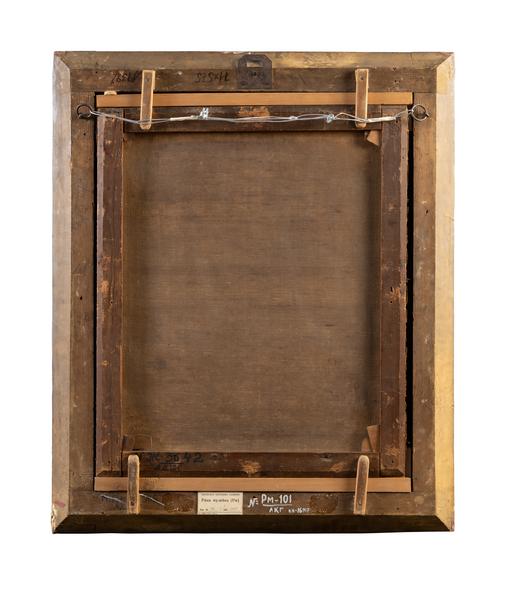
Basic information
- ID
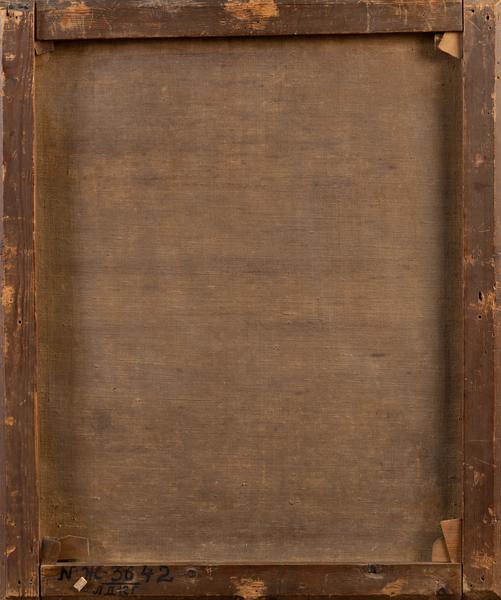
- Ж-3642
- Author
- Pieter Paul Rubens (circle) Anthony van Dyck
- Name
- Portrait of Franciscus van der Ee
- Date of creation
- 1627–1632
- Technique
- oil painting
- Material
- canvas oil
- Dimensions (height x width, cm)
- 67 x 56
Additionally
- Type
- painting
- Genre
- portraiture
- Plot
- Portrait
- Provenance
- Purchased from Hryhorii Dushyn in Leningrad, 1958
- Exposition
- Potocki Palace
Information about author
Information about author
Object description
Pieter Paul Rubens (1577–1640) and his student Anthony van Dyck (1599–1641) were the most prominent Flemish Baroque artists collaborating in Antwerp. As a result, their creative manner was so similar that it is sometimes difficult to distinguish who created a particular canvas, as in the example with the "Portrait of a Man" painting. The given work was purchased in 1958 by Lviv Art Gallery (now Borys Voznytskyi Lviv National Art Gallery) from the private collection of Hryhorii Dushyn in Leningrad (now Saint Petersburg). According to Mykhailo Dobroklonskyi's attribution (State Hermitage), the work was created by Pieter Paul Rubens. Instead, German researchers argue for Anthony van Dyck's authorship, confirmed by the photograph of "Portrait of Franciscus van der Ee" created by Pieter Paul Rubens' student. The work on the photo from the Rheinisches Bildarchiv Köln is identical to Lviv's painting in terms of the nature of the image and its dimensions. According to the photo, the portrait painted on canvas with oil paints was in a private collection in Cologne until February 1859. In that same year, Heinrich Schleger transferred it to the Wallraf-Richartz Museum. Due to the inscription, the work was sold to an unknown buyer on May 24, 1944, through the mediation of Heinz Kisters (Cologne / Kreuzlingen), and its current location is unknown. According to archival data, in 1936, Dr Erhard Göpel from Leipzig and Dr Durhard from London independently attributed the portrait to the brush of Anthony van Dyck. An etching by Joannes Meyssens from the third part of the famous series of engravings, "Iconography of van Dyck", with the image of Franciscus van der Ee, burgomaster of Brussels, confirms the attribution. Another 18th-century graphic imprint, with an image identical to the one in Lviv and signed "Sir Anthony van Dyck after Sir Anthony van Dyck", is housed in the National Portrait Gallery in London. The canvas was painted between 1627 and 1632 during Anthony van Dyck's Flemish period of creativity. Figuratively and plastically, it corresponds to the type of aristocratic portraiture developed by the artist, which outlined the development of English and European painting in the following decades. Thus, the work from the Gallery's collection combines representativeness with virtuosic ease, permanence with temporality, and vitality with the poetic atmosphere of the image. As in other works, Anthony van Dyck reproduces the model's spiritual nobility, sophistication, calm confidence, and sense of dignity, as well as the atmosphere of aristocratic culture in a variety of individual echoes. As a Baroque artist, the master fills the canvas with a hidden expression that looks behind the harmonised composition, technique, and forms. The image's peculiarity is the subtle "directing" of warm and cold colouring collisions, full of Venetian reminiscences. The oval format adds to the image's integrity, rhythmic softness, and intimacy. A view of the model from the bottom up, a white millstone collar, and a masterful reproduction of the outfit's velvet create the impression of solemnity.
Portrayed person
- The name of the person portrayed
- Franciscus van der Ee, burgomaster of Brussels
- Lifetime of the person portrayed
- 1602–1674
Legal regulation
Borys Voznytskyi Lviv National Art Gallery