Christ
unknown folk sculptor


Basic information
- ID
- С-I-968
- Author
- unknown folk sculptor
- Name
- Christ
- Date of creation
- 19th c.
- Country
- Ukraine
- Technique
- carving polychrome
- Material
- wood
- Dimensions (height x width x depth, cm)
- 88 x 32 x 25
Additionally
- Type
- sculpture
- Genre
- religious
- Plot
- Jesus Christ
- Provenance
- Ivanivtsi village, Zhydachiv district, Lviv region
Information about author
Object description
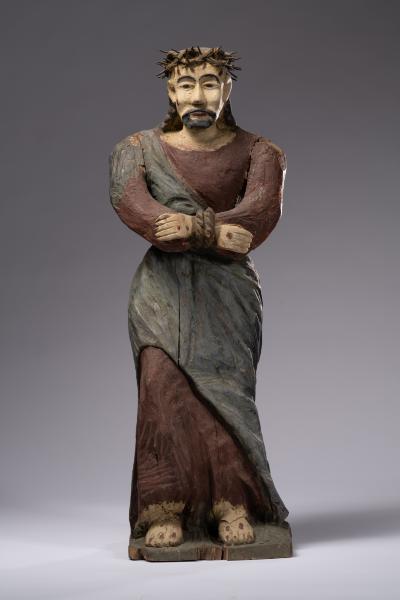
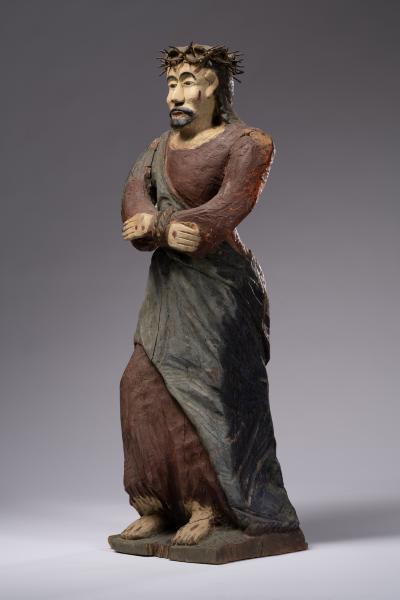
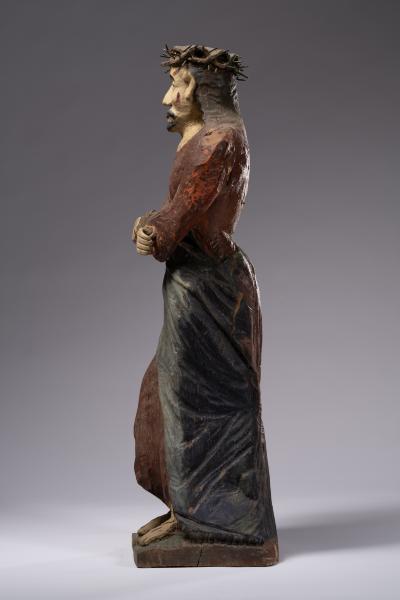
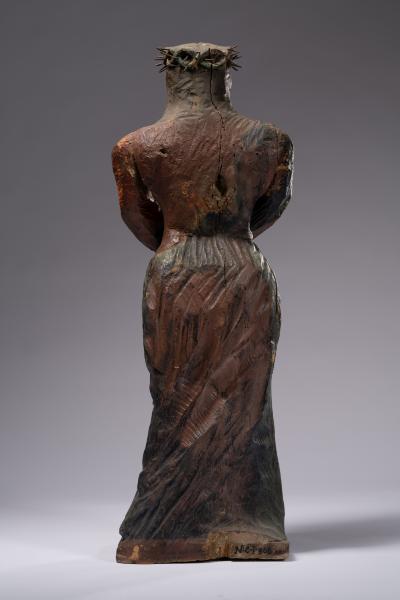
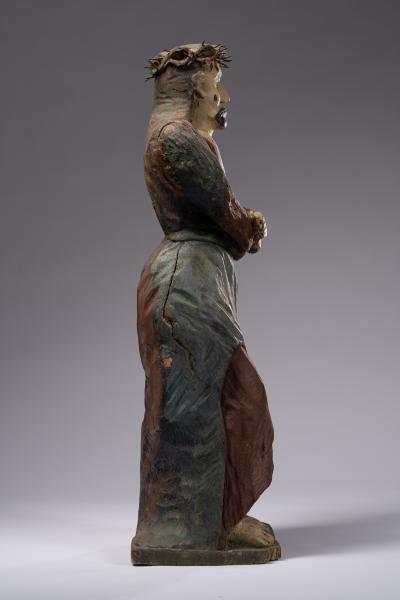
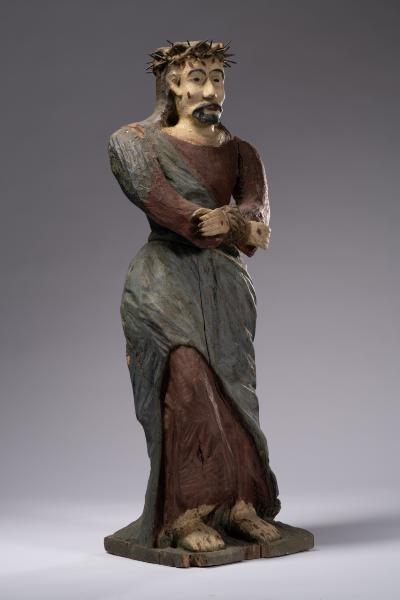
The abundance of sculptural figures of Christ in the churches of the western part of Ukraine was due to the influence of Western European iconography on local traditions. The images of the Saviour in wooden sculptures were varied. They often depicted the Pantocrator, the Assumption, the Epiphany and the Crucifixion, using scenes from the Passion cycle. The folk master represented Christ in a primitive way, using the image from the Passion of Jesus, which conveys the last episodes of his earthly life. The Saviour stands barefoot in front of Pontius Pilate with his hands bound crosswise – an allusion to the crucifixion cross. The static sculpture is carved from a single piece of wood, with only a few elements modified. Using all his skills in reproducing the human body, the folk artist carved the figure of Christ, hiding most of his body under a long cherry-coloured chiton and an omophorion thrown over his right shoulder. On Jesus' head is a crown of thorns, the needles digging into his body, forming wounds from which blood is flowing in thick drops. The saint's long, oval face, with its prominent wedge-shaped nose, is calm and serene. His expression shows a readiness to accept martyrdom. There is no anger, resistance or hatred in his face.
Legal regulation
Borys Voznytskyi Lviv National Art Gallery