Crucifixion
unknown folk sculptor



Basic information
- ID
- С-I-1541
- Author
- unknown folk sculptor
- Name
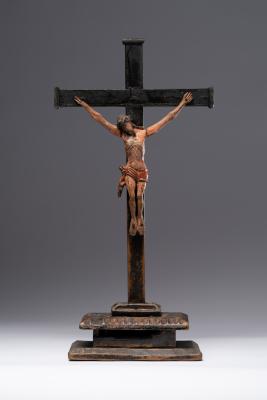
- Crucifixion
- Date of creation
- 18th c.
- Country
- Ukraine
- Technique
- carving polychromy
- Material
- wood
- Dimensions (height x width x depth, cm)
- 77.5 x 58 x 11
Additionally
- Type
- sculpture
- Genre
- religious
- Plot
- Crucifixion
- Provenance
- Expedition in 1979
Information about author
Object description
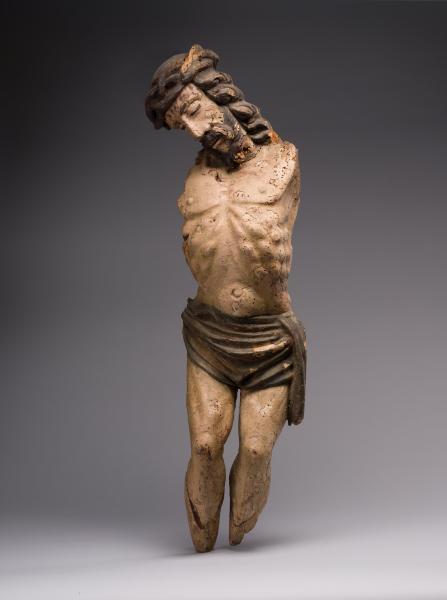
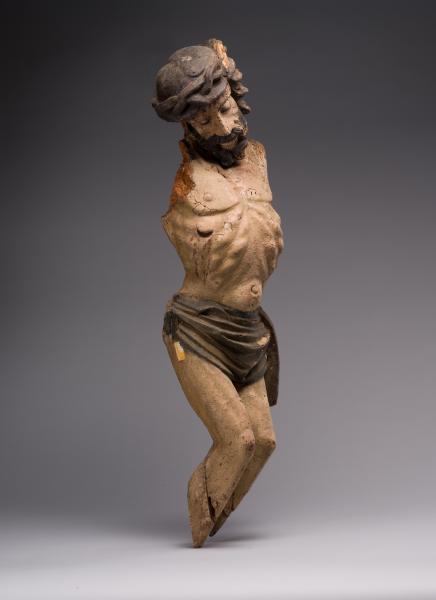
The sculptural depiction of the Crucified Christ, preserved only in part, is imbued with drama and inner tension. Submission to the will of the Almighty is emphasised by the head inclined towards the right shoulder, while the crown of thorns upon the head symbolises humiliation and suffering. The facial expression is filled with sorrow and calm. In the pose of the elongated body, one senses the inner struggle between suffering and the grandeur of sacrifice. The figure of Christ is modelled with anatomical plausibility, featuring a protruding chest, a tense torso, texturally rendered ribs, and muscular legs. Polychromy accentuates realism, with a focus on physical torment. The naked figure of Christ is enveloped by a perizoma at the hips, interpreted with rhythmically arranged sharp horizontal folds. The remains of polychromy on the cloth recall the former vividness of the image. Works of this kind had not only an aesthetic but also a liturgical dimension – they aided the faithful in sharing in the experience of worship.
Legal regulation
Borys Voznytskyi Lviv National Art Gallery