Resurrection of Jairus's Daughter
Peter Candid


Basic information
- ID
- Ж-2471
- Author
- Peter Candid
- Name
- Resurrection of Jairus's Daughter
- Technique
- oil painting
- Material
- wood oil
- Dimensions (height x width, cm)
- 65 x 42.2
Additionally
- Type
- painting
- Genre
- religious
- Plot
- New Testament stories
- Provenance
- the Lubomirski collection
- Exposition
- Potocki Palace
Information about author
Object description
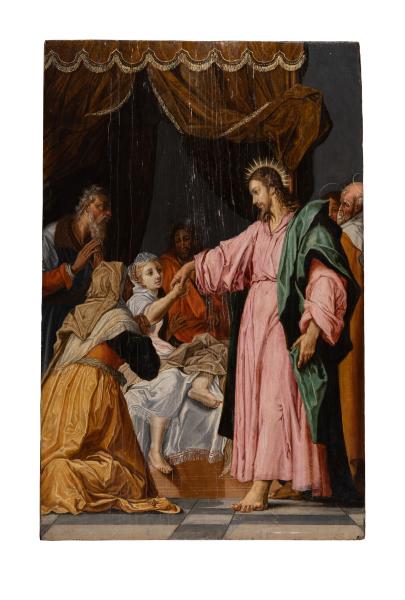
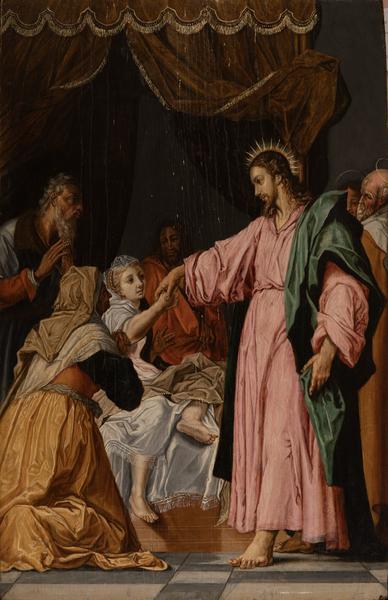
The painting depicts the resurrection of Jairus's daughter, a miracle performed by Jesus Christ when he brought the daughter of a Jewish elder to life in Capernaum. Jairus, a Jewish synagogue leader, had only one daughter, a twelve-year-old girl on the verge of death. Coming to Jesus Christ, Jairus fell at his feet and pleaded, saying, "My little daughter is dying. Please come and lay your hands on her. Then she will be healed and will live". Seeing Jairus's faith, Jesus Christ went with him. On their way, they were met by a messenger from Jairus's house, who said, "Your daughter is dead. There is no need to bother the Teacher". Upon hearing these words, Jesus told Jairus, "Do not be afraid; just believe". When they arrived at the man's house, they saw great sorrow – everyone was weeping. Jesus asked them, "Why are you people upset and crying? This child is not dead. She is only sleeping". No one believed Jesus. But Christ, sending the crowd away, took only the parents of the deceased and three apostles with him and entered the room where the dead girl lay. He took her by the hand and said, "Little girl, I tell you to stand up!". After that, the girl rose and began to walk. Jesus commanded to give her something to eat and strictly forbade them to tell anyone about this miracle. However, "rumours of this have spread everywhere". In the painting, the artist depicted the girl returning to life. The small-sized canvas could serve as an illustration of the Gospel during private prayer, as a reminder to cherish and value the experience of faith in the face of situations that surpass human strength and understanding.
Legal regulation
Borys Voznytskyi Lviv National Art Gallery