Centaur (copy)
unknown



Basic information
Additionally
- Type
- sculpture
- Genre
- mythological painting
Information about author
Object description
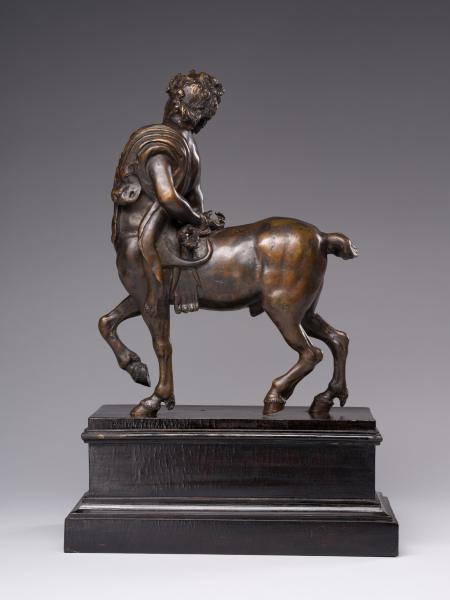
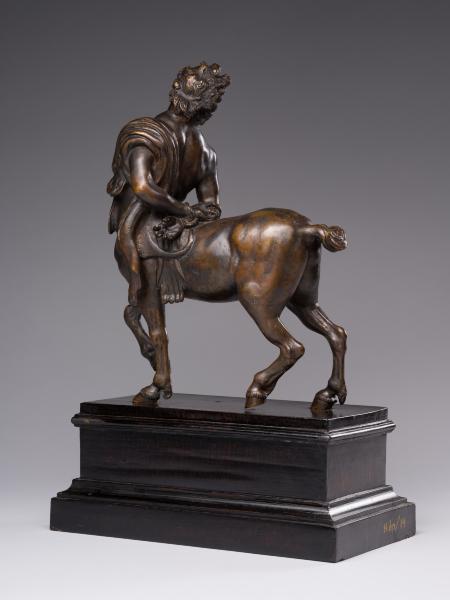
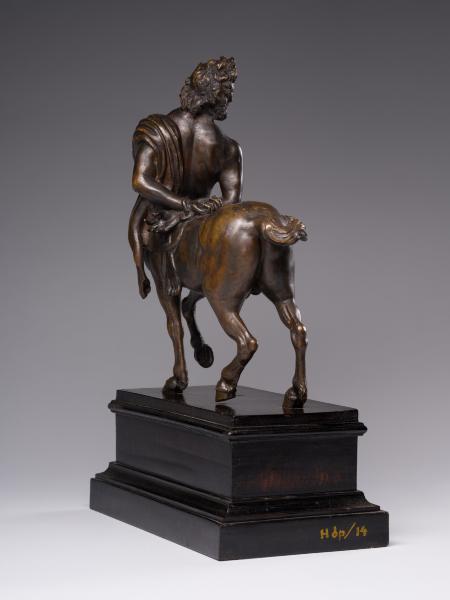
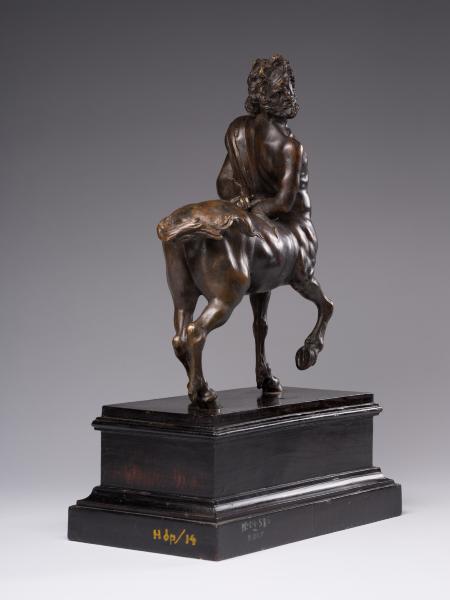
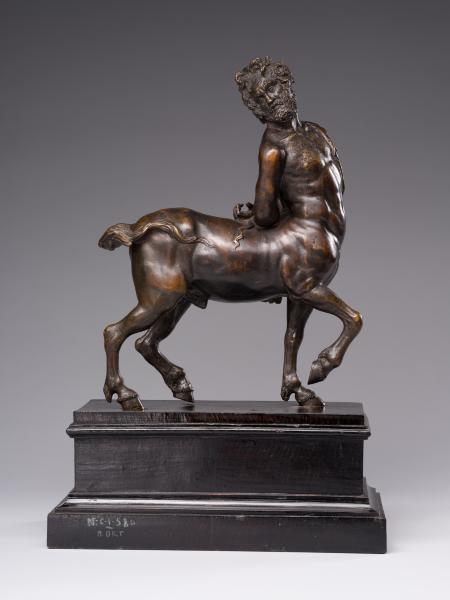
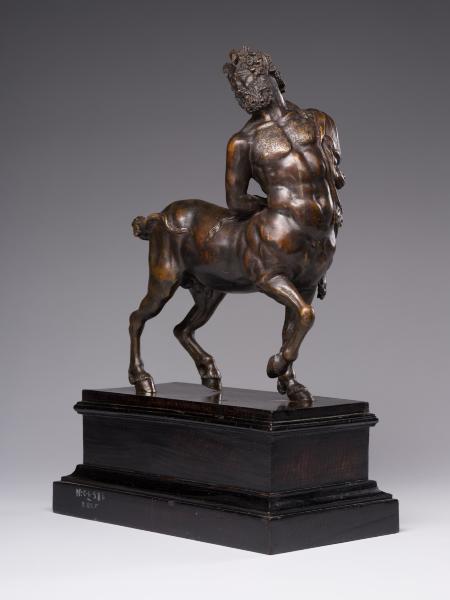
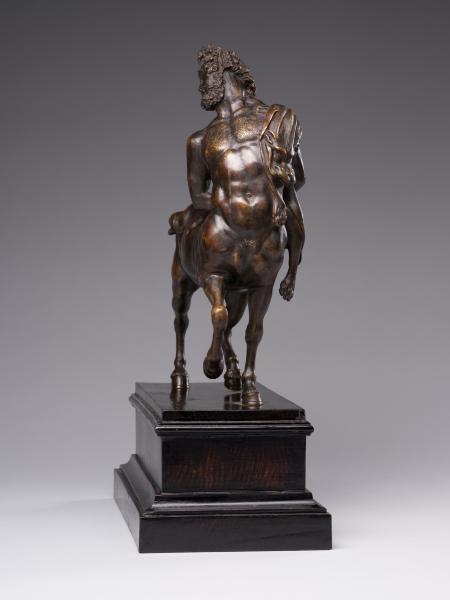
Centaurs (Greek: Κένταυρος) are wild mortal creatures with horse bodies and human heads and torsos, inhabitants of mountains and forest thickets, companions of the god of wine Dionysus in ancient Greek mythology. Initially, centaurs personified mountain rivers and stormy streams and appeared as tutors or opponents of heroes. The bronze sculpture of a centaur from the collection of Borys Voznytskyi Lviv National Art Gallery is one of numerous copies of the "Old Centaur", one of the two so-called Furietti Centaurs, which were found in 1736 during the excavations of Hadrian's Villa, Hellenistic sculptures made of dark marble, probably by Aristeas and Papias from the city of Aphrodisias in Asia Minor. The first owner of the works was Cardinal Furietti, and later, they became part of the collection of sculptures of the Popes in the Vatican. The closest thing to a gallery work is a copy of the image of an old centaur made of white marble, which until 1807 belonged to the influential Borghese family and was later acquired for the imperial collection in the Louvre under pressure from Napoleon Bonaparte.
Legal regulation
Borys Voznytskyi Lviv National Art Gallery