Nymphs and Cupids
Claude Michel (Clodion)


Basic information
- ID
- С-I-532
- Author
- Claude Michel (Clodion)
- Name
- Nymphs and Cupids
- Date of creation
- 1780
- Country
- France
- Technique
- moulding
- Material
- bronze
- Dimensions (height x width x depth, cm)
- 53 x 24 x 24
Additionally
- Type
- sculpture
- Genre
- mythological painting
- Plot
- Cupid
- Provenance
- Collection of Leon Pininski
Information about author
Object description
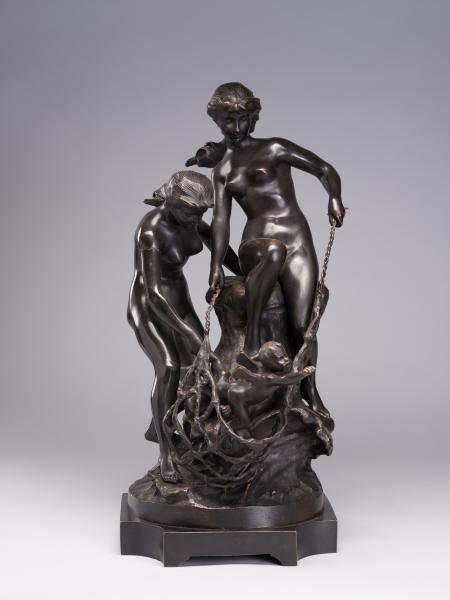
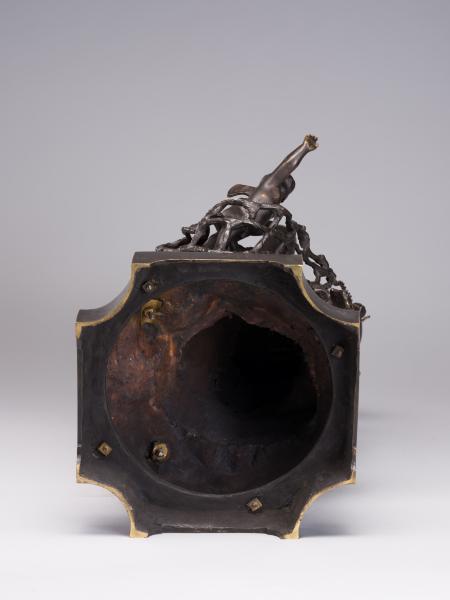
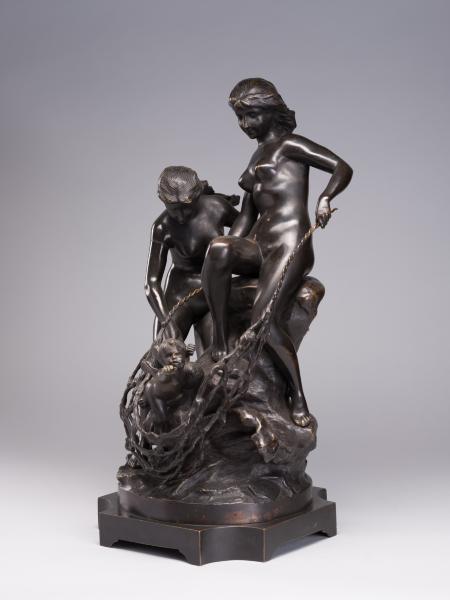
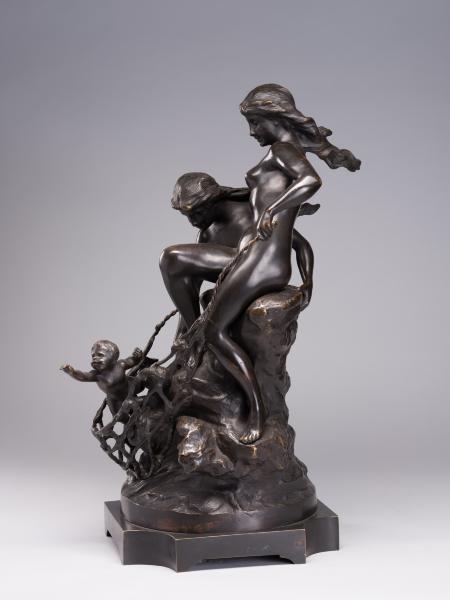
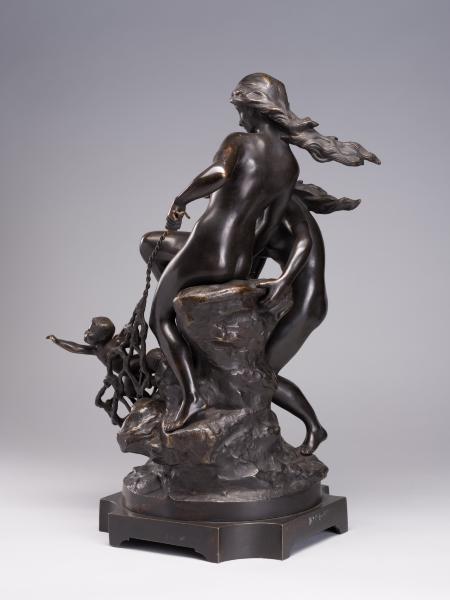
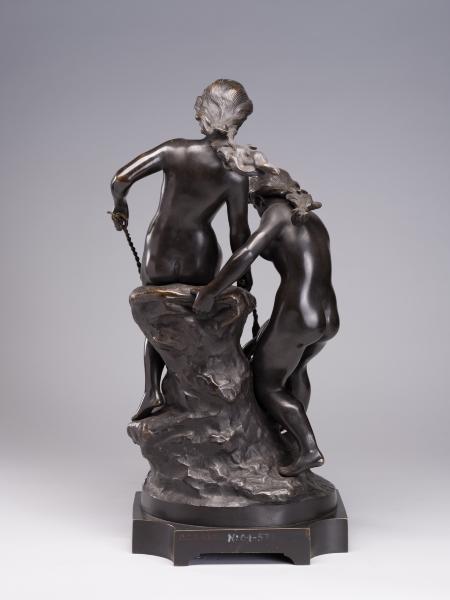
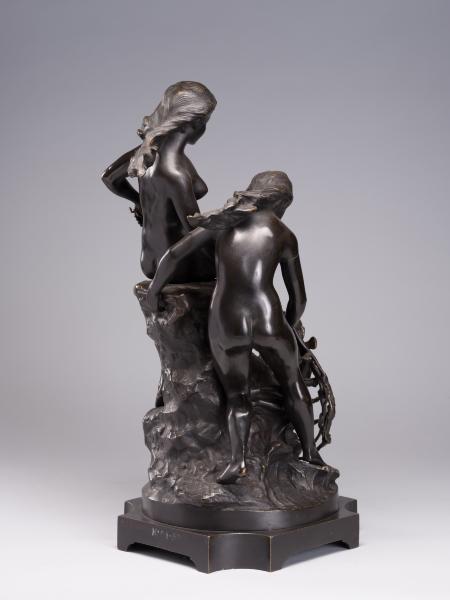
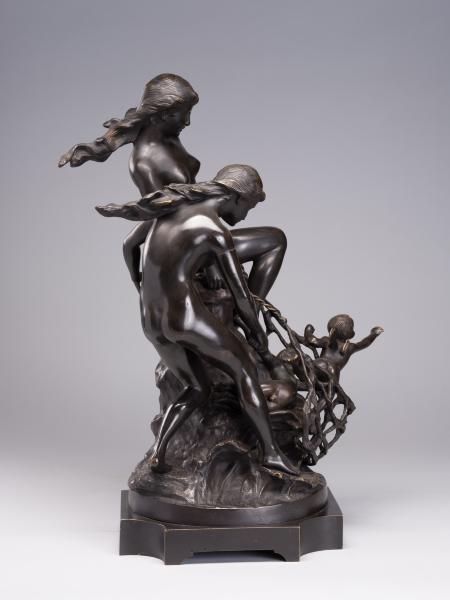
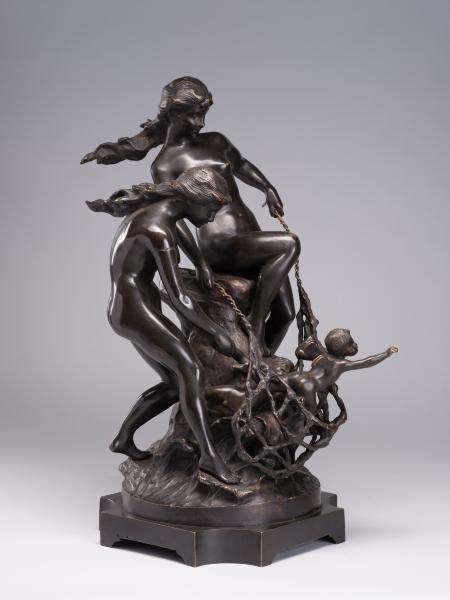
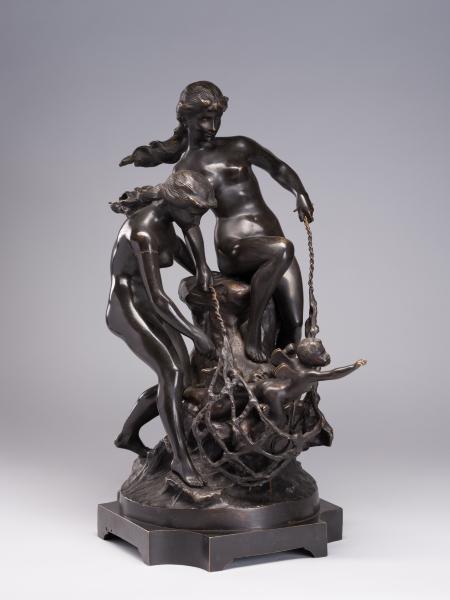
The composition by Claudion, dated 1780, was rarely cast in the 19th century due to the complexity of its execution: in addition to individual figures, it also required casting an intricate net in bronze. The composition is based on two naked female figures. One of them is sitting on a high rock, holding a fishing net in her hands, from which a small naked putto with wings (cupid) is trying to fly out. The second woman, depicted on the left, is helping the first one cope with the catch. The long, thick hair of both women seems to be blown by the wind. In the depths of the net lies another caught putti. At the bottom, the stone turns into a rounded podium, which in turn is attached with screws to a rectangular base with segmented cutouts in the corners.
Inscriptions
On the back edge of the stand are inscriptions: in red – "P.Z.S. 4201"; in white – "№ С-І-532".
Legal regulation
Borys Voznytskyi Lviv National Art Gallery