Catherine de Medici
unknown (Italian School)


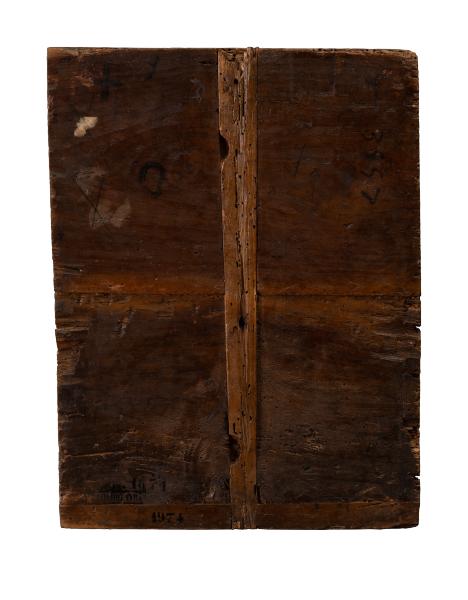
Basic information
- ID
- Ж-1974
- Author
- unknown (Italian School)
- Name
- Catherine de Medici
- Date of creation
- 17th c.
- Technique
- oil painting
- Material
- wood oil
- Dimensions (height x width, cm)
- 57.8 x 43.8
Additionally
- Type
- painting
- Genre
- portraiture
- Plot
- Portrait
- Provenance
- the Lubomirski collection
- Exposition
- Potocki Palace
Information about author
Object description
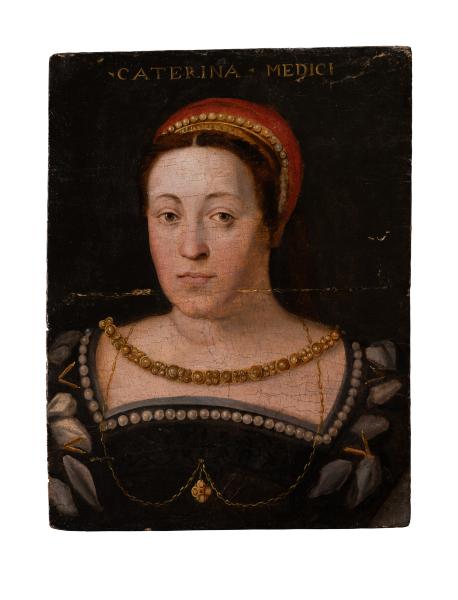
The painting depicts Catherine de Medici (1519–1589) – the French queen, wife of Henry II, and the most influential Italian in France. Catherine de Medici was the daughter of Lorenzo II de Medici and Madeleine de La Tour and the great-granddaughter of Lorenzo the Magnificent. She is recognised as a great lady of the Renaissance, a powerful political player, and an ambassador of culture, fashion, and Italian style. Catherine de Medici received her education from her uncle, Pope Clement VII, who foresaw that she would become the queen of France. On the throne awaited the handsome Henry II of Valois, who hoped the marriage would elevate the Florentine family of merchants and bankers into the ranks of European royal power and restore the empty French treasury. After ten years of marriage, Catherine bore 11 children, including the kings of France (Francis II, Charles IX, and Henry III) and the queen of Spain (Elisabeth). Catherine de Medici is also associated with dark legends surrounding her reign, which speak of her supposedly manipulative and ruthless nature. She was accused of manipulation and intrigue to achieve her political goals and even of witchcraft. Catherine was also accused of orchestrating the St. Bartholomew's Day Massacre in 1572, which resulted in the deaths of thousands of French Protestants. The portrait depicts a young woman in a lavish Renaissance dress adorned with exquisite jewellery. After 1559, Catherine de Medici is usually depicted wearing a black widow's veil.
Inscriptions
At the top is the artist's signature: "Caterina Medici".
Portrayed person
- The name of the person portrayed
- Catherine de Medici
- Lifetime of the person portrayed
- 1519–1589
Legal regulation
Borys Voznytskyi Lviv National Art Gallery