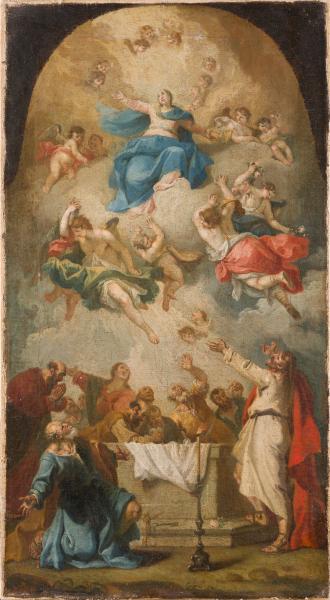
Assumption of the Virgin Mary
unknown (Workshop of Sebastiano Ricci)


Basic information
- ID
- Ж-2082
- Author
- unknown (Workshop of Sebastiano Ricci)
- Name
- Assumption of the Virgin Mary
- Technique
- oil painting
- Material
- canvas oil
- Dimensions (height x width, cm)
- 53.5 x 29.5
Additionally
- Type
- painting
- Genre
- religious
- Plot
- Virgin Mary
- Provenance
- the Lubomirski collection
- Exposition
- Potocki Palace
Information about author
Object description
At the beginning of the eighteenth century, the Rococo style was formed in Venetian art. In monumental art, the most renowned artist whose compositional techniques were often emulated by his students was Sebastiano Ricci (1669–1734). His workshop is associated with the sketch "Assumption of the Virgin Mary", which vividly shows the talent of the monumental artist. The triangular composition is viewed from bottom to top, creating a perspective effect on the wall, allowing for a clear overview of the entire scene. The Virgin Mary, surrounded by angels, ascends in the clouds as if on a throne. The lower part depicts the apostles facing the Virgin Mary with gestures and the dynamics of their bodies. The life of the Virgin Mary after the Resurrection and Ascension of her Son is described only in apocryphal sources that were not included in the Bible. The Book of Acts of the Apostles mentions that the Blessed Virgin Mary and the Apostle John went to Ephesus in 43 AD, located on the western coast of Asia Minor. But her body was taken to Jerusalem, where all the apostles gathered to bid farewell to her.
Legal regulation
Borys Voznytskyi Lviv National Art Gallery