Crucifixion
unknown


Basic information
- ID
- С-I-1783
- Author
- unknown
- Name
- Crucifixion
- Date of creation
- 18th c.
- Country
- Ukraine
- Technique
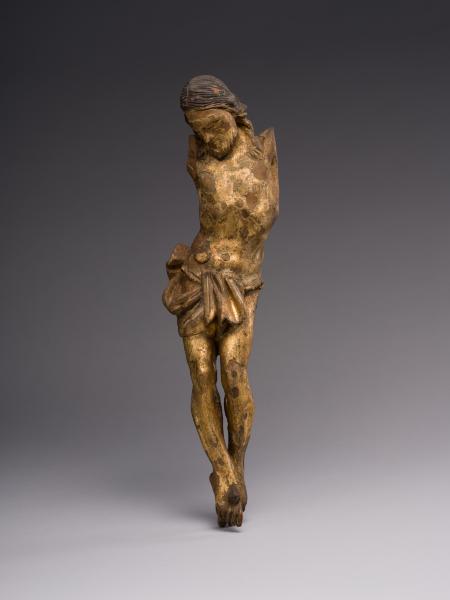
- carving polychrome
- Material
- wood
- Dimensions (height x width x depth, cm)
- 43.5 x 11 x 8
Additionally
- Type
- decorative and applied arts
- Genre
- religious
- Plot
- Crucifixion
- Provenance
- Zabolottsi village, Brody district, Lviv region
Information about author
Object description
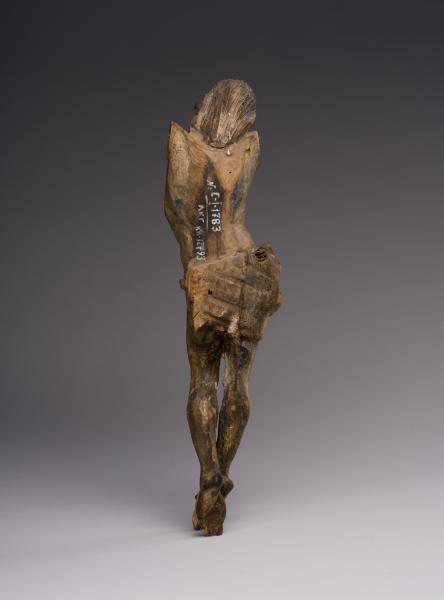
In the Middle Ages, the West abandoned the idealisation of the Crucified Christ in favour of earthly realism, which contributed to the emergence of the iconographic type of Crucifixion known as Catholic. The cross depicts the dying Saviour. His feet are realistically portrayed as being nailed together with a single nail. The sculptural image from the village in the Brody region falls into this category. Following the examples of Baroque sacred sculpture, Christ's body is bent in an S-shape. The figure of a tortured man is anatomically accurately depicted. The dynamics of the body's posture, the bend of the hips, the chest, the expression of suffering on the face, the tense muscles – all gravitate towards the Baroque style. In this image, the artist has combined physical torment with inner peace, evoking a sense of a higher purpose – the salvation of humanity. Even in its damaged state, this work retains its expressiveness, the tangible tragedy of the image, and the symbolism of sacrifice, which occupied a central place in Christianity.
Legal regulation
Borys Voznytskyi Lviv National Art Gallery