Crucifixion
unknown


Basic information
- ID
- С-I-1131
- Author
- unknown
- Name
- Crucifixion
- Date of creation
- 18th c.
- Country
- Ukraine
- Technique
- carving polychrome
- Material
- wood
- Dimensions (height x width x depth, cm)
- 53 x 43 x 12
Additionally
- Type
- sculpture
- Genre
- religious
- Plot
- Crucifixion
- Provenance
- Nezvysko village, Horodenka district, Ivano-Frankivsk region
Information about author
Object description
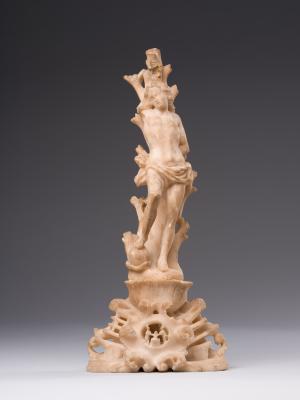
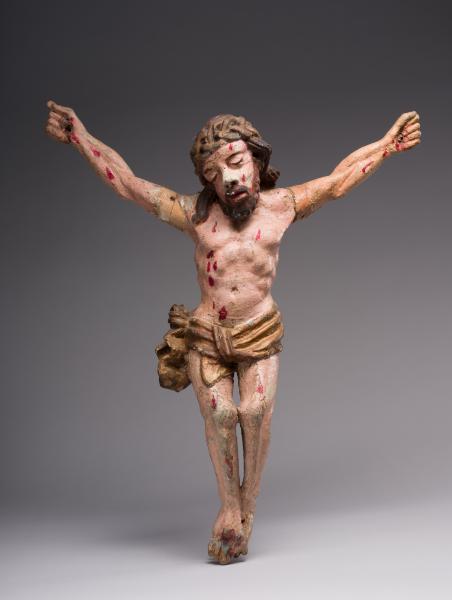
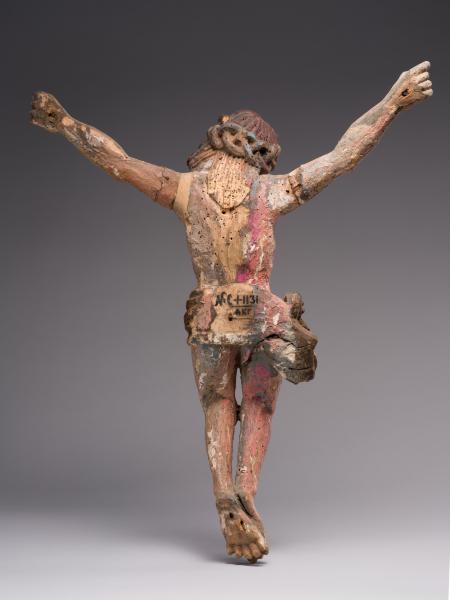
The polychrome figure of Christ crucified is carved in imitation of Western iconography. The stocky body is rendered with pronounced naturalism. The master carefully conveyed the anatomical features: an athletic figure, a tense chest, clearly defined ribs, a sunken abdomen, and well-defined muscles in the arms and legs. The arms are spread wide with closed palms, without strong tension, the legs are crossed, and the wounds on the body are clearly visible, leaving bloody traces – all aimed at conveying the dramatic nature of the scene. Jesus' head is slightly tilted to the right, his eyes closed, emphasising the end of his earthly suffering. His elongated face, framed by wavy carved lines of chestnut hair and a short wedge-shaped beard, conveys the sorrow and tranquillity of death. On his head is a crown of thorns, modelled with intertwined rods. Christ's naked body is covered with a loincloth tied in a knot on the right side. The deeply carved folds of the loincloth on his hips add decorative elements to the sculptural image. Overall, this work embodies the sacred themes of suffering and salvation, where artistic language serves as a means of drawing the viewer closer to the mystery of Christ's sacrifice.
Legal regulation
Borys Voznytskyi Lviv National Art Gallery