Male Portrait
Tiziano Veccelio (Titian)


Basic information
- ID
- Ж-756
- Author
- Tiziano Veccelio (Titian)
- Name
- Male Portrait
- Date of creation
- 16th c.
- Country
- Italy
- Technique
- oil painting
- Material
- canvas oil
- Dimensions (height x width, cm)
- 94.4 x 79.8
Additionally
- Type
- painting
- Genre
- portraiture
- Plot
- Portrait
- Provenance
- the Lubomirski collection
- Exposition
- Potocki Palace
Information about author
Object description
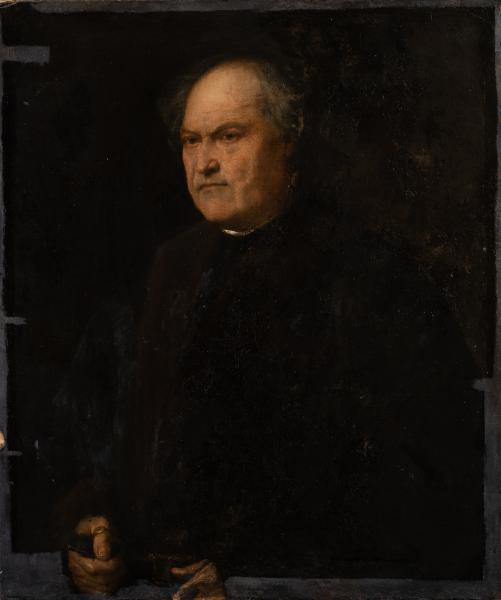
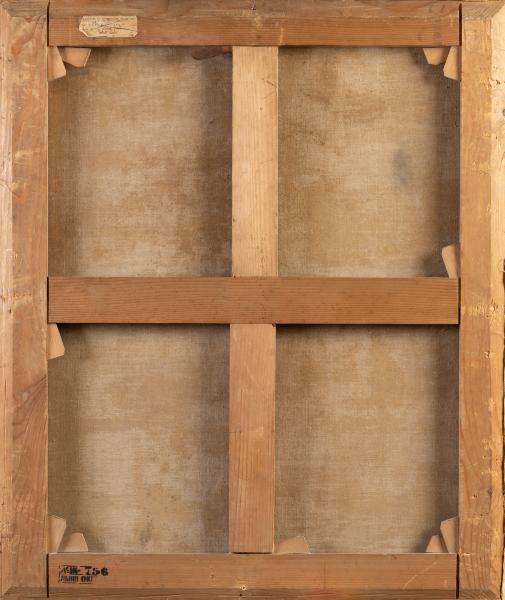
In the early 1940s, a collection of the Lviv Art Gallery (now Borys Voznytskyi Lviv National Art Gallery) was enriched with the "Male Portrait" painting. As is known, the given work belonged to Lubomirski Princes Museum, Lviv's largest public museum that opened in 1823. According to the museum inventory records, the work was listed as "Male Portrait" by Titian (Tiziano Vecellio, c. 1480/1485–1576), the leader of the Venetian school of painting and one of the most prominent artists of the High Renaissance. The records also indicate that the painting was restored and repainted over the entire surface, while the canvas was duplicated and stretched on a new subframe. On July 7, 1910, the work was sent to Vienna, but the purpose of that is still unknown. According to the Gallery's Accession Register, in August 1956, the portrait was restored by experts from the State Central Art Restoration Workshop. An X-ray examination of the work performed at the end of July 2022 helped reveal the author's signature – Titianus – on the right side of the man's face depicted in the painting. "Male Portrait" from the Gallery's collection was probably created by Titian in the late period of his artistic career, as evidenced by the texture of the paint layer and the limited range of colours. Depicted in a three-quarter turn to the left, an unknown man is shown on a dark background. His inner world is expressed through intense deep colour, textured brushstrokes, and diffused soft light rather than a majestic posture or restrained gestures. Such a technique enlivens the thoughtful face of the portrayed person. It emphasises his penetrating look filled with life wisdom and experience and goes beyond the canvas as if into the future. The man's clothing is painted in detail. The main focus of the work is kept on the tip of the belt – the man is tightening it with his right hand. This portrait is an excellent example of the masterful conveying of the hero's inner world and a historical document of the era.
Portrayed person
- The name of the person portrayed
- Antonio Grimani
- Lifetime of the person portrayed
- 1435–1523
Legal regulation
Borys Voznytskyi Lviv National Art Gallery