Back

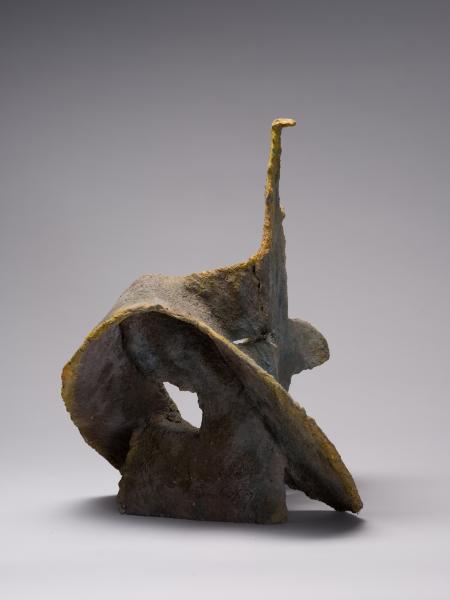
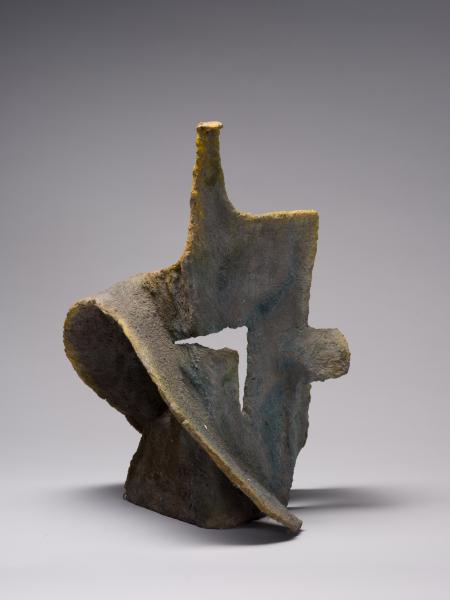
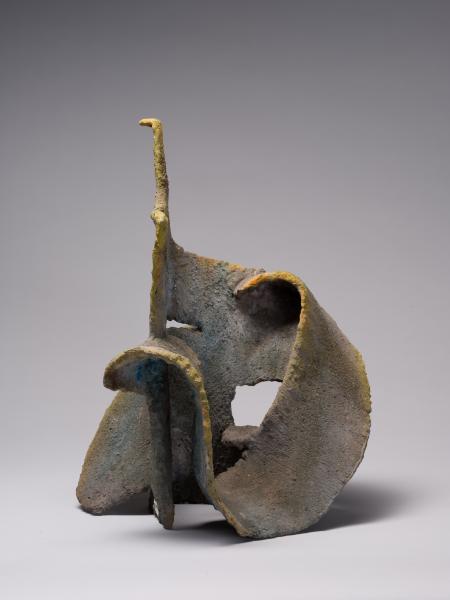
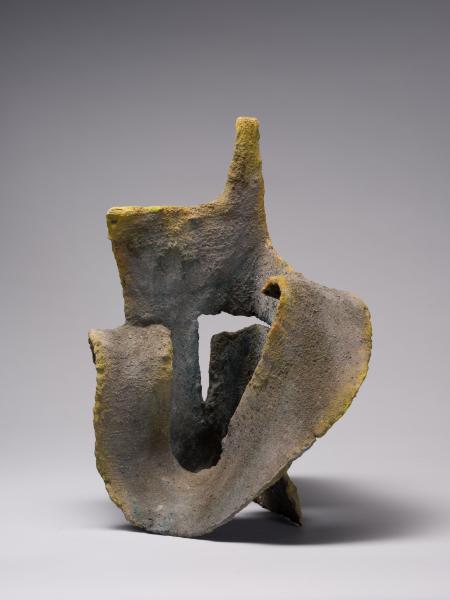
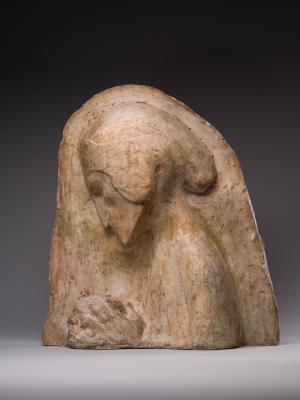
Seating Composition

Mykhailo Dzyndra

  • Seating Composition 2
  • Seating Composition 3
  • Seating Composition 4
  • Seating Composition 5
  • Seating Composition 6
Basic information
ID
ФД-581
Author
Mykhailo Dzyndra
Name
Seating Composition
Date of creation
1979
Country
the USA
Culture
Contemporary times
Technique
original technique
Material
cement mixture reinforcing mesh acrylic paint
Dimensions (height x width x depth, cm)
45 x 34 x 29
Additionally
Information about author
Author
Mykhailo Dzyndra
Artist's lifetime
1921–2006
Country
the USA, Ukraine
Biography
Mykhailo Dzyndra (8 November 1921–8 September 2006) was a Ukrainian sculptor, graphic artist, and architect, author of over one thousand sculptural works, hundreds of graphic compositions, and several dozen paintings. The artist’s life began in the village of Demnia in the Lviv region (now Mykolaiv district, Lviv region), in the peasant family of Vasyl and Kateryna Dzyndra. His early interest in sculpture was nurtured by local folk art – expressive, naïve, life-affirming carvings by local craftsmen found in the village cemetery and on the walls and interiors of the church. 

Dzyndra began his artistic education under Andrii Koverko, a renowned Lviv sculptor, to whom the young artist was likely referred in 1935 by his elder brother, Yevhen. His systematic professional training took place at the Lviv School of Applied and Industrial Art, where he studied from 1941 to 1944. His mentors were the classically inclined Ivan Severa and Mykola-Bohdan Mukhin, author of romantically inspired, nationally infused, and expressive sculptural works. 

The war brought Dzyndra to Bratislava and later to a displaced persons camp near Munich, where he established a carving school. Together with Yurii Solovii, he joined the Association of German Artists (1946) and participated in Ukrainian émigré exhibitions in Regensburg, Berchtesgaden, Munich, Bamberg, and Nuremberg. He received his first favourable reviews, notably from I. Keyvan, who described Dzyndra as a representative of the young Ukrainian artistic generation who had “begun to reveal his talent”. Synthesising various influences, in the late 1940s and early 1950s, Dzyndra created around seventy expressive easel sculptures based on mimetic principles and experimentation with diverse stylistic approaches. 

In 1951, the artist emigrated to the United States with his family. He later took part in the first exhibition of the Association of Ukrainian Artists in America (1952) and joined the rebellious modernist “Group of Ten”. His inclination toward formal innovation was reflected in his affiliation with the New York Group, which declared “freedom of creativity” and “modernity” as its foundational principles.

In 1964, during one of the group exhibitions, Dzyndra “met the brilliant Ukrainian master Oleksandr Arkhypenko” and, “upon returning home, destroyed all his ‘thematic sculptures’”. The subsequent decades were marked by a rejection of representational art and a turn toward “contemporary-style sculpture”, with experiments in the concepts of “sculpture of plastic associations”, “abstract sculpture of free form”, and “sculpture of architectural form”, as well as the creation of relief abstract compositions, grotesque portraits, and graphic and pictorial works. 

In the 1960s–1970s, Dzyndra lived in Putnam County, north of New York City, where he displayed his sculptures outdoors, allowing them to acquire new semantic and plastic resonances against the backdrop of the natural landscape. The artist later settled in Florida, where he built his own house and studio. He dreamed of establishing a Museum of Modern Art that would unite the works of Ukrainian émigré artists. 

In 1991, the artist returned to Ukraine, bringing with him approximately one thousand of his sculptural works. In 2005, through the efforts of Dzyndra and his wife, Mrs Sofia, the Mykhailo Dzyndra Museum of Modern Sculpture was opened in Briukhovychi near Lviv; today it is a branch of the Lviv National Art Gallery. 

Mykhailo Dzyndra passed away on 8 September 2006. He was buried at Lychakiv Cemetery in Lviv. A copy of his work, Fantasy for the Faithful, a composition of concise, flexible abstract forms associated with memory and eternity, stands over his grave.
Legal regulation
Borys Voznytskyi Lviv National Art Gallery