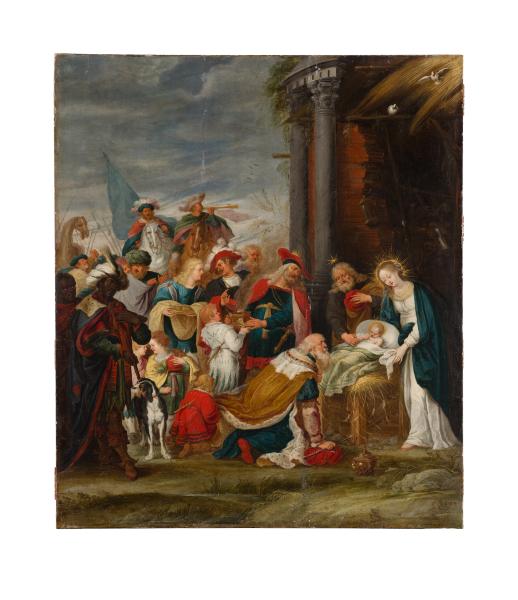
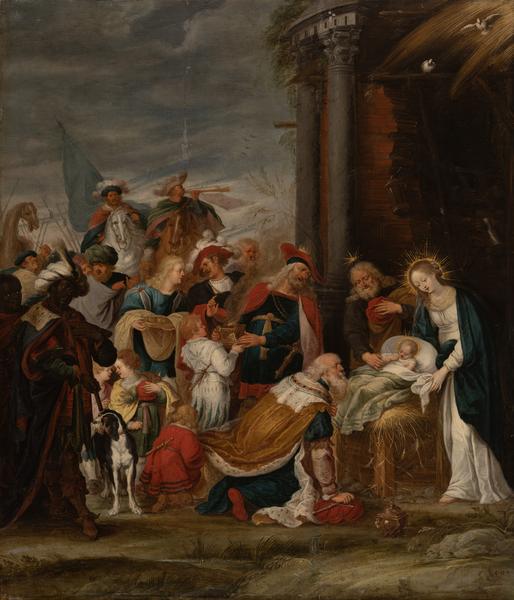
Adoration of the Magi
Cornelis de Baellieur


Basic information
- ID
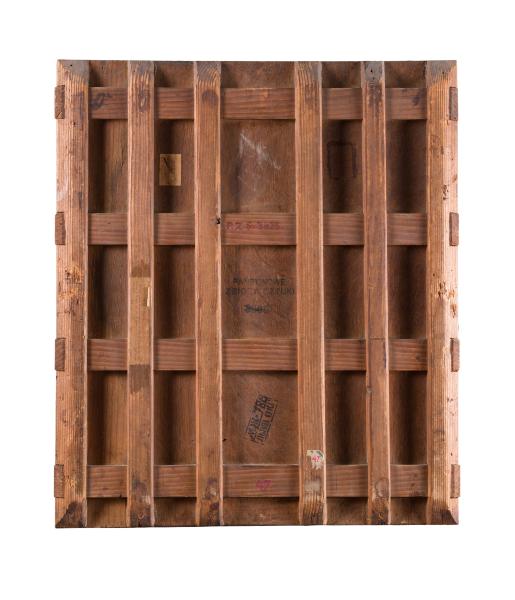
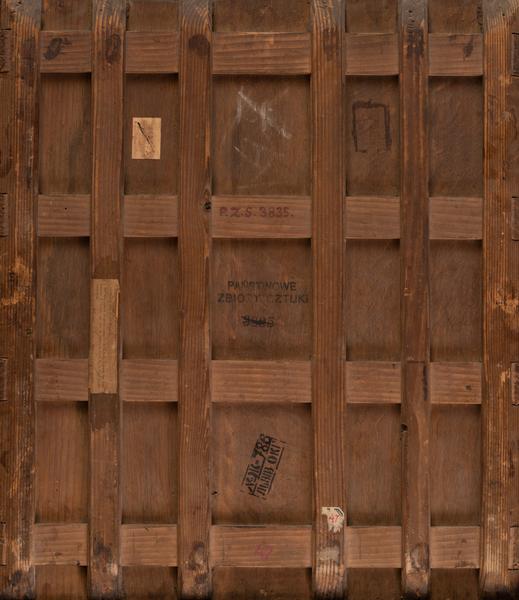
- Ж-786
- Author
- Cornelis de Baellieur
- Name
- Adoration of the Magi
- Date of creation
- 17th c.
- Country
- Flanders
- Technique
- oil painting
- Material
- wood oil
- Dimensions (height x width, cm)
- 57 x 49
Additionally
- Type
- painting
- Genre
- religious
- Provenance
- Collection of Leon Pininski
- Exposition
- Potocki Palace
Information about author
Object description
The work is a vivid example of Cornelis de Baellieur's painting style. The composition was most likely influenced by examples of Dutch engravings from the 16th century, particularly "The Adoration of the Magi" by Hendrick Goltzius. The picture represents three kings, Gaspar, Melchior, and Balthazar, who brought gifts to Jesus Christ. The Holy Family stands in front of them. The Virgin Mary reverently looks at the Child, and Joseph carefully takes his hand. The Holy Family is depicted in a dilapidated ancient temple, which most likely represents the victory of Christianity over paganism. The descent of the Holy Spirit, symbolised by two white doves and a bright golden glow, can be seen above the main scene. Gaspar is kneeling in front of the Holy Family, worshipping Christ. His hand is resting on a red pillow. Behind him, in the crowd, one can see Melchior, to whom a young page hands a casket with frankincense. Balthazar, surrounded by his servants, stands on the left. He is depicted as dark-skinned due to the iconographic tradition in Dutch painting. The work's iconography corresponds to the Middle Ages doctrine, according to which each king represents one of the continents known at that time. As a result, Gaspar symbolises Asia, Balthazar – Europe, and Melchior – Africa. The artist depicted the three kings in the appropriate clothes.
Legal regulation
Borys Voznytskyi Lviv National Art Gallery