Crucifixion
unknown, unknown folk sculptor


Basic information
- ID
- С-I-2119
- Author
- unknown unknown folk sculptor
- Name
- Crucifixion
- Date of creation
- 18th c.
- Country
- Ukraine
- Technique
- carving polychromy
- Material
- wood
- Dimensions (height x width x depth, cm)
- 50 x 55 x 11
Additionally
- Type
- sculpture
- Genre
- religious
- Plot
- Crucifixion
- Provenance
- Expedition in 1988
Information about author
Information about author
Object description
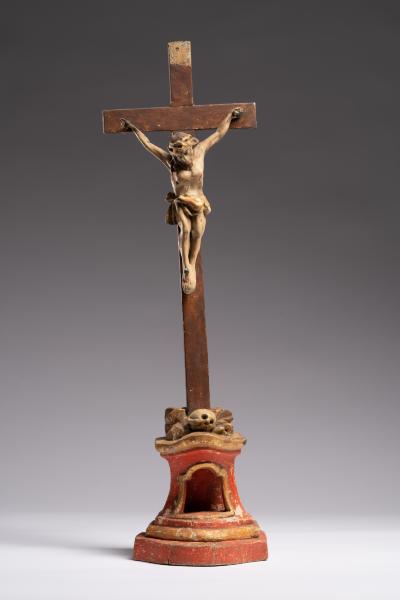
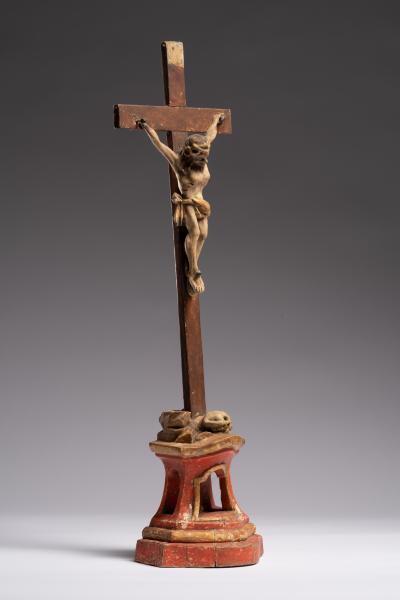
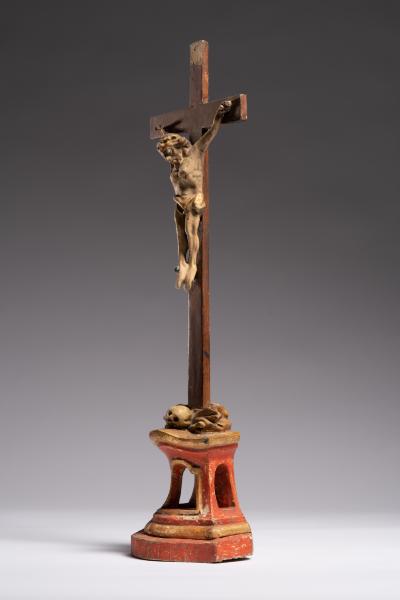
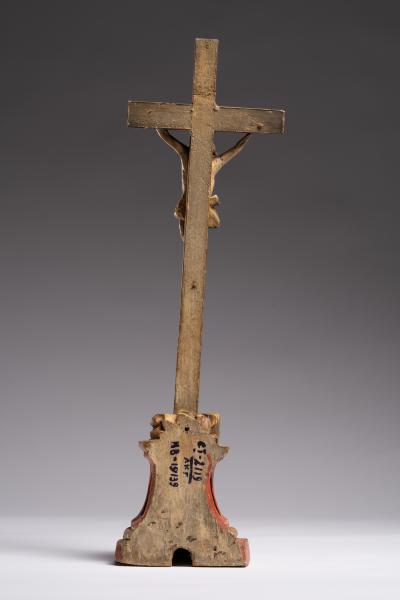
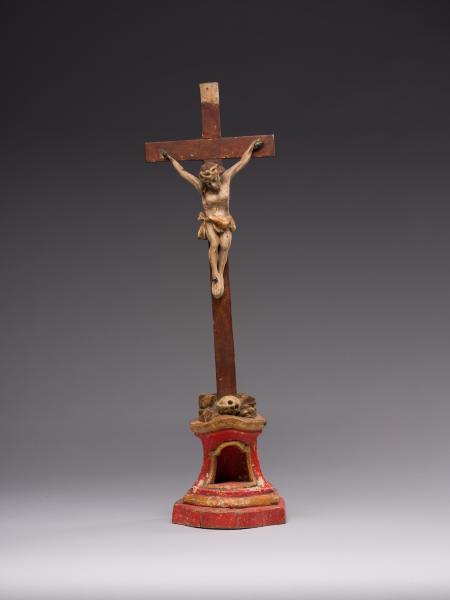
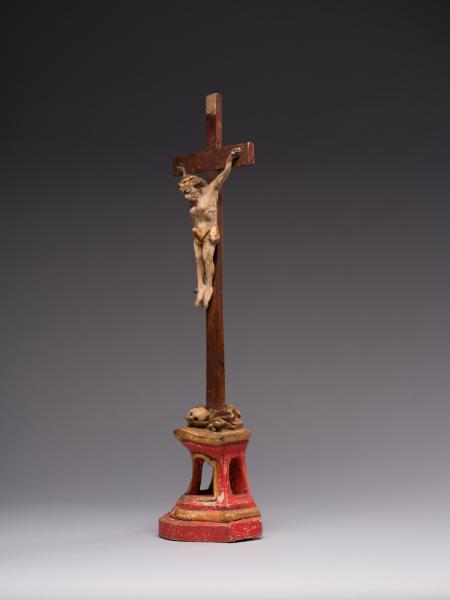
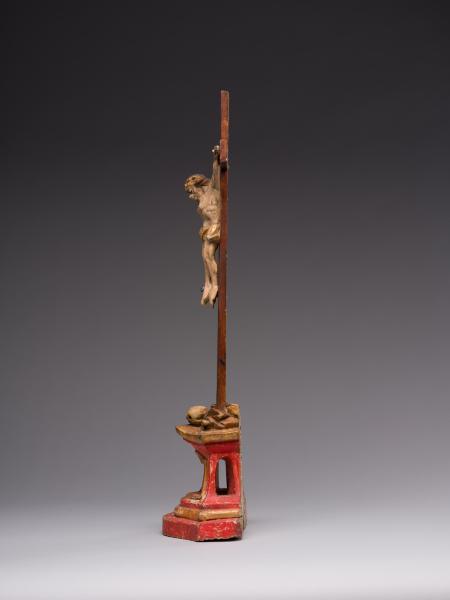
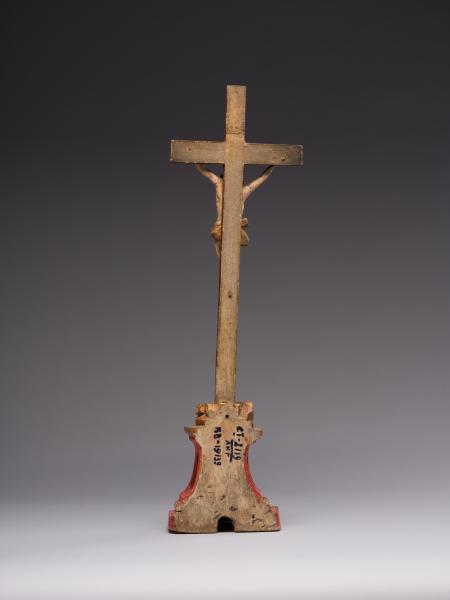
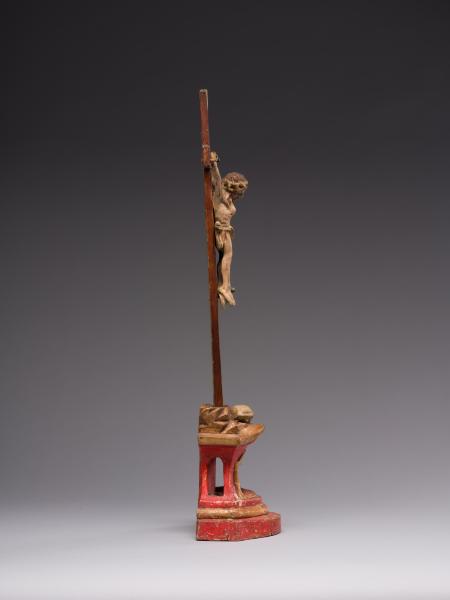
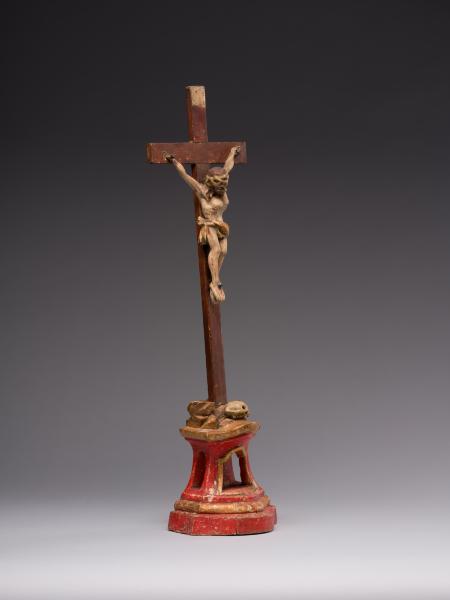
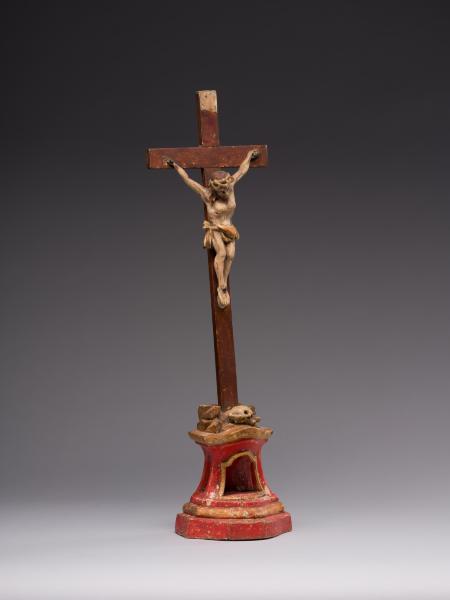
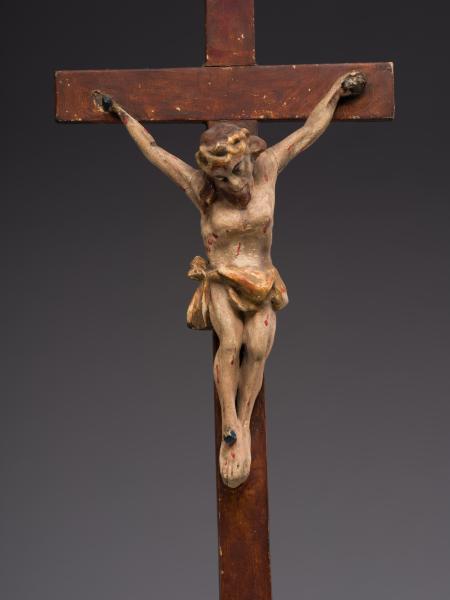
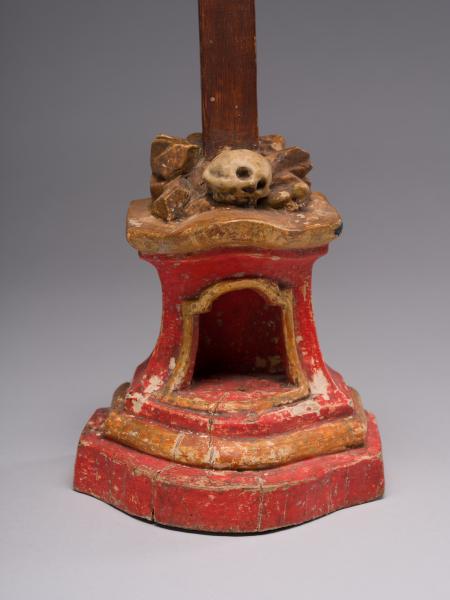
The carved wooden altar crucifix on a stylised base follows Western iconography. Almost the entire length of the vertical axis is occupied by a sculptural image of Christ. His curved, stocky figure hangs on the cross, nailed to it, his legs with crossed feet bent at the knee joints. The body is modelled in a generalised manner, but with a distinct emphasis on anatomy: a clearly defined chest with relief ribs, a sunken abdomen, and arm and leg muscles. Christ's head is tilted to the right, his face expressing calm and submission. Christ's naked body is covered by a loincloth tied at the hips with a knot, modelled with deep relief folds. The sculptural figure of Christ is rendered quite expressively, with an emphasis on suffering, and the work has a noticeable Baroque expression. The preserved polychromy enhances the drama of the image. The master paid considerable attention to the lower part of the composition – a red base in the form of an architectural pedestal. In the centre, at the base of the cross, is the traditional motif of Adam's skull, symbolising Christ's victory over death and sin. The manner of execution indicates that the work belongs to the genre of folk sacred sculpture. The work combines naivety of form with emotional expressiveness.
Legal regulation
Borys Voznytskyi Lviv National Art Gallery