Tsuba
unknown
Basic information
- ID
- Рз-2893
- Author
- unknown
- Name
- Tsuba
- Date of creation
- late 19th – early 20th c.
- Country
- Japan Austrian Empire Austro-Hungarian Empire
- Culture
- Edo period
- Technique
- casting silver and gold incrustation (zōgan)
- Material
- metal alloy
- Dimensions
- 9.1 x 8.5 x 0.7 cm (height x width x depth)
Additionally
- Type
- decorative and applied arts weapon
- Provenance
- A gift from O. Feldman
- Exposition
- Zolochiv Castle (Chinese Palace)
Information about author
Object description
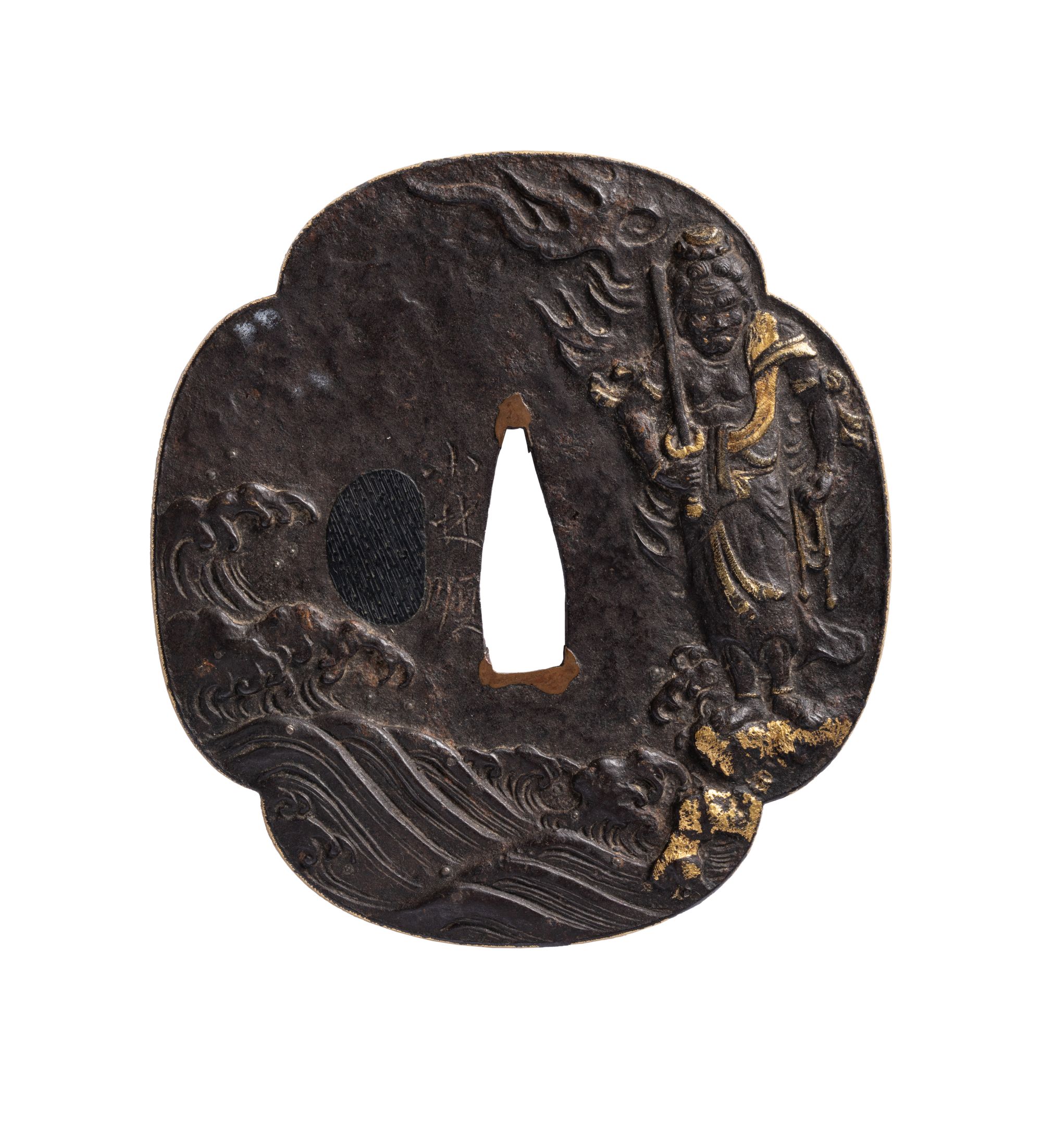
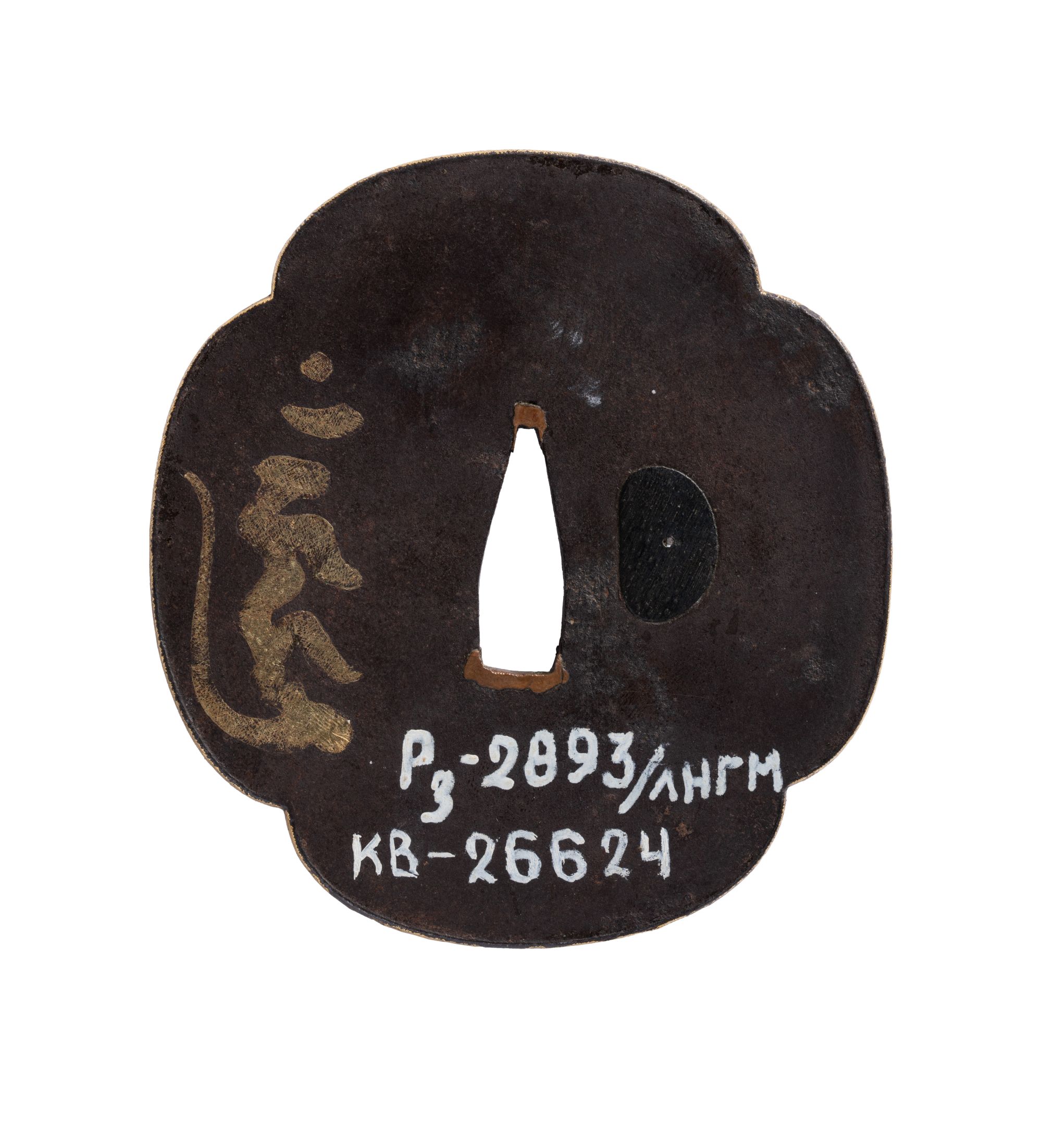
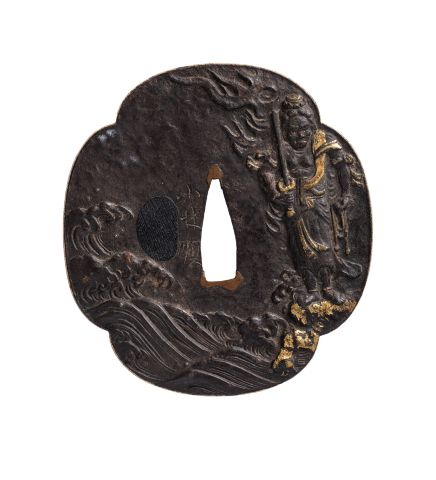
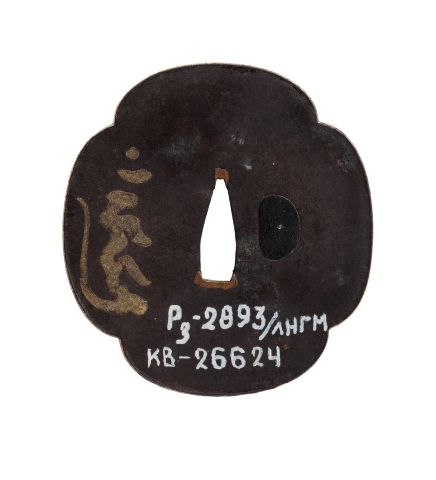
The tsuba, in the form of a four-leaf clover (mokko gata), is forged from an alloy of dark metals. There is a triangular hole in the centre. The copper inserts are in the upper and lower parts of the hole; on the right, there is an oval hole riveted with ferrous metal. There is a vertical hieroglyphic inscription between the rivet and the hole in three characters. The main part of the tsuba is engraved in high relief: on the right, there is an image of a man standing on a stone with a raised sword and flames behind his back; on the left, in the lower part, is a relief image of waves. Traces of forging are visible on the rest of the surface. The details of the man's clothes and the stone contain gilt. Silver dots are encrusted in the waves. On the reverse side, there is a vertical hieroglyphic cursive sign. The rim of the tsuba is smooth and gilded.
Legal regulation
Borys Voznytskyi Lviv National Art Gallery