Pelczynski Pond in Lviv

Antoni Lange
  • Pelczynski Pond in Lviv 2
  • Pelczynski Pond in Lviv 3
Basic information
ID
Ж-4314
Author
Antoni Lange
Name
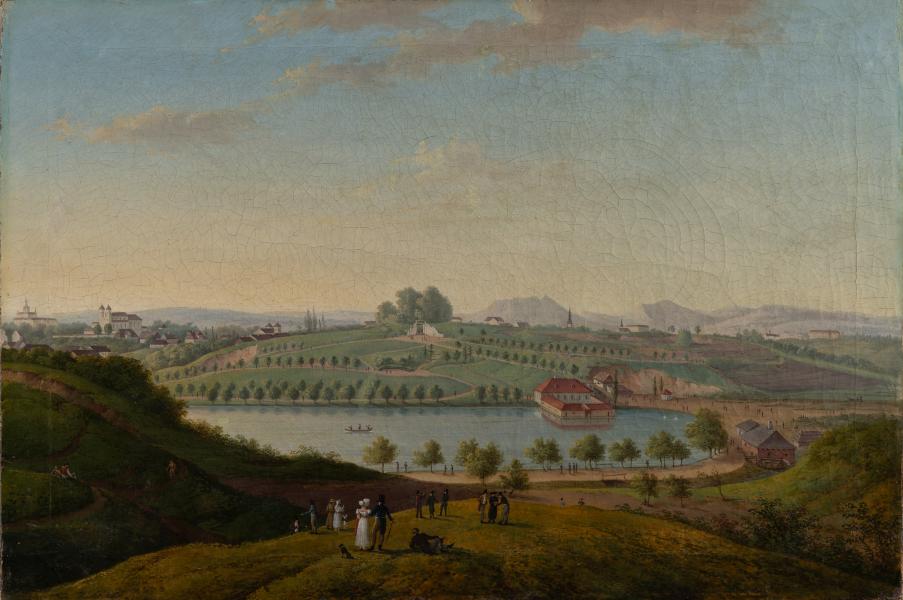
Pelczynski Pond in Lviv
Date of creation
1820s
Country
Austrian Empire
Technique
oil painting
Material
canvas oil
Dimensions (height x width, cm)
57.5 x 86
Additionally
Type
painting
Genre
landscape
Provenance
Lviv Historical Museum
Exposition
Lozinski Palace
Information about author
Author
Antoni Lange
Artist's lifetime
1778–1842
Country
Austrian Empire
Biography
Antoni Lange (1778, Vienna – 1842, Lviv) was an Austrian painter, graphic artist, and scenographer. He was born to the actor Joseph Lange (1751–1831) of the Viennese court theatre and the actress Maria Anna Elisabeth Schindler (1757–1779). The Lange family was related to the Mozarts. Wolfgang Amadeus Mozart and Joseph Lange were friends and performed together on stage. Their wives, Aloysia and Constanze, were sisters and also engaged in musical performances. Antoni Lange and Franz Xaver Mozart, known as the "Lviv Mozart", were cousins. Antoni Lange first learned drawing skills from his father, a Vienna Academy of Fine Arts graduate who often painted portraits of the family of his brother-in-law, W. A. Mozart. It is also possible that specific knowledge was passed on to him by his maternal grandfather, the miniature painter Philipp Ernst Schindler (1723–1793), who was the artistic director of the Imperial Porcelain Factory in Vienna. Antoni Lange attended the Drawing School of St. Anna in Vienna for several years. Also, he took private lessons from two well-known Austrian landscape painters of the time, followers of Claude Lorrain: Lorenz Adolf Schönberger (1768–1846) and Johann Nepomuk Schödlberger (1779–1853). The influence of these two painters left a significant mark on Lange's subsequent work, imparting it with stylistic traits of the Viennese school, characterised by poetic idealisation in the portrayal of landscapes. In 1808, Antoni Lange arrived in Lviv at the invitation of Franz Kratter (1758–1830), the Lviv German Theatre co-director and an old friend of his father. He worked as a scenic artist in Lviv for over 30 years on Polish and German theatrical stages. Between 1823 and 1827, a series of lithograph albums based on Antoni Lange's drawings was published, titled "Collection of the Most Beautiful and Interesting Places in Galicia" ("Zbiór najpiękniejszych і najinteresowniejszych okolic w Galicji", consisted of 37 sheets) and "Collection of Views of Notable Parks in Poland" ("Zbiór widoków celniejszych ogrodów w Polsce", consisted of 44 sheets). The renowned Lviv lithographic workshop of Joseph and Piotr Piller printed the albums. In preparing the material for these albums, Antoni Lange undertook numerous travels, resulting in panoramic views of Lviv and other towns and villages in Volhynia and Podillia. These included depictions of specific locales with staffage scenes of everyday life and numerous idealised (imaginary) romanticised landscapes. Among Antoni Lange's depictions of Lviv, the oil painting "Pelczynski Pond in Lviv" is particularly well-known. The artist died in Lviv and is buried in Lychakiv Cemetery. Antoni Lange's activities in Lviv in the early 19th century were of great significance to the artistic life of Galicia, particularly in establishing the position of the landscape genre. The artist's body of work is dispersed among museum collections in Ukraine, Poland, and Austria, as well as private collections.
Object description
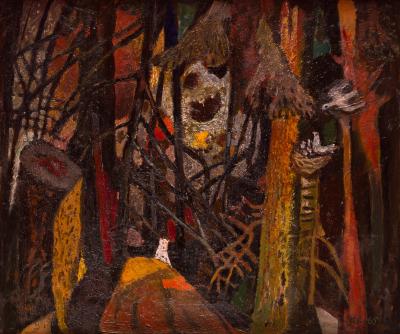
The painting is a typical example of veduta, popular in the 18th century – a multi-layered composition with a panoramic view of Lviv from the southern side. On the horizon, from left to right, the silhouettes of St. George's Cathedral, St. Mary Magdalene's Church, the rooftops of the Church and Monastery of St. Lazarus, and the outline of the Lviv High Castle are visible. In the panorama's centre is Pelczynski Pond, with the military swimming pool building, established in 1820 by General of Cavalry Count Jan-Karol Fresnel. The Wronowski Hill is depicted to the left, where the Citadel was later built between 1855 and 1857. In the foreground, detailed staffage figures of people strolling are depicted. Pelczynski Pond, which had been owned by the wealthy Lviv Pelk family since 1530, became one of the most popular spots for relaxation and leisurely walks among the city's residents in the 19th century. Since 1843, performances involving the military were regularly held here, the most famous of which was the "Battle with Sea Monsters" in 1845, which gained widespread attention in the contemporary press.
Inscriptions
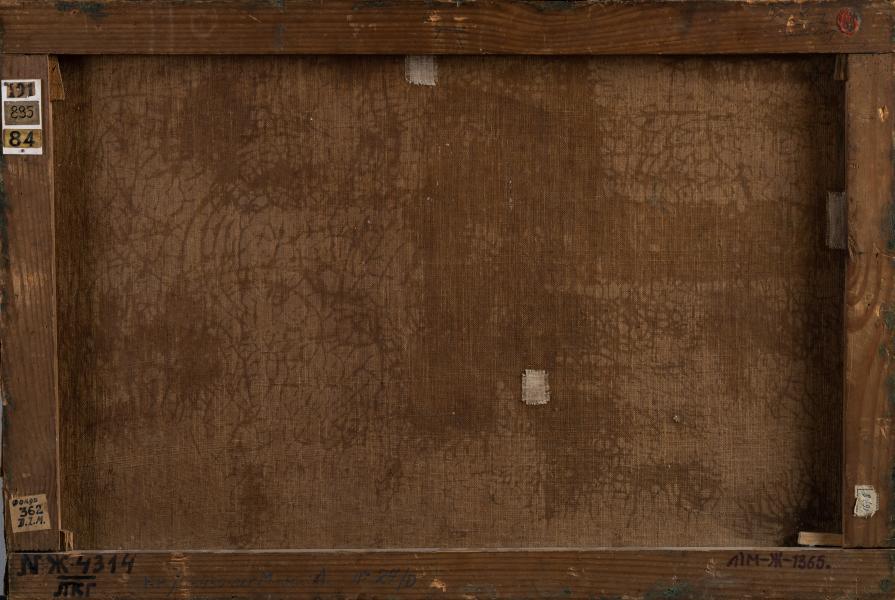
In the bottom left is the author's signature: "Lange". On the reverse side is the inscription: "Lang… Festenburg".
Legal regulation
Borys Voznytskyi Lviv National Art Gallery