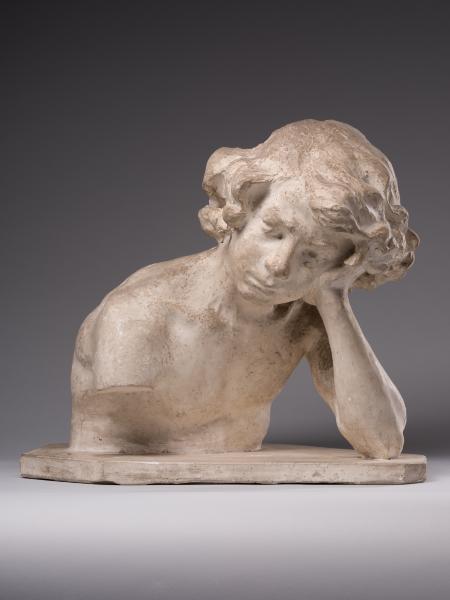
Bust of a Boy
Kazimiera Malaczynska-Pajzderska


Basic information
- ID
- С-I-629
- Author
- Kazimiera Malaczynska-Pajzderska
- Name
- Bust of a Boy
- Date of creation
- 1910
- Country
- Austro-Hungarian Empire
- Culture
- Contemporary times
- Technique
- moulding
- Material
- plaster
- Dimensions (height x width x depth, cm)
- 68 x 50 x 40
Additionally
- Type
- sculpture
- Genre
- portraiture
- Plot
- Portrait bust
- Provenance
- National Gallery of Lviv (until 1940)
Information about author
Object description
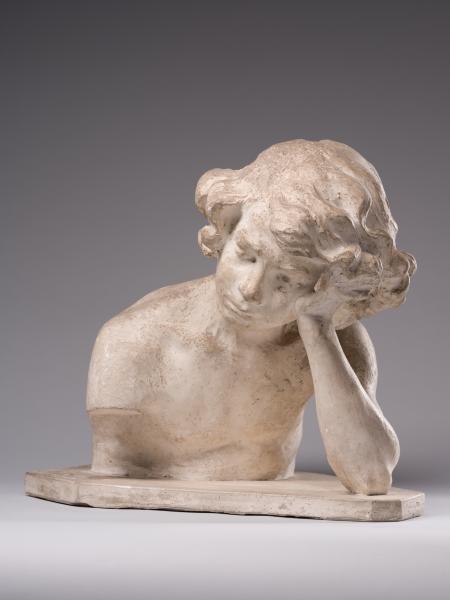
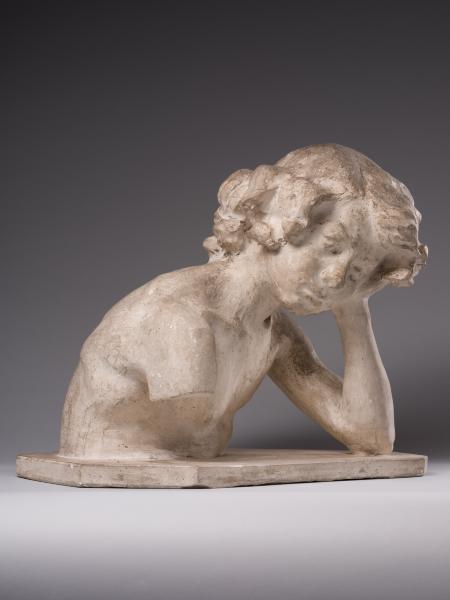
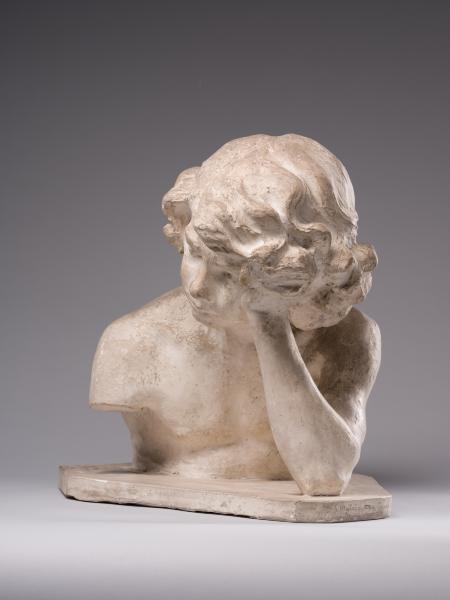
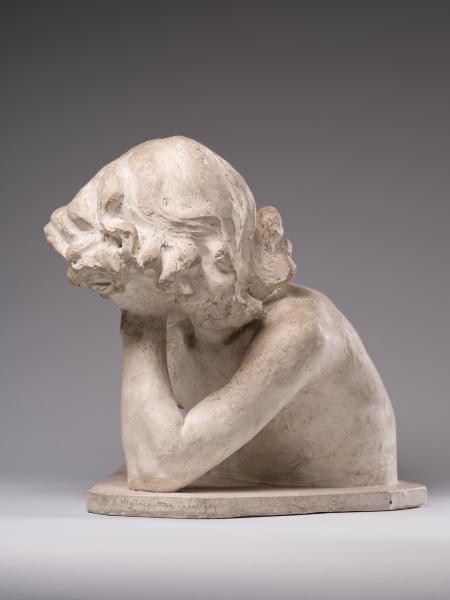
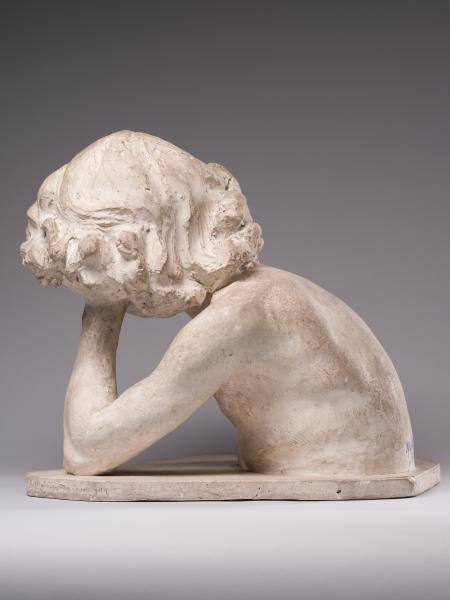
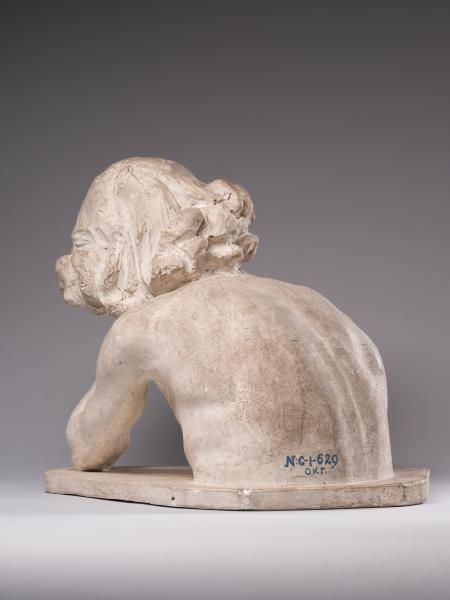
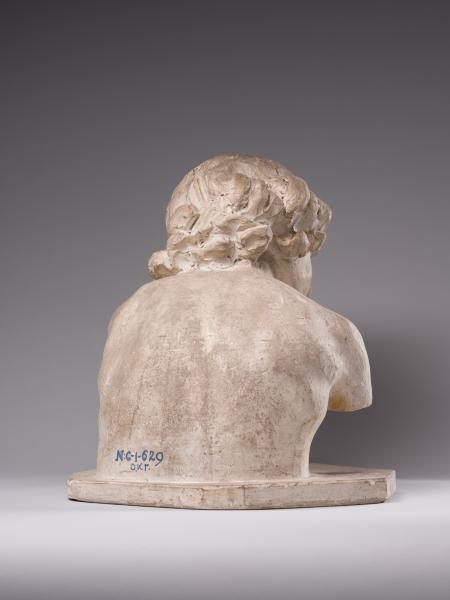
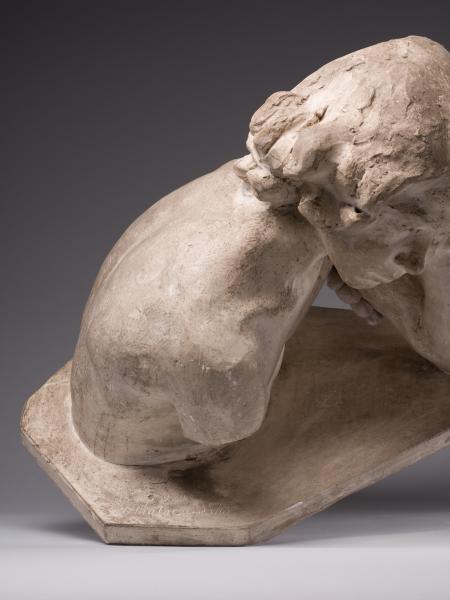
Kazimiera Malaczynska-Pajzderska's work has a dual figurative and plastic genesis; it is marked by the inspiration of the Secession, the plastic insights of A. Rodin, and modernised readings of classicist traditions, probably under the influence of A. Bourdelle. An elegiac and nostalgic note, evident in the powerful Bourdelian shapes, is present in some of the artist's early works from the early 1910s. Among them is the "Bust of a Boy", which refers to Hellenistic and Renaissance plastic art, recalls the "great styles" of the seventeenth century, associates itself with the putto, and simultaneously acquires modern artistic characteristics. The work is linked to the classical tradition by the idealisation of the image of a thoughtful child, the perfect soft modelling of the charming face, the thick wavy hair, the torso and the left hand. The absence of the right hand, reminiscent of lost fragments of ancient sculptures, is perceived as an appeal to antiquity as it was known in New and Modern Europe. At the same time, the asymmetry of the silhouette and the fluidity and dynamism of the sculptural masses suggest that the bust is inspired by the work of A. Rodin. Significantly, the sculpture is not perceived as a combination or synthesis of heterogeneous inspirations but as the organic emergence of the innovative amid classical plastic forms.
Inscriptions
Signed and dated on the left side of the base: "Paryż 910 / K. Małaczyńska".
Legal regulation
Borys Voznytskyi Lviv National Art Gallery