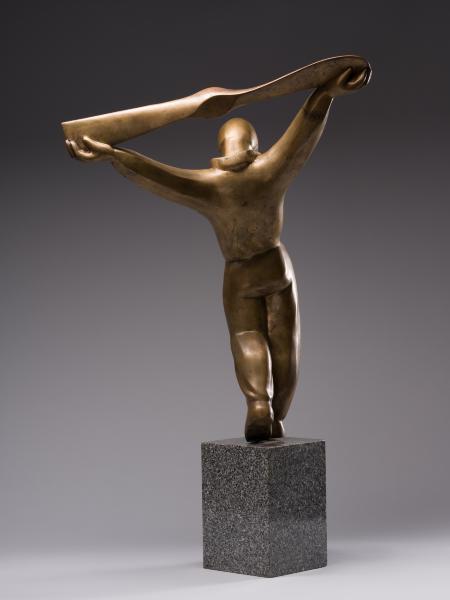
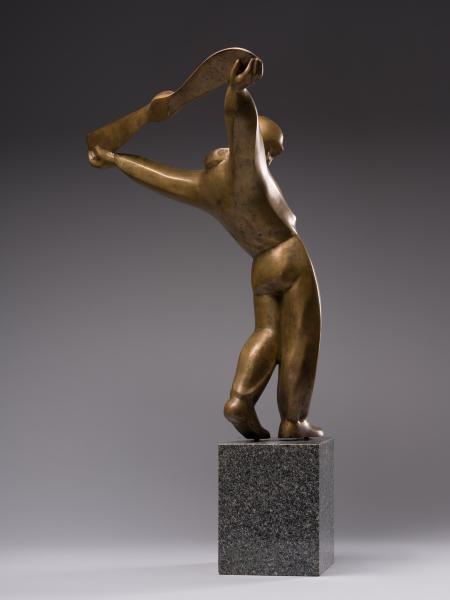
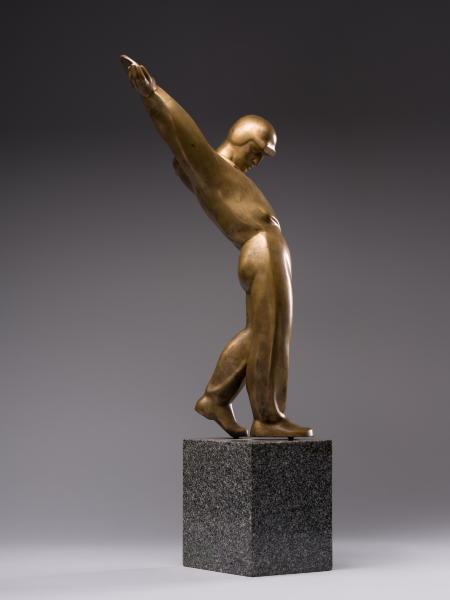
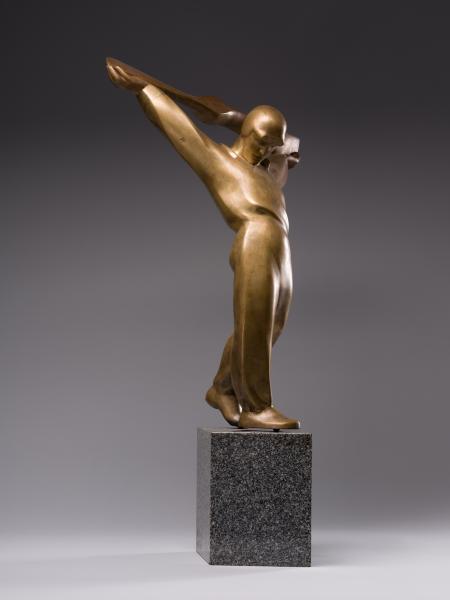
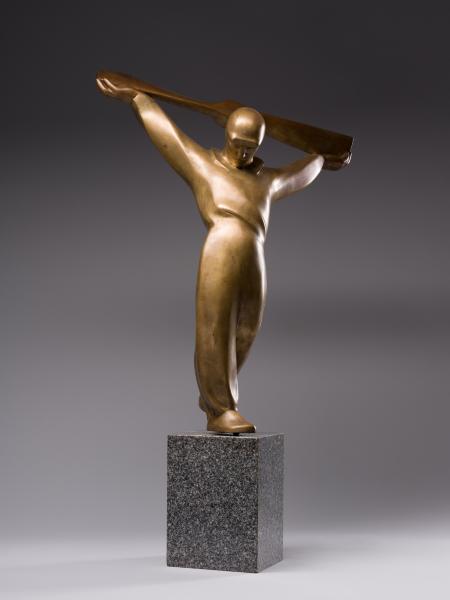
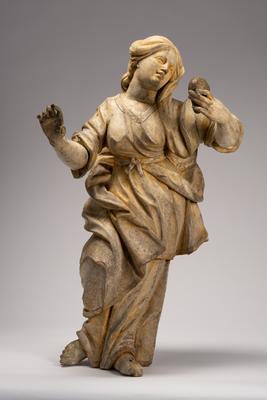
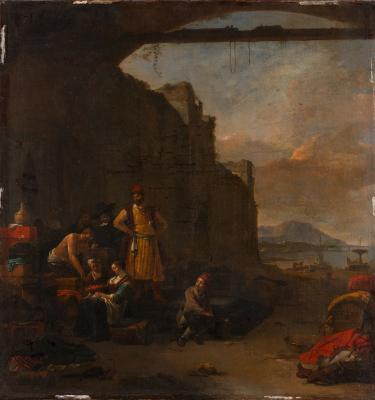
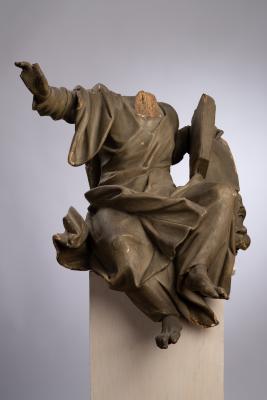
Aviator (Pilot)

Janina Reichert-Toth

  • Aviator (Pilot) 2
  • Aviator (Pilot) 3
  • Aviator (Pilot) 4
  • Aviator (Pilot) 5
  • Aviator (Pilot) 6
  • Aviator (Pilot) 7
  • Aviator (Pilot) 8
  • Aviator (Pilot) 9
  • Aviator (Pilot) 10
Basic information
ID
С-I-191
Author
Janina Reichert-Toth
Name
Aviator (Pilot)
Date of creation
1921 або 1927 (according to I. Khomyn, 2020); 1924–1926 (according to Y. Biriuliov, 2015)
Country
Poland
Culture
Contemporary times
Technique
casting
Material
bronze marble
Dimensions (height x width x depth, cm)
53.5 x 44 x 27.5
Information about author
Author
Janina Reichert-Toth
Artist's lifetime
1895–1985
Country
Austro-Hungarian Empire
Biography
Janina Reichert-Toth (22 June 1895, Staryi Sambir – 7 March 1986, Krakow) was a Polish sculptor who worked in Lviv and Krakow. She was born in Staryi Sambir as the daughter of Jozef Reichert, a court advisor in Lviv, and Antonina Kilarska. In 1907, she moved with her parents to Lviv, where she lived at 25 Kurkova Street (now Lysenko Street), in a house that belonged to her maternal grandfather, the famous Lviv ophthalmologist Jozef Kilarski. She attended the private gymnasium named after J. Slowacki. During the First World War, the family lived in Brno. From 1915 to 1918, she studied at the Lviv School of Art and Industry, Department of Decorative Sculpture. From 1919 to 1921, she studied at the Krakow Academy of Arts under the famous Polish painter, sculptor, and graphic artist Konstanty Laszczka. In Lviv, she worked in the sculpture studio of Ludwik Tyrowicz, a local businessman and sculptor of Armenian origin. Later, she opened her own studio in the family house at 25 Kurkova Street. In 1930, the city provided her with premises on the first floor of the Biesiadecki Palace at 10 Halytska Square. She taught drawing at the Women's Gymnasium of the Sisters of the Holy Family of Nazareth. She also worked at the State Women's Vocational School and at the Higher School of Home Economics for Women in Snopkiv. Alongside her teaching, she devoted herself to her creative work. In December 1935, she married Fryderyk Toth, a sculptor. After the marriage, she moved her studio to a new villa at 4 Odrowążów Street (now Litnia Street). In June 1919, she debuted at the II Exhibition of the Association of Polish Women Artists. J. Reichert-Toth received recognition at the Society of Friends of Art exhibition in the Industrial Museum in Lviv (1927), where the artist exhibited 22 works. In 1924–1939, in collaboration with the architect Witold Minkiewicz, she created a number of sculptures for sacred buildings in Lviv, including the churches of St. Mary Magdalene and St. Elizabeth in Lviv. In 1940, she worked at the Lviv Ceramics and Sculpture Factory. In 1941, she moved to Tomaszow Lubelski and, in 1946, to Krakow. J. Reichert-Toth's works from the 1920s show the influence of A. Bourdelle, medieval sculpture, and Renaissance sculpture. In a number of works, the Cubist inspiration of C. Brâncuși, J. Lipchitz and P. Picasso can be seen. Some sculptures are characterised by the integration of Art Deco forms. She developed her own style, characterised by tectonics, constructivism, and a clear rhythm. She worked in the fields of monumental, monumental-decorative, and easel sculpture.
Object description
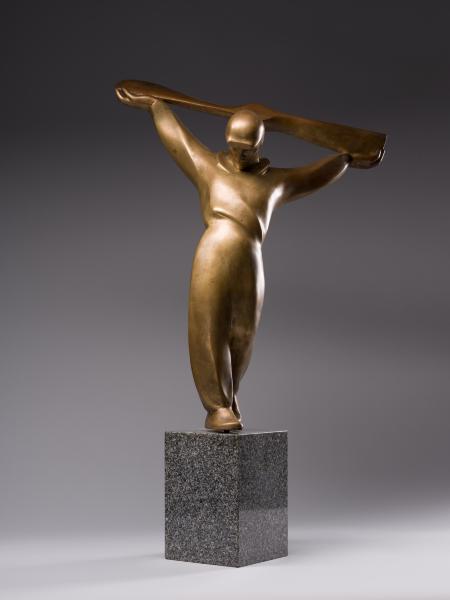
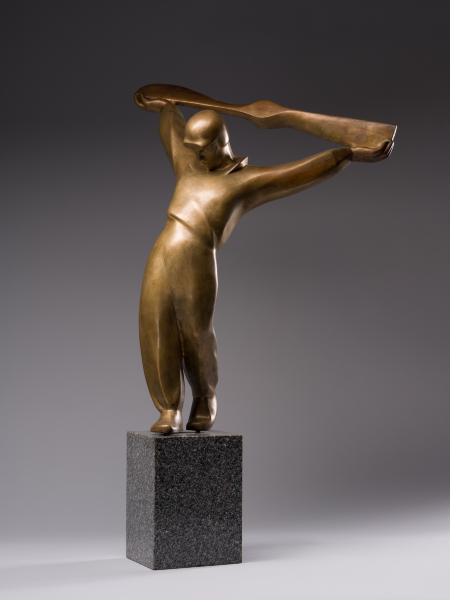
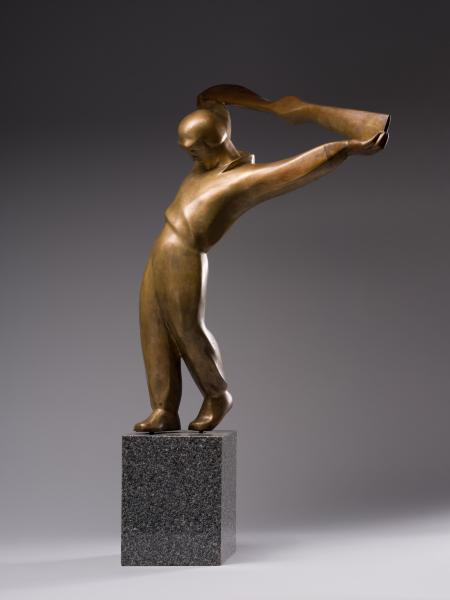
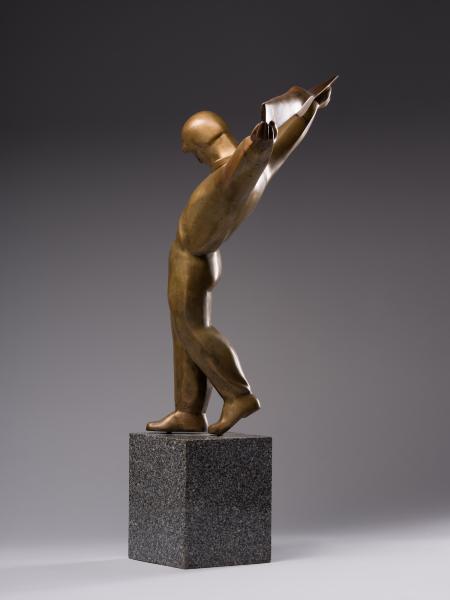
The sculpture was initially created in plaster as a design for a monument for the "Eaglets Cemetery", a Polish war memorial in the Lychakiv cemetery in Lviv, designed and built in 1921–1939. It seems that the work was intended to compete for the design of the monument to American pilots on one of the wings of the catacombs, designed by R. Indrukh and built after his death by A. Nestarovskyi with some changes in the sculptural decoration. Probably after winning the competition for a project by J. Rozyski and J. Stazynski, which was much less plastic and figuratively expressive but more representative, J. Reichert-Toth cast her work in bronze and exhibited it in 1927–1930, after which it began to be perceived as an easel sculpture. The sculpture is characterised by a clear rhythm of elastic curved lines, a refinement of plastic patterns organically combined with volumes, and an expressive interaction of form and space. The structural basis of the image is the tensed arc of a bent body whose streamlined form seems to unite it with the air, filled with the energy of the celestial elements. The image is tragic and sacrificial, with the raised and outstretched arms resembling the crucifix and the propeller held by the pilot resembling the crossbar. The path to eternity is associated with a measured pace, and the intonations of a solemn, mournful requiem are given by the dull golden glow of the bronze and the laconicism of the sculptural forms. The contrast between the dynamic arc of the body and the static triangle of the propeller and raised arms creates a plastic expressiveness.
Legal regulation
Borys Voznytskyi Lviv National Art Gallery