Still Life with Oysters
unknown


Basic information
- ID
- Ж-3921
- Author
- unknown
- Name
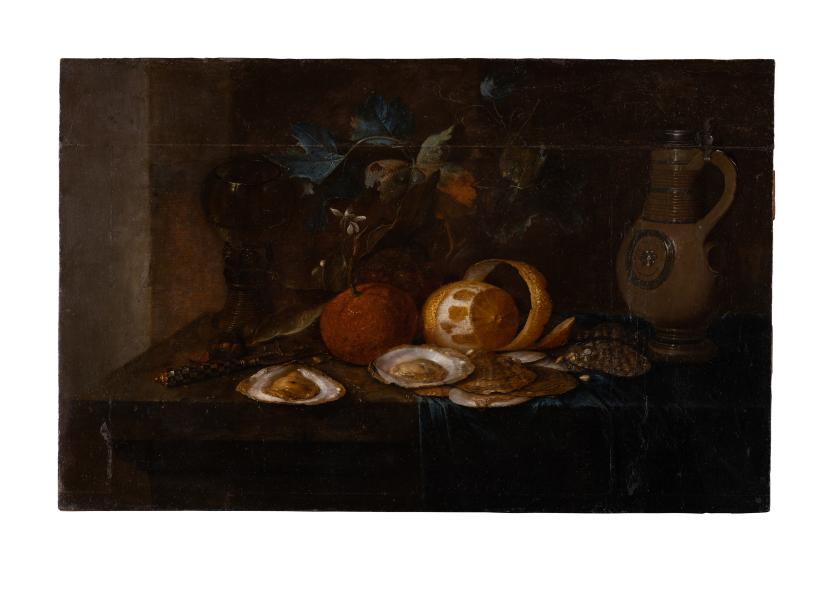
- Still Life with Oysters
- Date of creation
- 17th c.
- Country
- Holland
- Technique
- oil painting
- Material
- wood oil
- Dimensions (height x width, cm)
- 35.5 x 56
Additionally
- Type
- painting
- Genre
- still life
- Plot
- Still life
- Provenance
- Purchased from a private individual
- Exposition
- Potocki Palace
Information about author
Object description
In the 17th century, the Netherlands experienced the formation of a new society, along with its political and economic system. An incredible rise in science, literature, and visual arts takes place. The world of the burgher becomes the measure of all that happens and finds reflection in visual arts. Now, still lifes become an integral part of the burgher's life, reflecting their daily existence and serving as the main decoration of the interior. Dutch artists could reveal the essence and materiality of each object and its relationship with humans. The still life was not just a painting displaying various products on a table but a genuine source of symbols that contemporary viewers understood. Very often, it contained a hidden message for the viewer. The symbols depicted in still lifes of this era were meant to remind viewers of the transience of human life or carried a religious connotation. In the "Still Life with Oysters", oysters are arranged on the table in the foreground, symbolising abundance. Ripened fruits of autumn represent fertility. The glass (the goblet on the left) symbolises fragility. Objects not only individualise their owner but also gain individuality themselves. It is here that the source of the relationship between the object and the subject lies. The presence of a person is indicated by the carelessly tossed knife on the table, the haphazardly arranged oysters, and the cut lemon. Lemons symbolised deceit and the fallacy of earthly pleasures. And a peeled lemon, as seen in the still life, signified cunning.
Legal regulation
Borys Voznytskyi Lviv National Art Gallery